
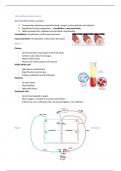
The cardiovascular system
three functions of the cv system:
1. Transporting substances around the body- oxygen, carbon dioxide and nutrients
2. Regulation of body temperature – vasodilation, vasoconstriction
3. Helps the blood clot- platelets clot the blood, stop bleeding
Vasodilation- the diameter of the lumen increases
Vasoconstriction- the diameter of the lumen decreases
Blood
Plasma
- Carries nutrients and oxygen around the body
- Contains salt, calcium and sugar
- Made of 90% water
- Flushes out waste products of exercise
White blood cells
- Fight illness and infection
- Engulf bacteria and viruses
- Produce antibodies to kill pathogens
Platelets
- Clot the blood
- Stop bleeding
- Help build tissue
Red blood cells
- Carries haemoglobin, oxygen
- More oxygen is needed as muscles work harder
- If there are more red blood cells, more haemoglobin, more efficient
Heart structure
,Left side – oxygenated
Right side – deoxygenated
Gaseous exchange in the body – gives O2, takes CO2
Gaseous exchange in the lungs – gives CO2, takes O2
Blood vessels
arteries (oxygenated)
- Carry blood away from heart
- Under pressure – thick, elastic muscular walls
veins (deoxygenated)
- Carry blood towards heart
- Blood pressure is less – thinner, less muscular walls
- Valve opens, closes – against gravity, stops backflow of blood
capillaries (deoxygenated)
- In tissues where gas exchange takes place
- 1 cell thick wall – endothelial wall
Vascular shunting
- As we exercise, heart rate increases
- The demand for oxygen increases in the working muscles
- Blood is redistributed from inactive areas to active areas
at rest:
the active areas are:
, the vital organs of the body
the inactive areas are:
voluntary working muscles
Vasodilation would occur in active areas
- More nutrients and oxygen in
- More lactic acid out
The respiratory system
Components of air:
Inhaled air – oxygen 20%, carbon dioxide 0.4%, nitrogen 79%, water vapour small amount
Exhaled air – oxygen 16%, carbon dioxide 4%, nitrogen 79%, water vapour large amount
tidal volume is the amount of air inspired and expired each normal breath
vital capacity is the maximum amount of air that can be inhaled in one breath
if you have a higher vital capacity you can recover quicker from exercise
how exercise effects breathing:
- increase in breathing rate
- increased gaseous exchange- removal of CO2 and intake of O2
- vital capacity increases during exercise
-
Gaseous exchange in lungs
When you breath in, the alveoli fill with air. The alveoli are covered in capillaries. Gases can pass
through the thin walls and travel into the blood stream.
There is a high concentration of oxygen in the alveoli and a low concentration of
oxygen in the blood, so oxygen diffuses from the alveoli into the blood. There is a high
concentration of carbon dioxide in the blood and a low concentration in the alveoli, so
carbon dioxide diffuses from the blood into the alveoli.
Structure of the respiratory system
Trachea- tube for passage of air – filters air
Bronchus- one of two branches of trachea, transports air to bronchioles
Intercostal muscles- muscles between ribs which allow lungs to expand and contract
Lungs- major organs of respiration- gaseous exchange occurs in lungs
Bronchioles- smaller air tubes from bronchi, transport air to lungs
Ribs- bones that form a cage to protect organs in chest area, expand and relax
Alveoli- air sacs which allow gaseous exchange into blood- CO 2 (out), O2 (in)
three functions of the cv system:
1. Transporting substances around the body- oxygen, carbon dioxide and nutrients
2. Regulation of body temperature – vasodilation, vasoconstriction
3. Helps the blood clot- platelets clot the blood, stop bleeding
Vasodilation- the diameter of the lumen increases
Vasoconstriction- the diameter of the lumen decreases
Blood
Plasma
- Carries nutrients and oxygen around the body
- Contains salt, calcium and sugar
- Made of 90% water
- Flushes out waste products of exercise
White blood cells
- Fight illness and infection
- Engulf bacteria and viruses
- Produce antibodies to kill pathogens
Platelets
- Clot the blood
- Stop bleeding
- Help build tissue
Red blood cells
- Carries haemoglobin, oxygen
- More oxygen is needed as muscles work harder
- If there are more red blood cells, more haemoglobin, more efficient
Heart structure
,Left side – oxygenated
Right side – deoxygenated
Gaseous exchange in the body – gives O2, takes CO2
Gaseous exchange in the lungs – gives CO2, takes O2
Blood vessels
arteries (oxygenated)
- Carry blood away from heart
- Under pressure – thick, elastic muscular walls
veins (deoxygenated)
- Carry blood towards heart
- Blood pressure is less – thinner, less muscular walls
- Valve opens, closes – against gravity, stops backflow of blood
capillaries (deoxygenated)
- In tissues where gas exchange takes place
- 1 cell thick wall – endothelial wall
Vascular shunting
- As we exercise, heart rate increases
- The demand for oxygen increases in the working muscles
- Blood is redistributed from inactive areas to active areas
at rest:
the active areas are:
, the vital organs of the body
the inactive areas are:
voluntary working muscles
Vasodilation would occur in active areas
- More nutrients and oxygen in
- More lactic acid out
The respiratory system
Components of air:
Inhaled air – oxygen 20%, carbon dioxide 0.4%, nitrogen 79%, water vapour small amount
Exhaled air – oxygen 16%, carbon dioxide 4%, nitrogen 79%, water vapour large amount
tidal volume is the amount of air inspired and expired each normal breath
vital capacity is the maximum amount of air that can be inhaled in one breath
if you have a higher vital capacity you can recover quicker from exercise
how exercise effects breathing:
- increase in breathing rate
- increased gaseous exchange- removal of CO2 and intake of O2
- vital capacity increases during exercise
-
Gaseous exchange in lungs
When you breath in, the alveoli fill with air. The alveoli are covered in capillaries. Gases can pass
through the thin walls and travel into the blood stream.
There is a high concentration of oxygen in the alveoli and a low concentration of
oxygen in the blood, so oxygen diffuses from the alveoli into the blood. There is a high
concentration of carbon dioxide in the blood and a low concentration in the alveoli, so
carbon dioxide diffuses from the blood into the alveoli.
Structure of the respiratory system
Trachea- tube for passage of air – filters air
Bronchus- one of two branches of trachea, transports air to bronchioles
Intercostal muscles- muscles between ribs which allow lungs to expand and contract
Lungs- major organs of respiration- gaseous exchange occurs in lungs
Bronchioles- smaller air tubes from bronchi, transport air to lungs
Ribs- bones that form a cage to protect organs in chest area, expand and relax
Alveoli- air sacs which allow gaseous exchange into blood- CO 2 (out), O2 (in)


