Conformity
- Changing our behaviour because of real or imagined group pressure
Kelman suggested there are 3 different types of conformity:
Compliance – most superficial type of conformity, individual conforms publicly to gain
the groups approval but privately disagrees with the group’s views. Its temporary and
shallow.
Identification - deeper type of conformity, individual identifies with a person or group to
be more a part of it. The individual accepts the attitudes as true and right
(internalisation) but they are doing this to be accepted (compliance). Change of belief or
behaviour may be temporary. May publicly change opinions even if we don’t privately
agree.
Internalisation – deepest level of conformity, views are taken on at a deep and
permanent level, it becomes a part of the persons own way of viewing the world.
Individuals accept the group norms resulting in public and private change of opinion/
behaviour.
Explanations for conformity:
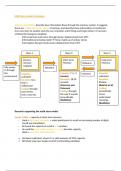
Deutsch and Gerard developed a two-process theory arguing there are two reasons people
conform:
- The need to be right (Informative social influence)
- The need to be liked (Normative social influence)
ISI – we have a basic need to check our ideas and attitudes to ensure they’re right. In
ambiguous situations we conform, changing our public and private views. Cognitive
process and is to do with what you think. It leads to permanent change in
opinion/behaviour (internalisation)
- More likely to occur in new situations when it may not be clear what is right, or in
decisions that need to be made quickly.
NSI – we need to be accepted so we avoid rejection and are inclined to conform.
Leading to compliance as we are changing our views, publicly not privately to be liked.
Pay attention to group norms and want to behave in an appropriate way and be like
others. Don’t want to appear foolish and to gain social approval. Emotional process and
leads to temporary changes in opinions/behaviour (compliance)
- More likely to happen when with strangers to avoid rejection. Can also occur with
friends as we are concerned about social approval. Can be more pronounced in stressful
situations.
- Changing our behaviour because of real or imagined group pressure
Kelman suggested there are 3 different types of conformity:
Compliance – most superficial type of conformity, individual conforms publicly to gain
the groups approval but privately disagrees with the group’s views. Its temporary and
shallow.
Identification - deeper type of conformity, individual identifies with a person or group to
be more a part of it. The individual accepts the attitudes as true and right
(internalisation) but they are doing this to be accepted (compliance). Change of belief or
behaviour may be temporary. May publicly change opinions even if we don’t privately
agree.
Internalisation – deepest level of conformity, views are taken on at a deep and
permanent level, it becomes a part of the persons own way of viewing the world.
Individuals accept the group norms resulting in public and private change of opinion/
behaviour.
Explanations for conformity:
Deutsch and Gerard developed a two-process theory arguing there are two reasons people
conform:
- The need to be right (Informative social influence)
- The need to be liked (Normative social influence)
ISI – we have a basic need to check our ideas and attitudes to ensure they’re right. In
ambiguous situations we conform, changing our public and private views. Cognitive
process and is to do with what you think. It leads to permanent change in
opinion/behaviour (internalisation)
- More likely to occur in new situations when it may not be clear what is right, or in
decisions that need to be made quickly.
NSI – we need to be accepted so we avoid rejection and are inclined to conform.
Leading to compliance as we are changing our views, publicly not privately to be liked.
Pay attention to group norms and want to behave in an appropriate way and be like
others. Don’t want to appear foolish and to gain social approval. Emotional process and
leads to temporary changes in opinions/behaviour (compliance)
- More likely to happen when with strangers to avoid rejection. Can also occur with
friends as we are concerned about social approval. Can be more pronounced in stressful
situations.