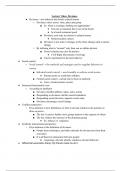
THE IMMUNE SYSTEM
DEFINITIONS
Pathogen: a disease causing agent
Antigen: A molecule capable of provoking an
immune response (any particle that triggers the
immune system to respond)
Innate immunity: Immunity that is present at
birth ad lasts a person’s entire life
Adaptive immunity: Specific antigen- specific
defence mechanisms that take several days to
become protective and are designed to remove a
specific antigen
Non-specific: Defences or responses that act on
all pathogens indiscriminately and in the same way
Specific: Reponses that are designed to remove one
type of antigen
Physical: physical barriers to entry
Chemical: chemical defences (enzymes or substances
that alter pH) that discourage growth of pathogens on epithelial surfaces
Defense: barriers to entry
Response: An immune reaction that must recognize a pathogen prior to action
, The Innate Immune Response (Non-specific)
consists of systems that are present at birth and do not change over the course of an organism’s life span
- Incapable of forming a memory response
- Are non-specific= cannot act differently on different pathogens and will act the same way thought the course
of a life
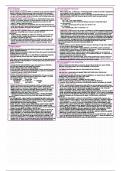
FIRST LINE OF DEFENCE
Is a system of physical and chemical barriers that prevent or limit the entry of pathogens into the
blood/tissue of the organism
they are non-specific defence mechanisms (act on all pathogens equally=do not discriminate)
can be physical or chemical
DEFENCE BARRIER ENTRY SITE
Skin - Physical: unbroken layer of epithical tissue to 1. tough dry layer, difficult to penetrate when
block entry to tissue unbroken
- chemical: acidic pH limits growth of pathogen 2. presence of certain bacteria on the skin that
destroy incoming pathogens
Mucous line nasal passages, digestive tract, respiratory, 1. production of mucus that is excreted and carries
membranes reproductive and excretory systems the pathogens out of the body
- Physical: traps pathogens, which can then be 2. nasal and other respiratory passages contain cilia
swallowed or blown out (fine hairs that sweep pathogens, dust, etc; away in
- Chemical: contains enzymes digest pathogens the mucous secretions)
Stomach - chemical: highly acidic, contains digestive 1. presence of bacteria in the intestines destroy
acid enzymes to break down pathogens some pathogens
2. stomach acid provides a lethal environment for
many pathogens
tears - physical: flushes out pathogens 1. pathogens trapped in mucous
- chemical: contains enzymes to digest
pathogens/limit growth
Vagina - physical: vaginal discharge trapes pathogens and 1. mucosal surfaces of the female reproductive tract
expels from body which provides defence against viruses, bacteria and
-chemical: has low pH to limit pathogen growth fungi
(also enzymes)
Urine - physical: flow during urination pushes pathogens 1. the flow of urine prevents extensive colonization
out of the urinary bladder or urethra
- chemical: has low pH to limit pathogen growth
DEFINITIONS
Pathogen: a disease causing agent
Antigen: A molecule capable of provoking an
immune response (any particle that triggers the
immune system to respond)
Innate immunity: Immunity that is present at
birth ad lasts a person’s entire life
Adaptive immunity: Specific antigen- specific
defence mechanisms that take several days to
become protective and are designed to remove a
specific antigen
Non-specific: Defences or responses that act on
all pathogens indiscriminately and in the same way
Specific: Reponses that are designed to remove one
type of antigen
Physical: physical barriers to entry
Chemical: chemical defences (enzymes or substances
that alter pH) that discourage growth of pathogens on epithelial surfaces
Defense: barriers to entry
Response: An immune reaction that must recognize a pathogen prior to action
, The Innate Immune Response (Non-specific)
consists of systems that are present at birth and do not change over the course of an organism’s life span
- Incapable of forming a memory response
- Are non-specific= cannot act differently on different pathogens and will act the same way thought the course
of a life
FIRST LINE OF DEFENCE
Is a system of physical and chemical barriers that prevent or limit the entry of pathogens into the
blood/tissue of the organism
they are non-specific defence mechanisms (act on all pathogens equally=do not discriminate)
can be physical or chemical
DEFENCE BARRIER ENTRY SITE
Skin - Physical: unbroken layer of epithical tissue to 1. tough dry layer, difficult to penetrate when
block entry to tissue unbroken
- chemical: acidic pH limits growth of pathogen 2. presence of certain bacteria on the skin that
destroy incoming pathogens
Mucous line nasal passages, digestive tract, respiratory, 1. production of mucus that is excreted and carries
membranes reproductive and excretory systems the pathogens out of the body
- Physical: traps pathogens, which can then be 2. nasal and other respiratory passages contain cilia
swallowed or blown out (fine hairs that sweep pathogens, dust, etc; away in
- Chemical: contains enzymes digest pathogens the mucous secretions)
Stomach - chemical: highly acidic, contains digestive 1. presence of bacteria in the intestines destroy
acid enzymes to break down pathogens some pathogens
2. stomach acid provides a lethal environment for
many pathogens
tears - physical: flushes out pathogens 1. pathogens trapped in mucous
- chemical: contains enzymes to digest
pathogens/limit growth
Vagina - physical: vaginal discharge trapes pathogens and 1. mucosal surfaces of the female reproductive tract
expels from body which provides defence against viruses, bacteria and
-chemical: has low pH to limit pathogen growth fungi
(also enzymes)
Urine - physical: flow during urination pushes pathogens 1. the flow of urine prevents extensive colonization
out of the urinary bladder or urethra
- chemical: has low pH to limit pathogen growth