8/29/2022
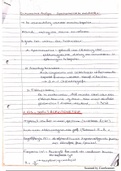
Lecture 1
John Dewey
● 1859-1952
○ Philosopher
○ Psychologist
○ Educational Reformer
■ Art communicates moral purpose by conveying a message
■ Everyone has capacity to create art
● Art As Experience (1934)
○ Esthetics in art
○ Quality of art that gives rise to meaning more important than itself
■ How does this quality come to be?
■ What experience?
■ Significant moment that arises from you navigating your natural
environment
● The Live Creature
○ When artistic objects are removed from human experience they’re viewed as a
mechanical exercise
○ Don’t appreciate their significance
■ When we isolate art we remove it from it’s context
■ Putting it in a glass cage/box
○ Nothing happens in isolation (everything through experience)- Art in isolation
destroys it
○ See the painting, don’t feel it
● Having AN Experience
○ Draw from what’s around us
○ Human experience is continual and constantly affects us, also means there are
tons of “en-co-ed” events
○ Having AN Experience: When material experience runs its course to fulfillment
■ Remember these moments forever
■ Very significant events
■ Know when it’s reached a point of fulfillment because we sit back and go
“wow”
● Washes away at the end
● Art is NOT “encoed”
● “Emotions become moments, and moments become experiences”
○ Art is meant to be experienced/enjoyed (esthetics)
○ Can’t separate estetic from artistic therefore must be
framed for receptive presentation
○ If there is purpose behind art, then there will be passion
behind art. If there’s passion behind art, it will be deemed
“esthetically pleasing.”
,● The Expressive Object
○ Art should speak to you and call you to it’s experience
○ If you try to separate the art in observation from it’s creation, we gloss over the
meaning, and we cannot gain experience from it
■ Mona Lisa
● A masterpiece has meaning because it’s so unlike every other
piece of art in history.
● Dewey refutes this- calls it the “esoteric” theory of art
● There is intrinsic and extrinsic meaning of art- focus on the object
itself rather than that conditions
● Substance and Form
○ Art is expressive- it has its own language.
○ Art, like language, has 3 features:
■ Artist (speaker)
■ Object (speech)
■ Viewer (audience)
○ Art is a creative blending of substance and form that connects the artist and the
viewer.
○ Language what is said and HOW it is said (difference between substance and
form)
■ Does the meaning of the piece come first? Or does the artist find the
meaning first and then try to find a way to express it?
● We shouldn’t see any distinction at all. Instead a piece of art is
fresh and vital and that’s what matters. You can’t separate the
esthetic value of art from its expressive form.
● Does it matter? Does it grab you? Does it speak to the human
experience?
,8/31/2022
Lecture 2
Berger Ch. 1
John Berger
● 1926-2017
○ “The Key of Dreams” by Rene Magritte (1898-1967)
■ Seeing comes before words.
■ Seeing establishes our place in the world
● What we know affects the way we see things (dynamic system)
■ Choose what to look at
● See other people as well as images
○ Images are detached from the time and place they were
taken
○ Person’s unique perspective on the world
○ Mental image first used to represent things that aren’t there
■ Meaning that lasts longer than the moment
■ Frozen for eternity
● “Vision of the artist”: What the artist saw in that particular time
through the image
● Mystification: when images of the past are presented as works of
art the true meaning of images becomes obscured and mystified
because of assumptions of:
○ Beauty
○ Truth
○ Genius
○ Civilization
○ Form
○ Status
○ Taste, etc.
■ Difficult to see what image really is
■ B/c privileged minority justifies their role as “art
experts” - ruling class
○ “Regentesses of the Old Men’s Alms House” & “Regent’s of the Old Men’s Alms
House” by Frans Hals (1580-1666)
■ Mystification obscures this piece
■ Hals was poor & old- lived on charity of others
● Prevented from appreciating the piece as what it is
● Hals painted the people as they were
● Must take into account our own mystifications and biases
○ Renaissance art perfected the skill of perspective: one piece of unity that’s the
“center of the piece”
○ The way we see art changed dramatically because of photos & videos
■ World of motion & space → frozen in time now
, ■ Camera eye: subjective viewpoint of photographer standing behind the
camera lens
■ Camera allows us to reproduce images BUT changes our experience
seeing pieces of art
○ “The Virgin of the Rocks” by Leonardo da Vinci (1452-1519) National Gallery &
Louvre
■ Provenance: chronology of ownership and historical location of art object
○ “Venus and Mars” by Boticelli (1445-1510)
■ Camera doesn’t all you to view pieces in their entirety
■ Camera allows you to see what the photographer wants you to see
○ “Procession to Calvary” by Breughel (1526-1569)
■ Reproduction (camera) isolates what the painting reveals
● Jesus on his way to be crucified in the vanishing point of the piece
● Virgin Mary being assisted by St. John
● Ravens: symbolic of death
○ Isolated snapshots of a larger, more meaningful scene
■ Language can be used to obscure the truth- same thing w/ camera, an
isolate what the whole picture reveals
○ Reproduction of a work of art destroys its “aura”
■ “Aura” because its an original
● Can touch what they touched, see their brush strokes
● Reproduction obscures the uniqueness of a piece and it no longer
stems from its meaning but instead from its physical existence
○ Commodifies a piece
○ Similar to intrinsic & extrinsic value of art
■ Value of art becomes more about the price than it
being an actual work of art
■ Enveloped by bogus religiosity
● Substitute for what paintings lost when
camera made it reproducible
○ Reproductions are used to prop up the illusion that nothing has actually changed
○ “Woman Pouring Milk” by Vermeer (1632-1675)
○ Berger calls for de-mystification
■ Give art to everyone, so that everyone can appreciate art and get rid of
mystification, “aura,” etc.
■ Wanted to teach people how to appreciate art- you don’t have to be an art
critic to appreciate art
Lecture 1
John Dewey
● 1859-1952
○ Philosopher
○ Psychologist
○ Educational Reformer
■ Art communicates moral purpose by conveying a message
■ Everyone has capacity to create art
● Art As Experience (1934)
○ Esthetics in art
○ Quality of art that gives rise to meaning more important than itself
■ How does this quality come to be?
■ What experience?
■ Significant moment that arises from you navigating your natural
environment
● The Live Creature
○ When artistic objects are removed from human experience they’re viewed as a
mechanical exercise
○ Don’t appreciate their significance
■ When we isolate art we remove it from it’s context
■ Putting it in a glass cage/box
○ Nothing happens in isolation (everything through experience)- Art in isolation
destroys it
○ See the painting, don’t feel it
● Having AN Experience
○ Draw from what’s around us
○ Human experience is continual and constantly affects us, also means there are
tons of “en-co-ed” events
○ Having AN Experience: When material experience runs its course to fulfillment
■ Remember these moments forever
■ Very significant events
■ Know when it’s reached a point of fulfillment because we sit back and go
“wow”
● Washes away at the end
● Art is NOT “encoed”
● “Emotions become moments, and moments become experiences”
○ Art is meant to be experienced/enjoyed (esthetics)
○ Can’t separate estetic from artistic therefore must be
framed for receptive presentation
○ If there is purpose behind art, then there will be passion
behind art. If there’s passion behind art, it will be deemed
“esthetically pleasing.”
,● The Expressive Object
○ Art should speak to you and call you to it’s experience
○ If you try to separate the art in observation from it’s creation, we gloss over the
meaning, and we cannot gain experience from it
■ Mona Lisa
● A masterpiece has meaning because it’s so unlike every other
piece of art in history.
● Dewey refutes this- calls it the “esoteric” theory of art
● There is intrinsic and extrinsic meaning of art- focus on the object
itself rather than that conditions
● Substance and Form
○ Art is expressive- it has its own language.
○ Art, like language, has 3 features:
■ Artist (speaker)
■ Object (speech)
■ Viewer (audience)
○ Art is a creative blending of substance and form that connects the artist and the
viewer.
○ Language what is said and HOW it is said (difference between substance and
form)
■ Does the meaning of the piece come first? Or does the artist find the
meaning first and then try to find a way to express it?
● We shouldn’t see any distinction at all. Instead a piece of art is
fresh and vital and that’s what matters. You can’t separate the
esthetic value of art from its expressive form.
● Does it matter? Does it grab you? Does it speak to the human
experience?
,8/31/2022
Lecture 2
Berger Ch. 1
John Berger
● 1926-2017
○ “The Key of Dreams” by Rene Magritte (1898-1967)
■ Seeing comes before words.
■ Seeing establishes our place in the world
● What we know affects the way we see things (dynamic system)
■ Choose what to look at
● See other people as well as images
○ Images are detached from the time and place they were
taken
○ Person’s unique perspective on the world
○ Mental image first used to represent things that aren’t there
■ Meaning that lasts longer than the moment
■ Frozen for eternity
● “Vision of the artist”: What the artist saw in that particular time
through the image
● Mystification: when images of the past are presented as works of
art the true meaning of images becomes obscured and mystified
because of assumptions of:
○ Beauty
○ Truth
○ Genius
○ Civilization
○ Form
○ Status
○ Taste, etc.
■ Difficult to see what image really is
■ B/c privileged minority justifies their role as “art
experts” - ruling class
○ “Regentesses of the Old Men’s Alms House” & “Regent’s of the Old Men’s Alms
House” by Frans Hals (1580-1666)
■ Mystification obscures this piece
■ Hals was poor & old- lived on charity of others
● Prevented from appreciating the piece as what it is
● Hals painted the people as they were
● Must take into account our own mystifications and biases
○ Renaissance art perfected the skill of perspective: one piece of unity that’s the
“center of the piece”
○ The way we see art changed dramatically because of photos & videos
■ World of motion & space → frozen in time now
, ■ Camera eye: subjective viewpoint of photographer standing behind the
camera lens
■ Camera allows us to reproduce images BUT changes our experience
seeing pieces of art
○ “The Virgin of the Rocks” by Leonardo da Vinci (1452-1519) National Gallery &
Louvre
■ Provenance: chronology of ownership and historical location of art object
○ “Venus and Mars” by Boticelli (1445-1510)
■ Camera doesn’t all you to view pieces in their entirety
■ Camera allows you to see what the photographer wants you to see
○ “Procession to Calvary” by Breughel (1526-1569)
■ Reproduction (camera) isolates what the painting reveals
● Jesus on his way to be crucified in the vanishing point of the piece
● Virgin Mary being assisted by St. John
● Ravens: symbolic of death
○ Isolated snapshots of a larger, more meaningful scene
■ Language can be used to obscure the truth- same thing w/ camera, an
isolate what the whole picture reveals
○ Reproduction of a work of art destroys its “aura”
■ “Aura” because its an original
● Can touch what they touched, see their brush strokes
● Reproduction obscures the uniqueness of a piece and it no longer
stems from its meaning but instead from its physical existence
○ Commodifies a piece
○ Similar to intrinsic & extrinsic value of art
■ Value of art becomes more about the price than it
being an actual work of art
■ Enveloped by bogus religiosity
● Substitute for what paintings lost when
camera made it reproducible
○ Reproductions are used to prop up the illusion that nothing has actually changed
○ “Woman Pouring Milk” by Vermeer (1632-1675)
○ Berger calls for de-mystification
■ Give art to everyone, so that everyone can appreciate art and get rid of
mystification, “aura,” etc.
■ Wanted to teach people how to appreciate art- you don’t have to be an art
critic to appreciate art