AIRCRAFT PERFORMANCE
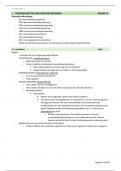
TRANSONIC AERODYNAMICS
Subsonic: pressure, volume and speed are variable. “const. volume flow”
Transonic: pressure, volume, density and temperature are variable. “const. mass flow”
< 0.3 Incompressible subsonic flow -
0.3 – 0.8 Compressible subsonic flow Speed of the airflow around the aircraft is below M=1
0.8 – 1.2 Transonic flow Speed of the airflow around the aircraft is below and above M=1
> 1.2 Supersonic flow Speed of the airflow around the aircraft is above M=1
>5 Hypersonic flow Above M=1, but the friction of air causes temperature problems
− Speed of sound is only depending upon the temperature.
TAT= SAT * (1+0.2M2)
TAT – temp. when the air molecules are suddenly brought to a stop.
SAT – temp. in still air.
RAM RISE – temp. rise due to the sudden stop of the air molecules.
− Mcritical is flight Mach number where speed of sound is reached on the airplane construction.
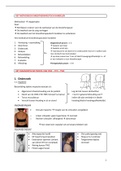
Item Low speed buffet Shock buffet
Angle of attack Large Small
Mach no. Low High
Characteristics Large amplitude, low frequency Small amplitude, high frequency
Actions needed Lower angle of attack, increase speed Decrease Mach no.
Exceeding the critical Mach no. results in: ① increasing lift at some point, then lift will decrease.
② The rudder effectiveness will be reduced.
− At sea-level Vmo is limited. At 25.000 ft Mmo is limited.
− Stall speed increases with altitude due to compressibility effects.
− Speed and stall speed are proportional to the root of the load factor.
Accelerated of g-stall is the stall when the load factor is greater than 1.
Absence of Area Ruling will result in: ① shock stall at the wing root. ② Tuck under (lift vector
shifts aft due to shock stall)
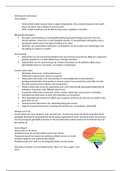
Factors that helps by increasing Mach no. and reducing the undesired aerodynamic effects:
① Thin profiles ② Sweep back ③ Vortex generators
Stall speed in IAS below 12.000 ft is constant with the altitude. Above 12.000 ft, the stall speed
will increase 2 kts per 1000 ft. (low speed buffet)
At high altitude & maximum speed: ① temp. decreases, whereby speed of sound decreases. ② Air
density decreases, whereby IAS of the Mcritical decreases. (shock buffet)
Conclusion: At high altitudes, IAS that belongs to shock-stall will decrease, while
IAS that belongs to low speed stall will increase.
TRANSONIC AERODYNAMICS
Subsonic: pressure, volume and speed are variable. “const. volume flow”
Transonic: pressure, volume, density and temperature are variable. “const. mass flow”
< 0.3 Incompressible subsonic flow -
0.3 – 0.8 Compressible subsonic flow Speed of the airflow around the aircraft is below M=1
0.8 – 1.2 Transonic flow Speed of the airflow around the aircraft is below and above M=1
> 1.2 Supersonic flow Speed of the airflow around the aircraft is above M=1
>5 Hypersonic flow Above M=1, but the friction of air causes temperature problems
− Speed of sound is only depending upon the temperature.
TAT= SAT * (1+0.2M2)
TAT – temp. when the air molecules are suddenly brought to a stop.
SAT – temp. in still air.
RAM RISE – temp. rise due to the sudden stop of the air molecules.
− Mcritical is flight Mach number where speed of sound is reached on the airplane construction.
Item Low speed buffet Shock buffet
Angle of attack Large Small
Mach no. Low High
Characteristics Large amplitude, low frequency Small amplitude, high frequency
Actions needed Lower angle of attack, increase speed Decrease Mach no.
Exceeding the critical Mach no. results in: ① increasing lift at some point, then lift will decrease.
② The rudder effectiveness will be reduced.
− At sea-level Vmo is limited. At 25.000 ft Mmo is limited.
− Stall speed increases with altitude due to compressibility effects.
− Speed and stall speed are proportional to the root of the load factor.
Accelerated of g-stall is the stall when the load factor is greater than 1.
Absence of Area Ruling will result in: ① shock stall at the wing root. ② Tuck under (lift vector
shifts aft due to shock stall)
Factors that helps by increasing Mach no. and reducing the undesired aerodynamic effects:
① Thin profiles ② Sweep back ③ Vortex generators
Stall speed in IAS below 12.000 ft is constant with the altitude. Above 12.000 ft, the stall speed
will increase 2 kts per 1000 ft. (low speed buffet)
At high altitude & maximum speed: ① temp. decreases, whereby speed of sound decreases. ② Air
density decreases, whereby IAS of the Mcritical decreases. (shock buffet)
Conclusion: At high altitudes, IAS that belongs to shock-stall will decrease, while
IAS that belongs to low speed stall will increase.