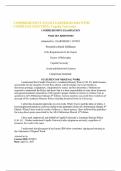
CCMC PRACTICE EXAM
| 100 QUESTIONS |
WITH PASSED
SOLUTIONS!!
CCMC
Evatee 8/28/24 CCMC
,CCMC PRACTICE EXAM | 100 QUESTIONS |
WITH PASSED SOLUTIONS!!
According to the Rehabilitation Act of 1973, tasks that must be performed on
the job, even if the method differs between employees with and without
disabilities, are called:
A. physical job demands
B. essential job functions
C. reasonable accommodations
D. worker traits Answer - B. essential job functions
When a case manager coordinates the transfer of a catastrophically or
chronically ill patient from one facility to another, the case manager can usually
claim a savings if the:
A. payor gives prior approval for the transfer.
B. patient transfers from a higher to a lower intensity of care.
C. patient transfers to a facility closer to home.
D. facilities are both in a preferred provider organization (PPO) network.
Answer - B. patient transfers from a higher to a lower intensity of care.
,The main purpose of client involvement in developing a rehabilitation plan is
to:
A. meet regulatory requirements.
B. organize the delivery of services and control costs.
C. improve precision in achievement of goals.
D. set long-term goals. Answer - C. improve precision in achievement of goals.
The most common method of assessing the effectiveness of case management
is:
A. savings reports.
B. client/employer satisfaction.
C. length of recovery.
D. decreased litigation costs. Answer - A. savings reports.
A model that standardizes appropriate services and treatment within an
appropriate length of stay is termed:
A. 24-hour accountability for nursing care.
B. collaborative approaches.
C. critical pathways.
D. staff model health maintenance organization (HMO). Answer - C. critical
pathways.
In determining the quality of a rehabilitation facility and its programs, the case
manager should assess accreditation, scope of services, proximity, flexibility,
and:
, A. financial reporting capabilities.
B. patient diagnosis and co-morbidity.
C. outcomes measurement systems.
D. employee benefits. Answer - C. outcomes measurement systems.
The primary source of information when conducting a case management
assessment is the:
A. payer.
B. significant other.
C. consumer.
D. healthcare provider. Answer - C. consumer.
The state Vocational Rehabilitation Agency can assist in accessing
transportation by:
A. arranging for vehicle lease options.
B. driving disabled workers to and from their employer.
C. purchasing adaptive equipment for the client's vehicle.
D. urging compliance with Title I of the Americans with Disabilities Act (ADA).
Answer - C. purchasing adaptive equipment for the client's vehicle.
Extra contractual benefits are:
A. covered in the home health benefit plan of the payor source.
B. not recommended by insurance case managers.
| 100 QUESTIONS |
WITH PASSED
SOLUTIONS!!
CCMC
Evatee 8/28/24 CCMC
,CCMC PRACTICE EXAM | 100 QUESTIONS |
WITH PASSED SOLUTIONS!!
According to the Rehabilitation Act of 1973, tasks that must be performed on
the job, even if the method differs between employees with and without
disabilities, are called:
A. physical job demands
B. essential job functions
C. reasonable accommodations
D. worker traits Answer - B. essential job functions
When a case manager coordinates the transfer of a catastrophically or
chronically ill patient from one facility to another, the case manager can usually
claim a savings if the:
A. payor gives prior approval for the transfer.
B. patient transfers from a higher to a lower intensity of care.
C. patient transfers to a facility closer to home.
D. facilities are both in a preferred provider organization (PPO) network.
Answer - B. patient transfers from a higher to a lower intensity of care.
,The main purpose of client involvement in developing a rehabilitation plan is
to:
A. meet regulatory requirements.
B. organize the delivery of services and control costs.
C. improve precision in achievement of goals.
D. set long-term goals. Answer - C. improve precision in achievement of goals.
The most common method of assessing the effectiveness of case management
is:
A. savings reports.
B. client/employer satisfaction.
C. length of recovery.
D. decreased litigation costs. Answer - A. savings reports.
A model that standardizes appropriate services and treatment within an
appropriate length of stay is termed:
A. 24-hour accountability for nursing care.
B. collaborative approaches.
C. critical pathways.
D. staff model health maintenance organization (HMO). Answer - C. critical
pathways.
In determining the quality of a rehabilitation facility and its programs, the case
manager should assess accreditation, scope of services, proximity, flexibility,
and:
, A. financial reporting capabilities.
B. patient diagnosis and co-morbidity.
C. outcomes measurement systems.
D. employee benefits. Answer - C. outcomes measurement systems.
The primary source of information when conducting a case management
assessment is the:
A. payer.
B. significant other.
C. consumer.
D. healthcare provider. Answer - C. consumer.
The state Vocational Rehabilitation Agency can assist in accessing
transportation by:
A. arranging for vehicle lease options.
B. driving disabled workers to and from their employer.
C. purchasing adaptive equipment for the client's vehicle.
D. urging compliance with Title I of the Americans with Disabilities Act (ADA).
Answer - C. purchasing adaptive equipment for the client's vehicle.
Extra contractual benefits are:
A. covered in the home health benefit plan of the payor source.
B. not recommended by insurance case managers.