

BLAKE REVISION PACK KEY NOTES
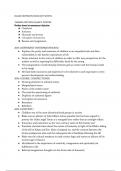
THEMES WITHIN BLAKE’S POETRY:
Broken down by assessment objective
★ Childhood
★ Authority
★ Humanity and divinity
★ Corruption of innocence
★ Reason and imagination
AO5: (DIFFERENT INTERPRETATIONS)
● Explores the purity and sweetness of children in an unspoiled state and their
vulnerability to the harsher experiences of life
● Draws attention to the voices of children in order to offer new perspectives for the
readers as well as exposing the difficulties faced by the young
● The juxtaposition of and interplay between god as creator and the humans made
in his image
● He finds both innocence and experience to be inherent in and important to every
person’s development and understanding
AO4: (GENRE, CONNECTIONS)
● Drawing attention to unheard voices
● Marginaliseid voices
● Power of the written word
● The need for questioning of authority
● Duplicity of authority figures
● Corruption of innocence
● Resistance
● Rebellion
AO3 (CONTEXT)
● Children one of the most disenfranchised groups in society
● Blake was an admirer of John Milton whose paradise lost has been argued to
portray the ‘fallen angel’ Satan as a renegade hero rather than an outright villain
● Innocence and experience as the ‘two contrary states of the human soul’
● Prevalent christian ideas about the nature of humanity in light of the Bible’s telling
of the fall of Adam and Eve, ideas of original sin, and the contrast between the
divine prelapsarian state and the subsequent life of hardship following the fall
● Blake saw the cultural tendency to exalt science logic and reason as failures of his
society (age of reason)
● He believed in the importance of creativity, imagination and spirituality for
fulfilment in life
● Believed imagination brought out the divine side of humanity
, SUMMARIES OF THE POEMS
(analysis and various useful tie ins to AOs)
INNOCENCE:
Infant Joy:
● Epitomises pure innocence, uncorrupted youth and hope
● Gives voice to the voiceless (children)
● A tender scene where the child expresses happiness and the mother wishes sweet joy for
their future
● The brevity of the poem doesn’t make it feel sparse, the simplicity and repetition
represents the voice of a newborn child, epitomising innocence
● Sums up the child’s pure unspoiled state, they are something made entirely of happiness
The Lamb
● Epitomises the holiness of children and demonstrates the ability of god to create positives
● Possible allusions to ‘gentle jesus meek and mild’ from Wesley’s Hymns for Children
(1763)
● Essick: the ‘quintessential song of Innocence’
● A child addresses a lamb, whimsically questioning it at first, but then revealing the answer
too
● Blake sets the child apart from the idea of original sin and creates alignment between the
lamb, the child and Jesus
● The rhyming couplets and repetitions of syntax helps create a gentle unselfconscious tone
● The lamb itself is a frequent motif in blake’s work as well as religious mythology
Holy Thursday
● The hints of experience to come mean this poem symbolises the duplicity of institutions-
they may appear benevolent initially, but the subtly critical tone undermines the childish
view
● Charity school children march into the ‘high dome’ of St Pauls
● They are led by ‘grey headed beadles’ who carry white staffs
● Imagery of shepherd and flock ‘multitudes of lambs’
● The speaker seems distant and designates them as innocent, implying they are an adult
observer
● The rhetoric is grander, lines longer and language more developed which separates the
identity of the speaker from some of the other childish speakers of the innocence poems
● The children are in receipt of patronising kind of charity at the hands of self satisfied
benefactors, which is reinforced by the self aware tone and possibility of irony in the adult
speaker perspective
● The long held tradition of the idea that celestial beings may appear in disguise at your
door and treat you as well as you welcome them links to the warning to not ‘drive an angel
from your door’
THEMES WITHIN BLAKE’S POETRY:
Broken down by assessment objective
★ Childhood
★ Authority
★ Humanity and divinity
★ Corruption of innocence
★ Reason and imagination
AO5: (DIFFERENT INTERPRETATIONS)
● Explores the purity and sweetness of children in an unspoiled state and their
vulnerability to the harsher experiences of life
● Draws attention to the voices of children in order to offer new perspectives for the
readers as well as exposing the difficulties faced by the young
● The juxtaposition of and interplay between god as creator and the humans made
in his image
● He finds both innocence and experience to be inherent in and important to every
person’s development and understanding
AO4: (GENRE, CONNECTIONS)
● Drawing attention to unheard voices
● Marginaliseid voices
● Power of the written word
● The need for questioning of authority
● Duplicity of authority figures
● Corruption of innocence
● Resistance
● Rebellion
AO3 (CONTEXT)
● Children one of the most disenfranchised groups in society
● Blake was an admirer of John Milton whose paradise lost has been argued to
portray the ‘fallen angel’ Satan as a renegade hero rather than an outright villain
● Innocence and experience as the ‘two contrary states of the human soul’
● Prevalent christian ideas about the nature of humanity in light of the Bible’s telling
of the fall of Adam and Eve, ideas of original sin, and the contrast between the
divine prelapsarian state and the subsequent life of hardship following the fall
● Blake saw the cultural tendency to exalt science logic and reason as failures of his
society (age of reason)
● He believed in the importance of creativity, imagination and spirituality for
fulfilment in life
● Believed imagination brought out the divine side of humanity
, SUMMARIES OF THE POEMS
(analysis and various useful tie ins to AOs)
INNOCENCE:
Infant Joy:
● Epitomises pure innocence, uncorrupted youth and hope
● Gives voice to the voiceless (children)
● A tender scene where the child expresses happiness and the mother wishes sweet joy for
their future
● The brevity of the poem doesn’t make it feel sparse, the simplicity and repetition
represents the voice of a newborn child, epitomising innocence
● Sums up the child’s pure unspoiled state, they are something made entirely of happiness
The Lamb
● Epitomises the holiness of children and demonstrates the ability of god to create positives
● Possible allusions to ‘gentle jesus meek and mild’ from Wesley’s Hymns for Children
(1763)
● Essick: the ‘quintessential song of Innocence’
● A child addresses a lamb, whimsically questioning it at first, but then revealing the answer
too
● Blake sets the child apart from the idea of original sin and creates alignment between the
lamb, the child and Jesus
● The rhyming couplets and repetitions of syntax helps create a gentle unselfconscious tone
● The lamb itself is a frequent motif in blake’s work as well as religious mythology
Holy Thursday
● The hints of experience to come mean this poem symbolises the duplicity of institutions-
they may appear benevolent initially, but the subtly critical tone undermines the childish
view
● Charity school children march into the ‘high dome’ of St Pauls
● They are led by ‘grey headed beadles’ who carry white staffs
● Imagery of shepherd and flock ‘multitudes of lambs’
● The speaker seems distant and designates them as innocent, implying they are an adult
observer
● The rhetoric is grander, lines longer and language more developed which separates the
identity of the speaker from some of the other childish speakers of the innocence poems
● The children are in receipt of patronising kind of charity at the hands of self satisfied
benefactors, which is reinforced by the self aware tone and possibility of irony in the adult
speaker perspective
● The long held tradition of the idea that celestial beings may appear in disguise at your
door and treat you as well as you welcome them links to the warning to not ‘drive an angel
from your door’


