2202886
Ozkan E, Belhan S, Yaran M, et al. (2018) ‘Occupational Therapy in Forensic Settings. Occupational
Therapy - Therapeutic and Creative Use of Activity’. IntechOpen.
http://dx.doi.org/10.5772/intechopen.79366.
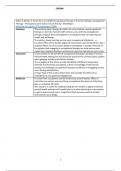
Summary This practice paper reviews the effect of social isolation and occupational
therapy on forensic mental health service users, and how occupational
therapist support their participation in occupations that can help improve
health and wellbeing.
The authors found out that service users occupational imbalance – a
resultant effect of the double stigma of incaceration and mental illness, has a
negative effect on service users ability to reintegrate in society. They are of
the opinion that engaging in occupational therapy can help service users
regain their deprived freedom and become useful to themselves and society.
Evaluation It was written for the benefit of occupational therapists working in forensic
mental health settings but would also be useful to the criminal justice system
when guaging activity levels before release.
The strengths of this article are the full details of different assessment
methods and how they are applied, author’s knowledge of the forensic
setting and challenges occupational therapist could face in enagaging service
users during rehabilitation.
A major flaw of this study is that it does not consider the effect of co-
morbidities on occupational engagement.
Reflection It is clear how occupations can be hindered by mental health, effect of
restrictions on service users and how occupational therapist can help them
gain or redevelop life skills.
This research is useful for understanding the OT models to apply in forensic
mental health settings and I would refer to it when planning an intervention,
to get to know service users, understand their recovery needs and tailor
interventions accordingly.
1
, 2202886
Morris, K. and Ward, K. (2018) ‘The implementation of a new conceptual framework for
occupational engagement in forensic settings: feasibility and application to occupational therapy
practice’, Mental health review journal, 23(4), pp. 308–319. doi:10.1108/MHRJ-03-2018-0007
Summary This systematic review investigated the viability of using theraputic tools to
encourage occupational engagement within secure mental health settings.
The author’s objective was to find out ways to develop occupational
therapy interventions that are meanful to service users, so that they
actively participate and benefit from the intervention.
Following the development and evaluation of these theraputic tools, focus
groups disscussions and reviews gathered by occupational therapists were
used to determine its effectiveness. The authors believe it had a positive
impact on service user engagement.
Evaluation This article is intended for clinicians, mainly occupational therapists.
Strengths of this study include understanding reasons why service users
would want to participate in an activity, and being able to pinpoint reasons
they do not engage fully with an intervention.
The author mentioned the limited research timeframe as a weakness.
However, there is another weakness - the size of the focus group is not
known. Therefore, their views may not reflect the opinion of most service
users who would require OT rehabilitation. Conducting evaluations on more
service users and stating the sample size will provide a true picture of how
effective the tool is.
Reflection This study would be effective in engaging and motivating service users to
engage in occupations that are purposeful and meaningful to them. It
adopts the stance of creating person-centered goals and can be a point of
reference when implementing and evaluating an intervention.
2
Ozkan E, Belhan S, Yaran M, et al. (2018) ‘Occupational Therapy in Forensic Settings. Occupational
Therapy - Therapeutic and Creative Use of Activity’. IntechOpen.
http://dx.doi.org/10.5772/intechopen.79366.
Summary This practice paper reviews the effect of social isolation and occupational
therapy on forensic mental health service users, and how occupational
therapist support their participation in occupations that can help improve
health and wellbeing.
The authors found out that service users occupational imbalance – a
resultant effect of the double stigma of incaceration and mental illness, has a
negative effect on service users ability to reintegrate in society. They are of
the opinion that engaging in occupational therapy can help service users
regain their deprived freedom and become useful to themselves and society.
Evaluation It was written for the benefit of occupational therapists working in forensic
mental health settings but would also be useful to the criminal justice system
when guaging activity levels before release.
The strengths of this article are the full details of different assessment
methods and how they are applied, author’s knowledge of the forensic
setting and challenges occupational therapist could face in enagaging service
users during rehabilitation.
A major flaw of this study is that it does not consider the effect of co-
morbidities on occupational engagement.
Reflection It is clear how occupations can be hindered by mental health, effect of
restrictions on service users and how occupational therapist can help them
gain or redevelop life skills.
This research is useful for understanding the OT models to apply in forensic
mental health settings and I would refer to it when planning an intervention,
to get to know service users, understand their recovery needs and tailor
interventions accordingly.
1
, 2202886
Morris, K. and Ward, K. (2018) ‘The implementation of a new conceptual framework for
occupational engagement in forensic settings: feasibility and application to occupational therapy
practice’, Mental health review journal, 23(4), pp. 308–319. doi:10.1108/MHRJ-03-2018-0007
Summary This systematic review investigated the viability of using theraputic tools to
encourage occupational engagement within secure mental health settings.
The author’s objective was to find out ways to develop occupational
therapy interventions that are meanful to service users, so that they
actively participate and benefit from the intervention.
Following the development and evaluation of these theraputic tools, focus
groups disscussions and reviews gathered by occupational therapists were
used to determine its effectiveness. The authors believe it had a positive
impact on service user engagement.
Evaluation This article is intended for clinicians, mainly occupational therapists.
Strengths of this study include understanding reasons why service users
would want to participate in an activity, and being able to pinpoint reasons
they do not engage fully with an intervention.
The author mentioned the limited research timeframe as a weakness.
However, there is another weakness - the size of the focus group is not
known. Therefore, their views may not reflect the opinion of most service
users who would require OT rehabilitation. Conducting evaluations on more
service users and stating the sample size will provide a true picture of how
effective the tool is.
Reflection This study would be effective in engaging and motivating service users to
engage in occupations that are purposeful and meaningful to them. It
adopts the stance of creating person-centered goals and can be a point of
reference when implementing and evaluating an intervention.
2