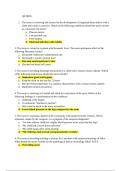
Q3 PEDS
1. The nurse is reviewing risk factors for the development of congenital heart defects with a
client that wants to conceive. Which of the following conditions should the nurse include
as a maternal risk factor?
a. Placenta previa
b. Late prenatal care
c. Preeclampsia
d. Maternal infection with rubella
2. The nurse is caring for a patient with rheumatic fever. The nurse anticipates which of the
following laboratory values?
a. Decreased erythrocyte sedimentation rate
b. Decreased C reactive protein level
c. Elevated antistreptolysin O titer
d. Elevated red blood cell count
3. The nurse is providing discharge instructions to a child with a central venous catheter. Which
of the following instructions should the nurse include?
a. Implement good oral hygiene
b. Keep the child on bed rest for 72 hours
c. Elevated body temperature is a common characteristic with a central venous catheter
d. Implement seizure precautions
4. The nurse is assessing an 8 month old infant for coarctation of the aorta. Which of the
following findings is a manifestation of the condition?
a. Clubbing of the fingers
b. A continuous “machinery murmur”
c. Skin warm to touch in the lower extremities
d. Lower blood pressure in the legs compared to the arms
5. The nurse is assessing a patient in the community with suspected aortic stenosis. Which
statement, madee by the caregiver, is a symptom of the suspected diagnosis?
a. “Ive been told my child has a higher blood pressure in her arms than her legs”
b. “My child had a recent throat infection”
c. “My child squats often when playing”
d. “My child has had several syncopal episodes recently”
6. The nurse is providing teaching to parents for a newborn with suspected tetralogy of fallot.
What should the nurses include are the pathological defects in tetralogy fallot? SATA
a. Overriding aorta
1. The nurse is reviewing risk factors for the development of congenital heart defects with a
client that wants to conceive. Which of the following conditions should the nurse include
as a maternal risk factor?
a. Placenta previa
b. Late prenatal care
c. Preeclampsia
d. Maternal infection with rubella
2. The nurse is caring for a patient with rheumatic fever. The nurse anticipates which of the
following laboratory values?
a. Decreased erythrocyte sedimentation rate
b. Decreased C reactive protein level
c. Elevated antistreptolysin O titer
d. Elevated red blood cell count
3. The nurse is providing discharge instructions to a child with a central venous catheter. Which
of the following instructions should the nurse include?
a. Implement good oral hygiene
b. Keep the child on bed rest for 72 hours
c. Elevated body temperature is a common characteristic with a central venous catheter
d. Implement seizure precautions
4. The nurse is assessing an 8 month old infant for coarctation of the aorta. Which of the
following findings is a manifestation of the condition?
a. Clubbing of the fingers
b. A continuous “machinery murmur”
c. Skin warm to touch in the lower extremities
d. Lower blood pressure in the legs compared to the arms
5. The nurse is assessing a patient in the community with suspected aortic stenosis. Which
statement, madee by the caregiver, is a symptom of the suspected diagnosis?
a. “Ive been told my child has a higher blood pressure in her arms than her legs”
b. “My child had a recent throat infection”
c. “My child squats often when playing”
d. “My child has had several syncopal episodes recently”
6. The nurse is providing teaching to parents for a newborn with suspected tetralogy of fallot.
What should the nurses include are the pathological defects in tetralogy fallot? SATA
a. Overriding aorta