1. MAJOR DEPRESSIVE DISORDER
A. 5 (or more) symptoms during the same 2-week period with at least one of the
symptoms either: (1) depressed mood and (2) loss of interest or pleasure in all, or
almost all, activity most of the day, nearly every day
3. Weight loss when not dieting or weight gain or decrease or increase in appetite
4. Insomnia or hypersomnia
5. Psychomotor retardation or agitation (observable)
6. Fatigue or loss of energy
7. Feeling of worthlessness or excessive or inappropriate guilt
8. Diminished ability to think or concentrate or indecisiveness
9. Recurrent thoughts of death or suicide ideation/attempt
B. Symptoms cause clinically significant distress or impairment in social, occupational,
or other important areas of functioning
C. Not attributable to physiological effects of a substance or medical condition
D. Not better explained by schizoaffective, schizophrenia, delusional disorder or other
specified/unspecified schizophrenia spectrum/other psychotic disorders
E. Never been a manic or hypomanic episode
Note
- Criteria A-C represent a major depressive episode
- Children & Adolescents
o Mood may be irritable rather than sad compared to older people
o Hypersomnia and hyperphagia more common
In older people more common psychomotor retardation
2. PERSISTENT DEPRESSIVE DISORDER (DYSTHYMIA)
A. Depressed mood for most of the days for at least 2 years
In children & adolescents irritable mood for at least 1 year
B. 2 (or more) of the following:
1. Poor appetite or overeating
2. Insomnia or hypersomnia
3. Low energy or fatigue
4. Low self-esteem
5. Poor concentration or difficulty making decisions
6. Feelings of hopelessness
C. The individual has never been without symptoms (Criteria A and B) for more than 2
months at a time
D. Criteria for a MDD may be continuously present for 2 years
E. Never been a manic or hypomanic episode and criteria have never been met for
cyclothymic disorder
F. Not better explained by schizophrenia, delusional disorder or other psychotic
disorders
G. Not attributable to physiological effects of a substance or medical condition
H. Symptoms cause clinically significant distress or impairment in social, occupational,
or other important areas of functioning
Note
- Higher risk of comorbidity, especially for anxiety and substance use disorder
- No loss of interest or recurrent thoughts of death in dysthymia
Both have the same specifiers - MDD only has with “catatonia” and “seasonal pattern”
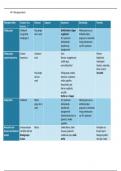
Melancholic features
A. 1 of the following during the most severe period of the current episode:
1. Loss of pleasure in all, or almost all, activities (anhedonia)
2. Lack of reactivity to usually pleasurable stimuli when something good happens
B. 3 (or more) of the following:
1. Depressed mood characterized by despondency, despair, and/or moroseness or
by empty-mood
2. Worse in the morning
3. Early-morning awakening
, 4. Psychomotor retardation or agitation
5. Significant anorexia or weight loss
6. Excessive or inappropriate guilt
Note
- Modest tendency to repeat across episodes
o More frequent in inpatients and older adults
o More likely to occur in those with psychotic features
o Less likely to occur in milder episodes
Psychotic features: Delusions and/or hallucinations are present with mood congruent
(guilt, disease, death etc.) or incongruent
Atypical features:
A. Mood reactivity (i.e., Brightens in response to positive events)
B. 2 (or more) of the following:
1. Weight gain or increase in appetite
2. Hypersomnia
3. Leaden paralysis
4. Pattern of interpersonal rejection sensitivity resulting in social/occupational
impairment
C. Criteria not met for “melancholic features” or “with catatonia”
Anxious distress:
A. At least 2 of the following:
1. Feeling keyed up or tense
2. Feeling usually restless
3. Difficulty concentrating
4. Fear that something awful may happen
5. Feeling that you may lose control
Mixed features:
A. At least 3 of the following:
1. Elevated, expansive mood
2. Inflated self-esteem or grandiosity
3. More talkative than usual or pressure to keep talking
4. Flight of ideas or subjective experience that thoughts are racing
5. Increase in energy or goal-directed activity
6. Increase or excessive involvement in activities that have a high potential for
painful consequences
7. Decreased need for sleep
B. Symptoms are observable and represent a change from the usual behaviour
C. For whom symptoms meet full criteria for either mania or hypomania, the diagnosis
should be bipolar I or bipolar II
D. Symptoms not attributable to the physiological effects of a substance
Catatonia features: Catatonia features present during most of the episode
Peripartum onset: Onset of mood symptoms occurs during pregnancy or in the 4
weeks after delivery
Seasonal pattern:
A. Regular temporal relationship between the onset of MDD and a time of the year
B. Full remissions also occur at a characteristic time of the year (usually spring/summer)
C. In the last 2 years, two MDD episodes have occurred during the same period
D. Seasonal MDD episodes substantially outnumber the non-seasonal ones
, Cognitive vulnerability-stress models of depression – Ambramson
Why some people are vulnerable to depression whereas other not? According to BOTH
theories, the meaning/interpretation that people give to their experiences influence
this
Hopelessness Theory Beck’s Theory
Inference Stable-global causes
s Future negative consequences
Negative self-characteristics
Event Negative cognitive Event Negative cognitive
style (inferences) schema/dysfunctional attitudes
Hopelessness Symptoms Cognitive distortions Negative
cognitive triad (yourself, world and
future) Symptoms
Moderato Social support, material,
rs emotional and informational
support
Depressed people inferences are Depressed people inferences are
negative negative and distorted
Similarities
- Role of cognition in the origins and maintenance of depression
- Cognitive vulnerability component moderating the effects of negative events on
depression
- Mediating sequence of negative inferences (hopelessness/negative cognitive
triad)
- Heterogeneity of depression
Differences
- Cognitive process (encoding, retrieval, attention)
- Cognitive products (cognitions about causes and consequences)
Hopelessness = Depressive & non cognition differ in content but not in process
Beck’s = Depressive & non cognition differ in content AND process
Cognitive theories explain the big facts of depression:
- Depression is recurrent
- Life events play a role in the development of depression
- Depression can be lethal (as increase the risk for suicide)
- Depression is a common disorder
- Depression peaks during middle to late adolescence
- There are gender differences where women show elevation in interpersonal
domain and negative cognitive styles (Abramson) while men on dysfunctional
attitudes (Becks)
- Depression is heterogenous with multiple causes
Assumptions of contemporary integrative interpersonal theory –
Hopwood
Contemporary integrative interpersonal theory (CIIT)
Personality and psychopathology manifest in interactions
with others
Psychopathology = Someone acts different than expected
o Agency (vs passivity) & communion (vs
dissociations)
o Levels = Motives, traits, behaviours
Motive = Be in control – Be close
Trait = Dominance – Nurturance
Behaviour = Directive – Friendly
A. 5 (or more) symptoms during the same 2-week period with at least one of the
symptoms either: (1) depressed mood and (2) loss of interest or pleasure in all, or
almost all, activity most of the day, nearly every day
3. Weight loss when not dieting or weight gain or decrease or increase in appetite
4. Insomnia or hypersomnia
5. Psychomotor retardation or agitation (observable)
6. Fatigue or loss of energy
7. Feeling of worthlessness or excessive or inappropriate guilt
8. Diminished ability to think or concentrate or indecisiveness
9. Recurrent thoughts of death or suicide ideation/attempt
B. Symptoms cause clinically significant distress or impairment in social, occupational,
or other important areas of functioning
C. Not attributable to physiological effects of a substance or medical condition
D. Not better explained by schizoaffective, schizophrenia, delusional disorder or other
specified/unspecified schizophrenia spectrum/other psychotic disorders
E. Never been a manic or hypomanic episode
Note
- Criteria A-C represent a major depressive episode
- Children & Adolescents
o Mood may be irritable rather than sad compared to older people
o Hypersomnia and hyperphagia more common
In older people more common psychomotor retardation
2. PERSISTENT DEPRESSIVE DISORDER (DYSTHYMIA)
A. Depressed mood for most of the days for at least 2 years
In children & adolescents irritable mood for at least 1 year
B. 2 (or more) of the following:
1. Poor appetite or overeating
2. Insomnia or hypersomnia
3. Low energy or fatigue
4. Low self-esteem
5. Poor concentration or difficulty making decisions
6. Feelings of hopelessness
C. The individual has never been without symptoms (Criteria A and B) for more than 2
months at a time
D. Criteria for a MDD may be continuously present for 2 years
E. Never been a manic or hypomanic episode and criteria have never been met for
cyclothymic disorder
F. Not better explained by schizophrenia, delusional disorder or other psychotic
disorders
G. Not attributable to physiological effects of a substance or medical condition
H. Symptoms cause clinically significant distress or impairment in social, occupational,
or other important areas of functioning
Note
- Higher risk of comorbidity, especially for anxiety and substance use disorder
- No loss of interest or recurrent thoughts of death in dysthymia
Both have the same specifiers - MDD only has with “catatonia” and “seasonal pattern”
Melancholic features
A. 1 of the following during the most severe period of the current episode:
1. Loss of pleasure in all, or almost all, activities (anhedonia)
2. Lack of reactivity to usually pleasurable stimuli when something good happens
B. 3 (or more) of the following:
1. Depressed mood characterized by despondency, despair, and/or moroseness or
by empty-mood
2. Worse in the morning
3. Early-morning awakening
, 4. Psychomotor retardation or agitation
5. Significant anorexia or weight loss
6. Excessive or inappropriate guilt
Note
- Modest tendency to repeat across episodes
o More frequent in inpatients and older adults
o More likely to occur in those with psychotic features
o Less likely to occur in milder episodes
Psychotic features: Delusions and/or hallucinations are present with mood congruent
(guilt, disease, death etc.) or incongruent
Atypical features:
A. Mood reactivity (i.e., Brightens in response to positive events)
B. 2 (or more) of the following:
1. Weight gain or increase in appetite
2. Hypersomnia
3. Leaden paralysis
4. Pattern of interpersonal rejection sensitivity resulting in social/occupational
impairment
C. Criteria not met for “melancholic features” or “with catatonia”
Anxious distress:
A. At least 2 of the following:
1. Feeling keyed up or tense
2. Feeling usually restless
3. Difficulty concentrating
4. Fear that something awful may happen
5. Feeling that you may lose control
Mixed features:
A. At least 3 of the following:
1. Elevated, expansive mood
2. Inflated self-esteem or grandiosity
3. More talkative than usual or pressure to keep talking
4. Flight of ideas or subjective experience that thoughts are racing
5. Increase in energy or goal-directed activity
6. Increase or excessive involvement in activities that have a high potential for
painful consequences
7. Decreased need for sleep
B. Symptoms are observable and represent a change from the usual behaviour
C. For whom symptoms meet full criteria for either mania or hypomania, the diagnosis
should be bipolar I or bipolar II
D. Symptoms not attributable to the physiological effects of a substance
Catatonia features: Catatonia features present during most of the episode
Peripartum onset: Onset of mood symptoms occurs during pregnancy or in the 4
weeks after delivery
Seasonal pattern:
A. Regular temporal relationship between the onset of MDD and a time of the year
B. Full remissions also occur at a characteristic time of the year (usually spring/summer)
C. In the last 2 years, two MDD episodes have occurred during the same period
D. Seasonal MDD episodes substantially outnumber the non-seasonal ones
, Cognitive vulnerability-stress models of depression – Ambramson
Why some people are vulnerable to depression whereas other not? According to BOTH
theories, the meaning/interpretation that people give to their experiences influence
this
Hopelessness Theory Beck’s Theory
Inference Stable-global causes
s Future negative consequences
Negative self-characteristics
Event Negative cognitive Event Negative cognitive
style (inferences) schema/dysfunctional attitudes
Hopelessness Symptoms Cognitive distortions Negative
cognitive triad (yourself, world and
future) Symptoms
Moderato Social support, material,
rs emotional and informational
support
Depressed people inferences are Depressed people inferences are
negative negative and distorted
Similarities
- Role of cognition in the origins and maintenance of depression
- Cognitive vulnerability component moderating the effects of negative events on
depression
- Mediating sequence of negative inferences (hopelessness/negative cognitive
triad)
- Heterogeneity of depression
Differences
- Cognitive process (encoding, retrieval, attention)
- Cognitive products (cognitions about causes and consequences)
Hopelessness = Depressive & non cognition differ in content but not in process
Beck’s = Depressive & non cognition differ in content AND process
Cognitive theories explain the big facts of depression:
- Depression is recurrent
- Life events play a role in the development of depression
- Depression can be lethal (as increase the risk for suicide)
- Depression is a common disorder
- Depression peaks during middle to late adolescence
- There are gender differences where women show elevation in interpersonal
domain and negative cognitive styles (Abramson) while men on dysfunctional
attitudes (Becks)
- Depression is heterogenous with multiple causes
Assumptions of contemporary integrative interpersonal theory –
Hopwood
Contemporary integrative interpersonal theory (CIIT)
Personality and psychopathology manifest in interactions
with others
Psychopathology = Someone acts different than expected
o Agency (vs passivity) & communion (vs
dissociations)
o Levels = Motives, traits, behaviours
Motive = Be in control – Be close
Trait = Dominance – Nurturance
Behaviour = Directive – Friendly