lOMoARcPSD|29110507
PSIH2724 Test 1. (2023)
Introduction to Health Psychology 16 (University of the Free State)
Scan to open on Studocu
Studocu is not sponsored or endorsed by any college or university
Downloaded by Andile Gcaba ()
, lOMoARcPSD|29110507
PSIH2724
Test 1
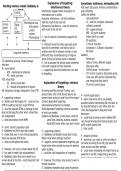
The General Adaptation Syndrome
By Han Selye (1986)
GAS is used to describe short-term and long-term reaction to stress.
We have three stages: Alarm reaction stage, Resistance stage and Exhaustion
stage.
Stage 1: Alarm Reaction stage
-Immediate reaction to a stressor.
-Human exhibit “fight or flight” response, to prepare the body for physical activity.
-It can cause decrease effectiveness in Immune system.
- Experience evaluated blood pressure and heart rate level.
Stage 2: Resistance Stage
-If stress continues, the body adapt the stress it exposed to.
-The body continue to mobilise its resources to deal with stress until its natural
resources begin to deplete.
Stage 3: Exhaustion stage
-The riskiest stage
-The body’s resources has depleted
-It is marked by body exhaustion and health problem.
Sense of Coherence (SOC)
Three factors that are influenced by our experience.
Comprehensibility- The degree in which we make cognitive sense of the stimuli we
perceive.
-The consistence and predictable our experience, the more it makes a stronger
sense.
Manageability- Our ability to access internal and external copy resources and use
them when we need them.
-The success we had on coping with demands, the stronger sense of manageability.
Meaningfulness- Our ability to emotionally to deal with demands and perceive them
as a challenge rather than burdens.
-The most important component according to Antovsky.
Downloaded by Andile Gcaba ()
PSIH2724 Test 1. (2023)
Introduction to Health Psychology 16 (University of the Free State)
Scan to open on Studocu
Studocu is not sponsored or endorsed by any college or university
Downloaded by Andile Gcaba ()
, lOMoARcPSD|29110507
PSIH2724
Test 1
The General Adaptation Syndrome
By Han Selye (1986)
GAS is used to describe short-term and long-term reaction to stress.
We have three stages: Alarm reaction stage, Resistance stage and Exhaustion
stage.
Stage 1: Alarm Reaction stage
-Immediate reaction to a stressor.
-Human exhibit “fight or flight” response, to prepare the body for physical activity.
-It can cause decrease effectiveness in Immune system.
- Experience evaluated blood pressure and heart rate level.
Stage 2: Resistance Stage
-If stress continues, the body adapt the stress it exposed to.
-The body continue to mobilise its resources to deal with stress until its natural
resources begin to deplete.
Stage 3: Exhaustion stage
-The riskiest stage
-The body’s resources has depleted
-It is marked by body exhaustion and health problem.
Sense of Coherence (SOC)
Three factors that are influenced by our experience.
Comprehensibility- The degree in which we make cognitive sense of the stimuli we
perceive.
-The consistence and predictable our experience, the more it makes a stronger
sense.
Manageability- Our ability to access internal and external copy resources and use
them when we need them.
-The success we had on coping with demands, the stronger sense of manageability.
Meaningfulness- Our ability to emotionally to deal with demands and perceive them
as a challenge rather than burdens.
-The most important component according to Antovsky.
Downloaded by Andile Gcaba ()