Assignment one
Principles of Research: Introducing research and the scientific process
Is psychology a science?
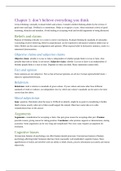
Science helps humans gain explanations and knowledge of the behaviours of the world around us. It
allows us to gain control and predict outcomes, with a systematic approach to understanding and
verifying knowledge. Scientists find their evidence/data through observation of the natural world,
experimenting in a laboratory and running a model. They may often merge different procedures to
gather their data [American Museum of Natural History (no date) The Scientific Method: 5 Steps for
Investigating Our World | AMNH]. Psychologists use their evidence and knowledge to help explain
how and why people think, feel, and behave in the ways they do. Just like other sciences, psychology
bases its evidence on research; using the systematic approach to do this also. Due to this, many
regard psychology as a science- especially due to the fact many of the theories approached are
testable. However, many others do not see psychology as a science due to the lack of physical being.
Deductive and Inductive reasoning to solve problem.
Deductive reasoning is when a psychologist starts with a general idea or hypothesis of what they
believe could be true and use evidence and examples to reach a conclusion in their study. It follows
a pathway of ‘theory- hypothesis- observation- confirmation.’ An example of this can be shown
through rugby teams. for example, your hypothesis could be that a rugby team plays well,
observation can be shown through evidence and examples of good plays, and confirmation shows
that they are a good team, through being top of the league. One strength of deductive reasoning is
that it is dependable. This is because if the original hypothesis is true, it is likely all evidence will
confirm this. However, a weakness of deductive reasoning is the fact it heavily relies on the
hypothesis being correct. [Streefkerk, Raimo. (2022). Inductive vs Deductive Reasoning | Difference
& Examples (scribbr.co.uk)] For example, a study may go into all neighbourhood dogs being violent.
This hypothesis is already incorrect- as many dogs have become accustomed to humans so are
friendly. This work makes any further evidence incorrect.
Inductive reasoning is when we create a theory based on an observation made. This is a common
way to conduct research on something that there is little information on, due to here being no
theory to test. It follows a pathway of ‘observation-pattern-hypothesis-theory'. An example of this
may be watching a rugby team play well in a rugby game (observation), then watching the rest of
their games (pattern) and realising they play well. You then device theory that the rugby team is
particularly good at the sport (theory and hypothesis). One strength of inductive reasoning is it
allows researchers to narrow down different probabilities by finding incorrect conclusions. It allows
researchers to find direction within their research, by narrowing down what answers are incorrect.
however, a weakness of inductive reasoning is that due to it being down to researchers' observation,
there may be bias in findings- so results may lack validity. [Jordan, James (2021).Advantages and
Disadvantages of Inductive Reasoning - The Classroom]
Scientific processes
Objectiveness is one scientific process that states that scientific knowledge should not be affected
bias or perspective- and what is left is equal to fact. [Reiss, Julian and Sprengar Jan. (2020). Scientific
Objectivity (Stanford Encyclopedia of Philosophy)] Objective research is contrasted from fiction and
propaganda, often defined as impartial, value-free, dependable, and real. [Resnik, D.B. (2001)
‘Objectivity of Research: Ethical Aspects’ pp. 10789-10793]. In theory, true objectivity would lead to
only the true answers, as everyone’s explanations would be the same due to lack of bias. one
strength of this form of research is that it gives us a fair and unbiased understanding of the topic,
Principles of Research: Introducing research and the scientific process
Is psychology a science?
Science helps humans gain explanations and knowledge of the behaviours of the world around us. It
allows us to gain control and predict outcomes, with a systematic approach to understanding and
verifying knowledge. Scientists find their evidence/data through observation of the natural world,
experimenting in a laboratory and running a model. They may often merge different procedures to
gather their data [American Museum of Natural History (no date) The Scientific Method: 5 Steps for
Investigating Our World | AMNH]. Psychologists use their evidence and knowledge to help explain
how and why people think, feel, and behave in the ways they do. Just like other sciences, psychology
bases its evidence on research; using the systematic approach to do this also. Due to this, many
regard psychology as a science- especially due to the fact many of the theories approached are
testable. However, many others do not see psychology as a science due to the lack of physical being.
Deductive and Inductive reasoning to solve problem.
Deductive reasoning is when a psychologist starts with a general idea or hypothesis of what they
believe could be true and use evidence and examples to reach a conclusion in their study. It follows
a pathway of ‘theory- hypothesis- observation- confirmation.’ An example of this can be shown
through rugby teams. for example, your hypothesis could be that a rugby team plays well,
observation can be shown through evidence and examples of good plays, and confirmation shows
that they are a good team, through being top of the league. One strength of deductive reasoning is
that it is dependable. This is because if the original hypothesis is true, it is likely all evidence will
confirm this. However, a weakness of deductive reasoning is the fact it heavily relies on the
hypothesis being correct. [Streefkerk, Raimo. (2022). Inductive vs Deductive Reasoning | Difference
& Examples (scribbr.co.uk)] For example, a study may go into all neighbourhood dogs being violent.
This hypothesis is already incorrect- as many dogs have become accustomed to humans so are
friendly. This work makes any further evidence incorrect.
Inductive reasoning is when we create a theory based on an observation made. This is a common
way to conduct research on something that there is little information on, due to here being no
theory to test. It follows a pathway of ‘observation-pattern-hypothesis-theory'. An example of this
may be watching a rugby team play well in a rugby game (observation), then watching the rest of
their games (pattern) and realising they play well. You then device theory that the rugby team is
particularly good at the sport (theory and hypothesis). One strength of inductive reasoning is it
allows researchers to narrow down different probabilities by finding incorrect conclusions. It allows
researchers to find direction within their research, by narrowing down what answers are incorrect.
however, a weakness of inductive reasoning is that due to it being down to researchers' observation,
there may be bias in findings- so results may lack validity. [Jordan, James (2021).Advantages and
Disadvantages of Inductive Reasoning - The Classroom]
Scientific processes
Objectiveness is one scientific process that states that scientific knowledge should not be affected
bias or perspective- and what is left is equal to fact. [Reiss, Julian and Sprengar Jan. (2020). Scientific
Objectivity (Stanford Encyclopedia of Philosophy)] Objective research is contrasted from fiction and
propaganda, often defined as impartial, value-free, dependable, and real. [Resnik, D.B. (2001)
‘Objectivity of Research: Ethical Aspects’ pp. 10789-10793]. In theory, true objectivity would lead to
only the true answers, as everyone’s explanations would be the same due to lack of bias. one
strength of this form of research is that it gives us a fair and unbiased understanding of the topic,