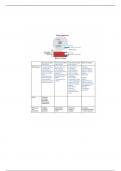
Fluid imbalance
Fluid volume deficit Fluid volume deficit Fluid volume excess Water intoxication
Dehydration Hypovolemia Hypervolemia
What happen? Loss of body fluid--- Isotonic fluid loss Excess fluid in Hypotonic
increased the from the ECF extracelluar extracellular fluid
concentration of Can progress to compartment as shifts into cells to
solutes in blood and hypovolemic shock result of fluid or attempt to restore
rise in serum Na+ Caused by: sodium retention, balance
levels. Excessive fluid loss excessive intake or Cells swell
Fluid shift out of Decreased fluid renal failure
cells into blood to intake Occurs when Caused:
restore balance Third space fluid compensatory fail to SIADH
Cells shrink and not shifting restore fluid balance Rapid infusion of
functiong properly Leads to CHF and hypotonic solution
pulmonary edema Excessive tap water
Causes: NG irrigation or
Heart failure, enemas
Cirrhosis Psychogenic
Kidney failure polydipsia
Excessive sodium
intake
At risk Confused
Comatose
Bedridden
infant/elderly
Enterally fed
What signs Irritability Mental status Tachypnea Increased
and Confusion deterioration Dyspnea intracranial pressure
symptoms? Dizziness Thirst Crackles ---early: change in
, What do you Weakness Tachycardia Hypertension LOC, N?V, muscle
see? Extreme thirst Delayed capillary Edema weakness, twitching,
Decrease urine refill Acute weight gain cramping
output Orthostatic excess of 5%
Fever hypotension Rapid, bounding ----Late: bradycardia,
Dry skin Urine pulse widen pulse
Sunken eyes output<30ml/hour S3 gallop pressure
Poor skin turgor Cool, pale Increased CVP, Seizures, coma
Tachycardia extremities pulmonary artery
Weight loss pressure and
pulmonary artery
wedge pressure
JVD
Nursing Fluid replacement--- Fluid replacement Edema: Prevention is the
intervention oral or IV over 48 Albumin Fluid and best treatment
hours replacement Na+restriction Assess neuro status
Monitor VS Blood transfusion Diuretics Monitor I&O and VS
Maintain I&O for haemorrhage Monitor VS Fluid restrictions
Maintain IV access Dopamine to Hourly I&O IV assess
Daily weight maintain BP Breath sounds Daily weights
Skin and mouth MAST trousers for Monitor ABG and Monitor serum Na+
care severe shock labs Seizure precautions
Assess for fluid Elevate HOB and
overload with give O2 as ordered
treatment Maintain IV access
Skin and mouth care
Daily weights
Electrolytes imbalance
Sodium: Normal range 135-145 mEq/L
Fluid volume deficit Fluid volume deficit Fluid volume excess Water intoxication
Dehydration Hypovolemia Hypervolemia
What happen? Loss of body fluid--- Isotonic fluid loss Excess fluid in Hypotonic
increased the from the ECF extracelluar extracellular fluid
concentration of Can progress to compartment as shifts into cells to
solutes in blood and hypovolemic shock result of fluid or attempt to restore
rise in serum Na+ Caused by: sodium retention, balance
levels. Excessive fluid loss excessive intake or Cells swell
Fluid shift out of Decreased fluid renal failure
cells into blood to intake Occurs when Caused:
restore balance Third space fluid compensatory fail to SIADH
Cells shrink and not shifting restore fluid balance Rapid infusion of
functiong properly Leads to CHF and hypotonic solution
pulmonary edema Excessive tap water
Causes: NG irrigation or
Heart failure, enemas
Cirrhosis Psychogenic
Kidney failure polydipsia
Excessive sodium
intake
At risk Confused
Comatose
Bedridden
infant/elderly
Enterally fed
What signs Irritability Mental status Tachypnea Increased
and Confusion deterioration Dyspnea intracranial pressure
symptoms? Dizziness Thirst Crackles ---early: change in
, What do you Weakness Tachycardia Hypertension LOC, N?V, muscle
see? Extreme thirst Delayed capillary Edema weakness, twitching,
Decrease urine refill Acute weight gain cramping
output Orthostatic excess of 5%
Fever hypotension Rapid, bounding ----Late: bradycardia,
Dry skin Urine pulse widen pulse
Sunken eyes output<30ml/hour S3 gallop pressure
Poor skin turgor Cool, pale Increased CVP, Seizures, coma
Tachycardia extremities pulmonary artery
Weight loss pressure and
pulmonary artery
wedge pressure
JVD
Nursing Fluid replacement--- Fluid replacement Edema: Prevention is the
intervention oral or IV over 48 Albumin Fluid and best treatment
hours replacement Na+restriction Assess neuro status
Monitor VS Blood transfusion Diuretics Monitor I&O and VS
Maintain I&O for haemorrhage Monitor VS Fluid restrictions
Maintain IV access Dopamine to Hourly I&O IV assess
Daily weight maintain BP Breath sounds Daily weights
Skin and mouth MAST trousers for Monitor ABG and Monitor serum Na+
care severe shock labs Seizure precautions
Assess for fluid Elevate HOB and
overload with give O2 as ordered
treatment Maintain IV access
Skin and mouth care
Daily weights
Electrolytes imbalance
Sodium: Normal range 135-145 mEq/L