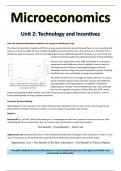
Unit 2: Technology and Incentives
How the Industrial Revolution enabled us to escape the Malthusian Trap
The Industrial Revolution marked a shift from energy sources like plant-based and wood fuels to coal, unlocking vast
reserves of stored sunlight but also introducing significant environmental costs. This period saw a transition from a
Malthusian agrarian economy, where technological gains were nullified by population growth, to a commercial and
industrial economy capable of sustained increases in living standards.
Nassau Senior's grim view of the 1848 Irish famine as a necessary
adjustment under Malthusian theory highlights the era's belief in
inevitable poverty. However, technological progress and non-
renewable resources began to outpace population growth, breaking
the Malthusian cycle and leading to rising living standards.
This shift is evident in the real wages of skilled craftsmen in London,
which remained stagnant until a dramatic increase post-1830 that
Figure 2.1: Real wages over seven centuries: wages of saw population and living standards rise together, marking the
craftsmen (skilled workers) in London (1264–2001), and
the population of Britain.
beginning of an "Escape" from the Malthusian trap. This continued
with the demographic transition in Britain from the 1870s, where
people would prefer smaller families, even when they earned enough to afford to have a lot of children, and this
trend spread globally as living standards improved.
Economic Decision-Making
What happens in the economy is the result of decisions by individuals, firms (or their owners and managers) and
governments, therefore economics models are used to explain how people make choices.
Model 1:
Net benefit (or ‘pay-off’) refers to the total gains or advantages derived from a particular action or decision, after
subtracting all the associated costs; thus, it measures the overall value or profit of that action.
Net Benefit = Total Benefit – Total Cost
Opportunity cost represents the value of the next best alternative that is foregone when a decision is made. It is the
cost of missing out on the benefits that could have been obtained by choosing the second-best option.
Opportunity Cost = Net Benefit of the Best Alternative - Net Benefit of Chosen Option
The option (whether that be you first choice of reserve option) that gives you the highest net benefit is the
economically sensible option.
, Model 2:
Economic cost is the explicit and implicit costs of an action (including monetary costs and costs of effort or time, for
example), plus the opportunity cost.
Economic Cost = Explicit Costs + Implicit Costs + Opportunity Cost
If the net benefit is greater than the economic cost then that choice makes economic sense.
Model 3:
Economic rent is the difference between the net benefit (monetary or otherwise) that an individual receives from a
chosen action, and the net benefit from the next best alternative. This advantage comes from the value or scarcity of
existing resources.
Economic Rent = Net Benefit of Option Taken – Opportunity Cost
If the option taken gives you economic rent, then it makes economic sense to make that choice.
Innovation rents are the profits in excess of the opportunity cost of capital that an individual or firm gets by
introducing a new technology, product, process or marketing strategy.
Innovation Rent = Profits from using the new technology – Profits if you continued with the
same technology as you competitors
Economic rents provide significant incentives for individuals and firms to take action within the economy. For
instance, the prospect of innovation rents can motivate firm owners to adopt new technologies. This concept is
crucial in understanding historical economic developments, such as the Industrial Revolution, where economic rents
influenced technological shifts.
Economics emphasizes the importance of alternatives and choices, underscoring how economic incentives—rewards
or penalties—affect decision-making. Individuals and firms assess the costs and benefits of different actions, typically
opting for the most profitable route. While material gain often drives decisions, non-economic motivations like
ethical considerations and social approval also play roles.
Relative Costs, the prices of goods or services compared to others, are key in shaping economic incentives. They
influence decisions ranging from hiring workers to consumer purchases. What matters is the price difference
between options rather than absolute price levels. For example, if supermarket prices are significantly lower than
those at a corner shop, shoppers will likely prefer the supermarket. This principle was evident during the Industrial
Revolution, where the relative cost of coal (for steam engines) to wages influenced the adoption of steam power.
In summary, economic rents and relative prices are central to understanding how incentives shape economic
behaviour and drive technological and industrial change.
The Comparative Advantage of Specialisation
In 1600, the global manufacturing centers for textiles and other non-agricultural goods were in Asia, but the
Industrial Revolution in Britain, followed by its spread to Europe and the US, shifted this dominance; by 1900, they
produced the majority of manufactured goods as they were able to specialize due to rapid technological
advancements that increased worker productivity. Meanwhile the rest of the world specialized in farming, where
technological progress was slower and populations remained in the Malthusian trap.
Why did this scenario come about?
Before the industrial revolution, items that you owned, such as crops, meat, clothing and tools, would have been
made by a family member or someone in your village which would have been bought or sold within a local market.
How the Industrial Revolution enabled us to escape the Malthusian Trap
The Industrial Revolution marked a shift from energy sources like plant-based and wood fuels to coal, unlocking vast
reserves of stored sunlight but also introducing significant environmental costs. This period saw a transition from a
Malthusian agrarian economy, where technological gains were nullified by population growth, to a commercial and
industrial economy capable of sustained increases in living standards.
Nassau Senior's grim view of the 1848 Irish famine as a necessary
adjustment under Malthusian theory highlights the era's belief in
inevitable poverty. However, technological progress and non-
renewable resources began to outpace population growth, breaking
the Malthusian cycle and leading to rising living standards.
This shift is evident in the real wages of skilled craftsmen in London,
which remained stagnant until a dramatic increase post-1830 that
Figure 2.1: Real wages over seven centuries: wages of saw population and living standards rise together, marking the
craftsmen (skilled workers) in London (1264–2001), and
the population of Britain.
beginning of an "Escape" from the Malthusian trap. This continued
with the demographic transition in Britain from the 1870s, where
people would prefer smaller families, even when they earned enough to afford to have a lot of children, and this
trend spread globally as living standards improved.
Economic Decision-Making
What happens in the economy is the result of decisions by individuals, firms (or their owners and managers) and
governments, therefore economics models are used to explain how people make choices.
Model 1:
Net benefit (or ‘pay-off’) refers to the total gains or advantages derived from a particular action or decision, after
subtracting all the associated costs; thus, it measures the overall value or profit of that action.
Net Benefit = Total Benefit – Total Cost
Opportunity cost represents the value of the next best alternative that is foregone when a decision is made. It is the
cost of missing out on the benefits that could have been obtained by choosing the second-best option.
Opportunity Cost = Net Benefit of the Best Alternative - Net Benefit of Chosen Option
The option (whether that be you first choice of reserve option) that gives you the highest net benefit is the
economically sensible option.
, Model 2:
Economic cost is the explicit and implicit costs of an action (including monetary costs and costs of effort or time, for
example), plus the opportunity cost.
Economic Cost = Explicit Costs + Implicit Costs + Opportunity Cost
If the net benefit is greater than the economic cost then that choice makes economic sense.
Model 3:
Economic rent is the difference between the net benefit (monetary or otherwise) that an individual receives from a
chosen action, and the net benefit from the next best alternative. This advantage comes from the value or scarcity of
existing resources.
Economic Rent = Net Benefit of Option Taken – Opportunity Cost
If the option taken gives you economic rent, then it makes economic sense to make that choice.
Innovation rents are the profits in excess of the opportunity cost of capital that an individual or firm gets by
introducing a new technology, product, process or marketing strategy.
Innovation Rent = Profits from using the new technology – Profits if you continued with the
same technology as you competitors
Economic rents provide significant incentives for individuals and firms to take action within the economy. For
instance, the prospect of innovation rents can motivate firm owners to adopt new technologies. This concept is
crucial in understanding historical economic developments, such as the Industrial Revolution, where economic rents
influenced technological shifts.
Economics emphasizes the importance of alternatives and choices, underscoring how economic incentives—rewards
or penalties—affect decision-making. Individuals and firms assess the costs and benefits of different actions, typically
opting for the most profitable route. While material gain often drives decisions, non-economic motivations like
ethical considerations and social approval also play roles.
Relative Costs, the prices of goods or services compared to others, are key in shaping economic incentives. They
influence decisions ranging from hiring workers to consumer purchases. What matters is the price difference
between options rather than absolute price levels. For example, if supermarket prices are significantly lower than
those at a corner shop, shoppers will likely prefer the supermarket. This principle was evident during the Industrial
Revolution, where the relative cost of coal (for steam engines) to wages influenced the adoption of steam power.
In summary, economic rents and relative prices are central to understanding how incentives shape economic
behaviour and drive technological and industrial change.
The Comparative Advantage of Specialisation
In 1600, the global manufacturing centers for textiles and other non-agricultural goods were in Asia, but the
Industrial Revolution in Britain, followed by its spread to Europe and the US, shifted this dominance; by 1900, they
produced the majority of manufactured goods as they were able to specialize due to rapid technological
advancements that increased worker productivity. Meanwhile the rest of the world specialized in farming, where
technological progress was slower and populations remained in the Malthusian trap.
Why did this scenario come about?
Before the industrial revolution, items that you owned, such as crops, meat, clothing and tools, would have been
made by a family member or someone in your village which would have been bought or sold within a local market.