

Neurosciences Lecture 5
Membrane Potential, Ion Channels and Transporters
Electrical signals in nerve cells
1. Receptor potential
2. Synaptic potential
3. Action potential
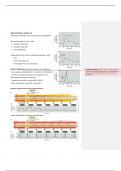
Requirements for electric signalling (between cells)
- Fast
- Over long distances
- No strength loss over distances
Passive signals (conductance decays over distance) Commented [JW(1]: Passive signals are produced by the
synapses. Only when the passive signal is strong enough, an
Active signals (conductance is constant over distance)
action potential will be produced (and this will be active
* active and passive signals are deviations from conduction)
the resting membrane potential.
* passive conduction travels BOTH WAYS,
Active conduction does NOT (one-way).
,Resting membrane potential = difference in electrical potential across the membrane Commented [JW(2]: Active and passive signals are
deviations from the resting membrane potential (important
during an inactive period (–60 mV). It is the combined electrochemical effect of different
property of neurons)
ions at different concentrations inside and outside the cell. For each ion, channels exist in
the membrane that selectively conduct that ion.
Intracellularly Extracellularly
Potassium (K+) Sodium (Na+)
Negatively charged protein ions Chlorine (Cl-)
When the neuron is at rest, most ion channels are closed. However, a few potassium
channels are open and potassium ions are therefore free to diffuse out of the cell in to the
extracellular space. If we consider only the potassium ions, we notice that the intracellular
concentration remains much higher than the extracellular concentration. This is because
the potassium ions are pulled by two different and opposing forces:
1. Diffusion force pulls the potassium ions down their concentration gradient out of the
cell → depletion of internal positive charges → potential becomes increasingly negative
2. Electrical force (produced by the attraction of positively charged potassium ions toward
the negative cell interior) generates an electrical gradient that pulls potassium back
into the cell
The diffusion and electrical forces eventually come into balance, and an electrical potential
is achieved at which the electrical gradient is exactly balanced by the diffusion gradient =
equilibrium potential for potassium (K+). At this electrochemical equilibrium, there is no Commented [JW(3]: Balance between the diffusion force
and electrical force = no net movement of potassium (K+)
net movement of potassium ions.
ions = electrochemical equilibrium = equilibrium potential =
reversal potential
Resting membrane potential is based on two membrane properties Commented [JW(4]: Resting membrane potentail: neuron
is at rest (NOT: the ions are not 'moving')
- Lipid bilayer is impermeable for ions (very good insulator)
- Specialised ion channels can selectively conduct ions
Goldman equation
(for monovalent ions – valence is either +1 or –1)
𝑃𝐾 [𝐾]𝑜𝑢𝑡 + 𝑃𝑁𝑎 [𝑁𝑎]𝑜𝑢𝑡 + 𝑃𝐶𝑙 [𝐶𝑙]𝑖𝑛
𝑉𝑚 = 58 × 𝑙𝑜𝑔
𝑃𝐾 [𝐾]𝑖𝑛 + 𝑃𝑁𝑎 [𝑁𝑎]𝑖𝑛 + 𝑃𝐶𝑙 [𝐶𝑙]𝑜𝑢𝑡
Px permeability of the membrane for ion X
Commented [JW(5]: The permeability at rest for
potassium channels (resting membrane potential: -58 mV) is
much higher than permeability for sodium and chloride
PK >> PNa PNa >> PK
Commented [JW(6]: The action potential changes the
𝑃𝐾 [𝐾]𝑜𝑢𝑡 𝑃𝑁𝑎 [𝑁𝑎]𝑜𝑢𝑡 membrane permeability drastically (permeability sodium
𝑉𝑚 ≈ 58 ⋅ 𝑙𝑜𝑔 = 𝐸𝐾 𝑉𝑚 ≈ 58 ⋅ 𝑙𝑜𝑔 = 𝐸𝑁𝑎
𝑃𝐾 [𝐾]𝑖𝑛 𝑃𝑁𝑎 [𝑁𝑎]𝑖𝑛 channels is much higher (116 mV) than permeability for
potassium)
, 𝑃𝑁𝑎 𝑃
[𝐾]𝑜𝑢𝑡 + [𝑁𝑎]𝑜𝑢𝑡 + 𝐶𝑙 [𝐶𝑙]𝑖𝑛
𝑃𝐾 𝑃𝐾
𝑉𝑚 = 58 × 𝑙𝑜𝑔
𝑃𝑁𝑎 𝑃𝐶𝑙
[𝐾]𝑖𝑛 + 𝑃 [𝑁𝑎]𝑖𝑛 + 𝑃 [𝐶𝑙]𝑜𝑢𝑡
𝐾 𝐾
PNa/PK permeability of Na+ relative to that of K+
PCl/PK permeability of Cl- relative to that of K+
Equilibrium potential = electrical potential at electrochemical equilibrium; the electrical
potential difference across the cell membrane that exactly balances the concentration
gradient of an ion.
Nernst equation Commented [JW(7]: EXAM
𝑅×𝑇 [𝑋]𝑜𝑢𝑡
𝐸𝑋 = × 𝑙𝑛
𝑧×𝐹 [𝑋]𝑖𝑛
Ex equilibrium potential (in mV) F Faraday constant = 96500 C mol-1
R gas constant = 8,31 J K -1 mol-1 [X]out concentration outside
T temperature in Kelvin [X]in concentration inside
z valence (electrical charge) of ion
Nernst equation at room temperature
58 [𝑋]𝑜𝑢𝑡
𝐸𝑋 = × 𝑙𝑜𝑔
𝑧 [𝑋]𝑖𝑛
Nernst equation = equation that relates the capacity of an ion to the take up one or more
electrons (reduction potential).
N.B. 𝑙𝑜𝑔10𝑋 = 𝑋
𝑙𝑜𝑔10 = 1
𝑙𝑜𝑔1 = 0
1
𝑙𝑜𝑔 = −1
10
Reversal potential = Nernst potential = membrane potential at which the direction of
ionic current reverses. There is no net flow of ions from one side of the membrane to the
other. For channels that are permeable to only a single type of ions, the reversal potential
is identical to the equilibrium potential of the ion (when there is no net movement of ions).
Membrane Potential, Ion Channels and Transporters
Electrical signals in nerve cells
1. Receptor potential
2. Synaptic potential
3. Action potential
Requirements for electric signalling (between cells)
- Fast
- Over long distances
- No strength loss over distances
Passive signals (conductance decays over distance) Commented [JW(1]: Passive signals are produced by the
synapses. Only when the passive signal is strong enough, an
Active signals (conductance is constant over distance)
action potential will be produced (and this will be active
* active and passive signals are deviations from conduction)
the resting membrane potential.
* passive conduction travels BOTH WAYS,
Active conduction does NOT (one-way).
,Resting membrane potential = difference in electrical potential across the membrane Commented [JW(2]: Active and passive signals are
deviations from the resting membrane potential (important
during an inactive period (–60 mV). It is the combined electrochemical effect of different
property of neurons)
ions at different concentrations inside and outside the cell. For each ion, channels exist in
the membrane that selectively conduct that ion.
Intracellularly Extracellularly
Potassium (K+) Sodium (Na+)
Negatively charged protein ions Chlorine (Cl-)
When the neuron is at rest, most ion channels are closed. However, a few potassium
channels are open and potassium ions are therefore free to diffuse out of the cell in to the
extracellular space. If we consider only the potassium ions, we notice that the intracellular
concentration remains much higher than the extracellular concentration. This is because
the potassium ions are pulled by two different and opposing forces:
1. Diffusion force pulls the potassium ions down their concentration gradient out of the
cell → depletion of internal positive charges → potential becomes increasingly negative
2. Electrical force (produced by the attraction of positively charged potassium ions toward
the negative cell interior) generates an electrical gradient that pulls potassium back
into the cell
The diffusion and electrical forces eventually come into balance, and an electrical potential
is achieved at which the electrical gradient is exactly balanced by the diffusion gradient =
equilibrium potential for potassium (K+). At this electrochemical equilibrium, there is no Commented [JW(3]: Balance between the diffusion force
and electrical force = no net movement of potassium (K+)
net movement of potassium ions.
ions = electrochemical equilibrium = equilibrium potential =
reversal potential
Resting membrane potential is based on two membrane properties Commented [JW(4]: Resting membrane potentail: neuron
is at rest (NOT: the ions are not 'moving')
- Lipid bilayer is impermeable for ions (very good insulator)
- Specialised ion channels can selectively conduct ions
Goldman equation
(for monovalent ions – valence is either +1 or –1)
𝑃𝐾 [𝐾]𝑜𝑢𝑡 + 𝑃𝑁𝑎 [𝑁𝑎]𝑜𝑢𝑡 + 𝑃𝐶𝑙 [𝐶𝑙]𝑖𝑛
𝑉𝑚 = 58 × 𝑙𝑜𝑔
𝑃𝐾 [𝐾]𝑖𝑛 + 𝑃𝑁𝑎 [𝑁𝑎]𝑖𝑛 + 𝑃𝐶𝑙 [𝐶𝑙]𝑜𝑢𝑡
Px permeability of the membrane for ion X
Commented [JW(5]: The permeability at rest for
potassium channels (resting membrane potential: -58 mV) is
much higher than permeability for sodium and chloride
PK >> PNa PNa >> PK
Commented [JW(6]: The action potential changes the
𝑃𝐾 [𝐾]𝑜𝑢𝑡 𝑃𝑁𝑎 [𝑁𝑎]𝑜𝑢𝑡 membrane permeability drastically (permeability sodium
𝑉𝑚 ≈ 58 ⋅ 𝑙𝑜𝑔 = 𝐸𝐾 𝑉𝑚 ≈ 58 ⋅ 𝑙𝑜𝑔 = 𝐸𝑁𝑎
𝑃𝐾 [𝐾]𝑖𝑛 𝑃𝑁𝑎 [𝑁𝑎]𝑖𝑛 channels is much higher (116 mV) than permeability for
potassium)
, 𝑃𝑁𝑎 𝑃
[𝐾]𝑜𝑢𝑡 + [𝑁𝑎]𝑜𝑢𝑡 + 𝐶𝑙 [𝐶𝑙]𝑖𝑛
𝑃𝐾 𝑃𝐾
𝑉𝑚 = 58 × 𝑙𝑜𝑔
𝑃𝑁𝑎 𝑃𝐶𝑙
[𝐾]𝑖𝑛 + 𝑃 [𝑁𝑎]𝑖𝑛 + 𝑃 [𝐶𝑙]𝑜𝑢𝑡
𝐾 𝐾
PNa/PK permeability of Na+ relative to that of K+
PCl/PK permeability of Cl- relative to that of K+
Equilibrium potential = electrical potential at electrochemical equilibrium; the electrical
potential difference across the cell membrane that exactly balances the concentration
gradient of an ion.
Nernst equation Commented [JW(7]: EXAM
𝑅×𝑇 [𝑋]𝑜𝑢𝑡
𝐸𝑋 = × 𝑙𝑛
𝑧×𝐹 [𝑋]𝑖𝑛
Ex equilibrium potential (in mV) F Faraday constant = 96500 C mol-1
R gas constant = 8,31 J K -1 mol-1 [X]out concentration outside
T temperature in Kelvin [X]in concentration inside
z valence (electrical charge) of ion
Nernst equation at room temperature
58 [𝑋]𝑜𝑢𝑡
𝐸𝑋 = × 𝑙𝑜𝑔
𝑧 [𝑋]𝑖𝑛
Nernst equation = equation that relates the capacity of an ion to the take up one or more
electrons (reduction potential).
N.B. 𝑙𝑜𝑔10𝑋 = 𝑋
𝑙𝑜𝑔10 = 1
𝑙𝑜𝑔1 = 0
1
𝑙𝑜𝑔 = −1
10
Reversal potential = Nernst potential = membrane potential at which the direction of
ionic current reverses. There is no net flow of ions from one side of the membrane to the
other. For channels that are permeable to only a single type of ions, the reversal potential
is identical to the equilibrium potential of the ion (when there is no net movement of ions).

