Lecture 6: Setting up Body Axes
Abbreviation Key:
Thursday, August 15, 2019 10:58 PM b/c = because
b/w = between
w/ = with
expt = experiment
• In-Vitro Fertilization (IVF) ex. = example
• IVF: test-tubed embryo (during morula-blastocyst stage) transfer into the uterus. Followed by…
• Preimplantation Genetic Diagnosis (PGD): 1 or 2 cells are removed from 4-8 cell stage embryo to put thru
a genetic test. Transplant those w/o a genetic defect back into the mother.
○ Able to happen b/c each blastomere is totipotent and highly regulative.
• Setting up Body Axes (Xenopus)
• The egg is radially symmetrical w/ Animal-Vegetal regions. (If looked at top, the embryo is 180 degree
identical.)
• Maternally-provided mRNAs are differentially localized along the AV axis in Xenopus.
○ They are signaling molecules that provide polarity and specify the main body axes.
• No zygotic transcription until mid-blastula transition (MBT). Everything first controlled by maternal
factors…^
• Vg-1: growth factor, member of the TGF-B family.
○ Maternally-expressed and localized to the vegetal cortex of the oocyte.
○ Translated AFTER fertilization.
○ Involved in mesoderm and endoderm induction.
• Xwnt-11: growth factor that is maternally-expressed and localized vegetally.
○ Plays a role in specifying the future dorsal side.
• Veg-t: maternally-expressed and localized vegetally.
○ TF regulating mesoderm and endoderm development.
○ Induces Xnr (nodal, a TFG family member) gene expression.
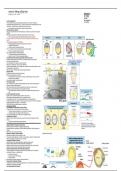
• Cortical Rotation and the Nieuwkoop Center (NKC): breaks the symmetry!
• Formation of the NKC depends on the rotation of the cortex (gel-like layer of actin filaments).
• The rotation breaks radial symmetry.
• The midline passes thru the sperm entry point and the NKC.
• NKC gives rise to blastopore.* Dorsal lip on top of blastopore.
• Rotation causes determinants to shift in vegetal cortex -> generates 2 halves that are different: one side
forms blastopore, the other does not.
• Direction of rotation is dictated by sperm entry point (opposite directions).
• Disruption of NKC
• Disrupting cortical rotation can lead to mutant embryos.
• Exposing 1-cell stage embryos to UV light ->
○ Disrupts formation of microtubule array -> Produces "ventralized embryos" which have excess
ventral blood-forming mesoderm.
• Lithium treatments produce "dorsalized embryos."
• The importance of NKC
• Expt 1, Results: the embryo half w/o the NKC developed abnormally. Produced a radially-symmetric
embryo w/o anterior or posterior structures.
• Expt 2, Results: When cells of the NKC are grafted onto the ventral side, 1 embryo now has 2
blastopores -> Conjoined twin embryos w/ 2 dorsal sides are produced.
○ CONCLUSION: signals from the NKC are required for both anterior AND posterior structures to
form.
• Dorsal Cell Specification by B-catenin
• B-catenin is one of the determinants that are shifted in cortical rotation.
• GSK-3/protease complex degrades B-catenin in the cytoplasm. So when…
• Frizzled receptor binds to Wnt -> activates Dishevelled (Dsh), which inactivates GSK-3. ->
• B-catenin accumulates in the cytoplasm, is able to enter the nucleus, binds to TF of PCF-3, and regulate
transcription (activates Siamois gene). -> Forms blastopore!
• CONCLUSION: Dsh acts to stabilize B-catenin in dorsal cells!
• Lithium directly inhibits GSK.
• Chick Blastoderm: the axes depend on gravity. (Chicken)
• The egg rotates thru the chicken's uterus as the embryo develops.
○ The rotation causes the blastoderm to tip in the direction of the rotation.
○ The uppermost region of the blastoderm marks the posterior. ->
• The primitive streak initiates from the this, posterior marginal zone (PMZ).
• Transplantation of PMZ cells
• PMZ cells are similar to NKC cells: they induce a new A/P axis (streak) if transplanted into another
embryo.
○ Typically the more advanced critical streak takes over.
• Cells that express Vg1, Wnt8c induce nodal expression, expressed in both the PMZ and primitive streak. Primitive streak: cannot elongate b/c
• Hypoblast inhibits the Formation of Primitive Streak Cerberus is bound to Nodal. Inhibits Nodal
• Protein required for streak formation is inhibited by hypoblast signals. expression and prevents cells from anterior
• Endoblasts cells begin to proliferate at the PMZ and displace hypoblast cells. Cerberus expression is movement.
blocked->
• PMZ is free to move and the streak is initiated.
• Mammalian vs Xenopus & Chick Development (XENOPUS STARTS HERE)
• Mammals' extra-embryonic structure is placenta, not yolk.
• No clear sign of polarity (difference in symmetry) in mammals' eggs, no evidence of localized maternal
factors, and zygotic gene transcription occurs at 1-cell stage.
• Constructing a Fate Map of an Embryo
• Inject MW dyes into each of 32-cell staged embryo. Observe final location of dye.
• Ectoderm: epidermis, epidermal derivatives (hair follicles, sweat glands), NS.
• Mesoderm: notochord, somites (muscle), lateral plate mesoderm (heart, kidney), vascular system.
• Endoderm: gut (lining of trachea, lungs, salivary glands, liver, pancreas).
• Spemann's Organizer Activity: Cell Fate and Induction (Xenopus)
• The donor organizer tissue (w/ dorsal lip) was able to induce a secondary axis on host embryo by
recruiting their host tissues. -> Organizer tissue!
○ Notochord is donor-derived.
○ Somites both donor- and host-derived.
○ NS are host-derived.
• Equivalent tissue to Organizer (xenopus) is Henson's Node (chick).
• Henson's Node Transplantation (Chicken)
• Transplantation of a node from head-forming stage embryo, into an equivalent chick embryo induces a
secondary axis, w/ head fold and everything.
• Cell Fate Specification Test (Xenopus)
Abbreviation Key:
Thursday, August 15, 2019 10:58 PM b/c = because
b/w = between
w/ = with
expt = experiment
• In-Vitro Fertilization (IVF) ex. = example
• IVF: test-tubed embryo (during morula-blastocyst stage) transfer into the uterus. Followed by…
• Preimplantation Genetic Diagnosis (PGD): 1 or 2 cells are removed from 4-8 cell stage embryo to put thru
a genetic test. Transplant those w/o a genetic defect back into the mother.
○ Able to happen b/c each blastomere is totipotent and highly regulative.
• Setting up Body Axes (Xenopus)
• The egg is radially symmetrical w/ Animal-Vegetal regions. (If looked at top, the embryo is 180 degree
identical.)
• Maternally-provided mRNAs are differentially localized along the AV axis in Xenopus.
○ They are signaling molecules that provide polarity and specify the main body axes.
• No zygotic transcription until mid-blastula transition (MBT). Everything first controlled by maternal
factors…^
• Vg-1: growth factor, member of the TGF-B family.
○ Maternally-expressed and localized to the vegetal cortex of the oocyte.
○ Translated AFTER fertilization.
○ Involved in mesoderm and endoderm induction.
• Xwnt-11: growth factor that is maternally-expressed and localized vegetally.
○ Plays a role in specifying the future dorsal side.
• Veg-t: maternally-expressed and localized vegetally.
○ TF regulating mesoderm and endoderm development.
○ Induces Xnr (nodal, a TFG family member) gene expression.
• Cortical Rotation and the Nieuwkoop Center (NKC): breaks the symmetry!
• Formation of the NKC depends on the rotation of the cortex (gel-like layer of actin filaments).
• The rotation breaks radial symmetry.
• The midline passes thru the sperm entry point and the NKC.
• NKC gives rise to blastopore.* Dorsal lip on top of blastopore.
• Rotation causes determinants to shift in vegetal cortex -> generates 2 halves that are different: one side
forms blastopore, the other does not.
• Direction of rotation is dictated by sperm entry point (opposite directions).
• Disruption of NKC
• Disrupting cortical rotation can lead to mutant embryos.
• Exposing 1-cell stage embryos to UV light ->
○ Disrupts formation of microtubule array -> Produces "ventralized embryos" which have excess
ventral blood-forming mesoderm.
• Lithium treatments produce "dorsalized embryos."
• The importance of NKC
• Expt 1, Results: the embryo half w/o the NKC developed abnormally. Produced a radially-symmetric
embryo w/o anterior or posterior structures.
• Expt 2, Results: When cells of the NKC are grafted onto the ventral side, 1 embryo now has 2
blastopores -> Conjoined twin embryos w/ 2 dorsal sides are produced.
○ CONCLUSION: signals from the NKC are required for both anterior AND posterior structures to
form.
• Dorsal Cell Specification by B-catenin
• B-catenin is one of the determinants that are shifted in cortical rotation.
• GSK-3/protease complex degrades B-catenin in the cytoplasm. So when…
• Frizzled receptor binds to Wnt -> activates Dishevelled (Dsh), which inactivates GSK-3. ->
• B-catenin accumulates in the cytoplasm, is able to enter the nucleus, binds to TF of PCF-3, and regulate
transcription (activates Siamois gene). -> Forms blastopore!
• CONCLUSION: Dsh acts to stabilize B-catenin in dorsal cells!
• Lithium directly inhibits GSK.
• Chick Blastoderm: the axes depend on gravity. (Chicken)
• The egg rotates thru the chicken's uterus as the embryo develops.
○ The rotation causes the blastoderm to tip in the direction of the rotation.
○ The uppermost region of the blastoderm marks the posterior. ->
• The primitive streak initiates from the this, posterior marginal zone (PMZ).
• Transplantation of PMZ cells
• PMZ cells are similar to NKC cells: they induce a new A/P axis (streak) if transplanted into another
embryo.
○ Typically the more advanced critical streak takes over.
• Cells that express Vg1, Wnt8c induce nodal expression, expressed in both the PMZ and primitive streak. Primitive streak: cannot elongate b/c
• Hypoblast inhibits the Formation of Primitive Streak Cerberus is bound to Nodal. Inhibits Nodal
• Protein required for streak formation is inhibited by hypoblast signals. expression and prevents cells from anterior
• Endoblasts cells begin to proliferate at the PMZ and displace hypoblast cells. Cerberus expression is movement.
blocked->
• PMZ is free to move and the streak is initiated.
• Mammalian vs Xenopus & Chick Development (XENOPUS STARTS HERE)
• Mammals' extra-embryonic structure is placenta, not yolk.
• No clear sign of polarity (difference in symmetry) in mammals' eggs, no evidence of localized maternal
factors, and zygotic gene transcription occurs at 1-cell stage.
• Constructing a Fate Map of an Embryo
• Inject MW dyes into each of 32-cell staged embryo. Observe final location of dye.
• Ectoderm: epidermis, epidermal derivatives (hair follicles, sweat glands), NS.
• Mesoderm: notochord, somites (muscle), lateral plate mesoderm (heart, kidney), vascular system.
• Endoderm: gut (lining of trachea, lungs, salivary glands, liver, pancreas).
• Spemann's Organizer Activity: Cell Fate and Induction (Xenopus)
• The donor organizer tissue (w/ dorsal lip) was able to induce a secondary axis on host embryo by
recruiting their host tissues. -> Organizer tissue!
○ Notochord is donor-derived.
○ Somites both donor- and host-derived.
○ NS are host-derived.
• Equivalent tissue to Organizer (xenopus) is Henson's Node (chick).
• Henson's Node Transplantation (Chicken)
• Transplantation of a node from head-forming stage embryo, into an equivalent chick embryo induces a
secondary axis, w/ head fold and everything.
• Cell Fate Specification Test (Xenopus)