Bookkeeping Terms & Knowledge Check
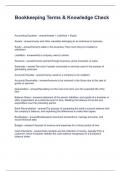
Accounting Equation - answerAssets = Liabilities + Equity
Assets - answermoney and other valuables belonging to an individual or business
Equity - answerOwner's stake in the business. How much they've invested or
withdrawn.
Liabilities - answerwhat a company owes to others
Revenue - answerIncome earned through business, gross proceeds, or sales
Expenses - answerThe cost of assets consumed or services used in the process of
generating revenues.
Accounts Payable - answermoney owed by a company to its creditors.
Accounts Receivable - answerAmounts to be received in the future due to the sale of
goods or services
Depreciation - answerSpreading out the cost of an item over the expected life of the
item
Balance Sheet - answera statement of the assets, liabilities, and capital of a business or
other organization at a particular point in time, detailing the balance of income and
expenditure over the preceding period.
Bank Reconciliation - answerThe process of comparing the bank's account balance with
the company's balance, and explaining the differences to make them agree.
Bookkeeper - answerBookkeepers document transactions, manage accounts, and
record financial data.
Budget - answerA forecast of revenue and expenses for a future period of time
Cash Payments - answerCash receipts are the collection of money, typically from a
customer, which increases (debits) the cash balance recognized on a business's
balance sheet.
, Cash Sales - answerCash sales refers to transactions where the customer pays for the
goods or services immediately with cash, check, or a credit or debit card.
Confidentiality - answerClients entrust bookkeepers with very sensitive financial
information, and a business owner must be able to trust that their bookkeeper will treat
their data with the utmost care
Conflict of Interest - answerWhen a person's individual interests raise a question about
their ability to act or make decisions or judgments objectively
Credits - answerA monetary instrument directing the financial institution to pay the
bearer a specified sum of money
Current Assets - answeritems that can or will be converted into cash within one year
Current Liabilities - answerliabilities due within a short time, usually within a year
Debits - answerAn increase in assets or expenses or a decrease in liabilities, owner's
equity, or revenue.
Financial Statements - answerFinancial statements refer to a set of reports that show
how a business is performing financially and all business activities related to running the
business.
Gross Profit - answerTotal revenue minus Cost of Goods Sold.
Honesty - answerOwning any mistakes and doing everything you can to fix them and
being open and transparent with your client about the state of their finance.
Invoice - answerAn invoice (sales invoice) is an itemized bill of goods sold or services
provided. Invoices usually carry terms to record credit sales. If a business purchases
supplies or raw materials from another business, they might refer to the invoice received
from the vendor or supplier as a "purchase invoice."
Objectivity - answerNever allowing another party to influence your findings or letting
personal bias get in the way of performing your duties.
Professionalism - answerBeing courteous and considerate, avoiding any activity that
could bring shame to the profession or client, and maintaining proper credentials and
skills
Profitability - answerMeasure of financial gain, what percentage of revenue is retained
as profit
Reconciliation - answerThe process of comparing transactions and activity to supporting
documentation.
Accounting Equation - answerAssets = Liabilities + Equity
Assets - answermoney and other valuables belonging to an individual or business
Equity - answerOwner's stake in the business. How much they've invested or
withdrawn.
Liabilities - answerwhat a company owes to others
Revenue - answerIncome earned through business, gross proceeds, or sales
Expenses - answerThe cost of assets consumed or services used in the process of
generating revenues.
Accounts Payable - answermoney owed by a company to its creditors.
Accounts Receivable - answerAmounts to be received in the future due to the sale of
goods or services
Depreciation - answerSpreading out the cost of an item over the expected life of the
item
Balance Sheet - answera statement of the assets, liabilities, and capital of a business or
other organization at a particular point in time, detailing the balance of income and
expenditure over the preceding period.
Bank Reconciliation - answerThe process of comparing the bank's account balance with
the company's balance, and explaining the differences to make them agree.
Bookkeeper - answerBookkeepers document transactions, manage accounts, and
record financial data.
Budget - answerA forecast of revenue and expenses for a future period of time
Cash Payments - answerCash receipts are the collection of money, typically from a
customer, which increases (debits) the cash balance recognized on a business's
balance sheet.
, Cash Sales - answerCash sales refers to transactions where the customer pays for the
goods or services immediately with cash, check, or a credit or debit card.
Confidentiality - answerClients entrust bookkeepers with very sensitive financial
information, and a business owner must be able to trust that their bookkeeper will treat
their data with the utmost care
Conflict of Interest - answerWhen a person's individual interests raise a question about
their ability to act or make decisions or judgments objectively
Credits - answerA monetary instrument directing the financial institution to pay the
bearer a specified sum of money
Current Assets - answeritems that can or will be converted into cash within one year
Current Liabilities - answerliabilities due within a short time, usually within a year
Debits - answerAn increase in assets or expenses or a decrease in liabilities, owner's
equity, or revenue.
Financial Statements - answerFinancial statements refer to a set of reports that show
how a business is performing financially and all business activities related to running the
business.
Gross Profit - answerTotal revenue minus Cost of Goods Sold.
Honesty - answerOwning any mistakes and doing everything you can to fix them and
being open and transparent with your client about the state of their finance.
Invoice - answerAn invoice (sales invoice) is an itemized bill of goods sold or services
provided. Invoices usually carry terms to record credit sales. If a business purchases
supplies or raw materials from another business, they might refer to the invoice received
from the vendor or supplier as a "purchase invoice."
Objectivity - answerNever allowing another party to influence your findings or letting
personal bias get in the way of performing your duties.
Professionalism - answerBeing courteous and considerate, avoiding any activity that
could bring shame to the profession or client, and maintaining proper credentials and
skills
Profitability - answerMeasure of financial gain, what percentage of revenue is retained
as profit
Reconciliation - answerThe process of comparing transactions and activity to supporting
documentation.