HORMONES IN PHOSPHO-CALCIUM METABOLISM:
(regulation of Calcemia)
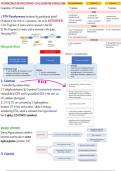
1. PTH Parathormone (produced by parathyroid gland)
Produced in the form of a precursor, has to be ACTIVATED:
1. Pre Fragment of amino acid is removed in the ER.
2. Pro Fragment of amino acid is removed in the golgi,
Activating PTH.
Biological effects:
2. Calcitonin ROLE
- Controlled by calcium levels. ✓
1. 7 dehydrocholesterol & Ergosterol Converted into vitamins
cholecalciferol (D3) and Ergocalciferol (D2) in the skin via
UV radiation (photolysis).
2. D3 & D2 are activated by 2 hydroxylations
(position 25 in liver and position 1 alpha in kidneys,
activated by PTH, which is activated from hypocalcemia)
Into 1 alpha, 25 (OH)2 calciferol.
REGULATIONS:
During Hypercalcemia calciferol
becomes inactive due to extra
hydroxylation (position 24).
3. Calcitriol
(regulation of Calcemia)
1. PTH Parathormone (produced by parathyroid gland)
Produced in the form of a precursor, has to be ACTIVATED:
1. Pre Fragment of amino acid is removed in the ER.
2. Pro Fragment of amino acid is removed in the golgi,
Activating PTH.
Biological effects:
2. Calcitonin ROLE
- Controlled by calcium levels. ✓
1. 7 dehydrocholesterol & Ergosterol Converted into vitamins
cholecalciferol (D3) and Ergocalciferol (D2) in the skin via
UV radiation (photolysis).
2. D3 & D2 are activated by 2 hydroxylations
(position 25 in liver and position 1 alpha in kidneys,
activated by PTH, which is activated from hypocalcemia)
Into 1 alpha, 25 (OH)2 calciferol.
REGULATIONS:
During Hypercalcemia calciferol
becomes inactive due to extra
hydroxylation (position 24).
3. Calcitriol