1. Cell biology notes
Cell structure27/6/20
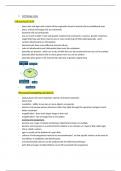
- plant cells and algal cells contain all the organelles found in animal cells and additional ones
- plant, animal and fungal cells are eukaryotic
- bacterial cells are prokaryotic
- pro are much smaller in size and genetic material not enclosed in a nucleus: genetic material a
single DNA loop and there may be one or more small rings of DNA called plasmids , don’t
contain mitochondria or chloroplasts
- bacterial cells have many different sizes but all pro
- roles of mitochondria and chloroplast taken over the cytoplasm
- plasmids are present , which are circles of DNA that can be transferred from one cell to another
- plasmids allow bacterial cells to move genes from one cell to another
- plasmids allow genes to be inserted into bacteria in genetic engineering
-
Microscopy/investigating cells 28/6/20
- typical plant cell 0.1mm diameter animal cell 0.02mm diameter
- know units
- resolution : ability to see two or more objects as separate
- electron microscope passes electrons rather than light through the specimen and gives much
better resolution
- magnification : how much larger image is than real
- magnification= size of image/size of real object
- growing microorganisms
- bacteria use a type of simple cell division called binary fission to multiply
- bacteria can be grown in a nutrient broth solution or as colonies on a type of jelly called agar
- this is called a culture
- agar is usually at the bottom of a petri dish
- cultures of microorganisms need to be uncontaminated , so that specific strains can be used to
test effects of antibiotics and disinfectants
- uncontaminated cultures can be produced by the following technique:
- petri dish and agar sterilised before use to kill unwanted microorganisms
, - inoculating loop is sterilised by passing it through a flame
- cooled inoculating loop is used to transfer bacteria to the agar
- lip of the petri dish must be quickly removed and replace when transferring bacteria and
secured with tape to stop it coming off ( otherwise microorganisms from the air may
contaminate the culture)
- dish is stored upside down to stop condensation dripping onto agar surface
- this procedure id called aseptic technique , ensured only required microorganisms are grown
- in industry higher temp used for rapid growth
-
Microscopy/investigating cells 20/7/20
- Bacteria use a type of simple cell division called binary fission
- Under enough nutrients and temp they can divide as quickly as every 20 minutes
- 2^x x= division phases
- Bacteria can be grown in a nutrient broth solution or as colonies on a type of jelly called Agar
- This is called a culture
- Agar is usually at the bottom of a flat disk called Petri dish
- Cultures of microorganisms need to be uncontaminated
- So specific strains can be used to test effects of antibiotics or disinfectants
- Uncontaminated cultures can be produced by the following sterile technique:
- Petri dishes and agar must be sterilised before to kill any unwanted microorganisms
- Inoculating loop is sterilised by passing it through a flame
- Cooled inoculating loop is used to transfer bacteria to the agar
- Lid of the Petri dish must be quickly removed and replaced when transferring bacteria and
secured with tape to stop it coming off , otherwise microorganisms from the air may
contaminate the culture
- Dish is stored upside down to stop condensation dripping onto agar surface
- This procedure is called aseptic technique and ensures only requires microorganisms are grown
- In schools and colleges, cultures should be incubated at a max temp of 25, this reduced the
likelihood of the growth of harmful bacteria
- In industry, higher temp used for more rapid growth
- Area of a colony of bacteria can be calculated by πr^2
cell division 21/7/20
- -nucleus of a cell contains chromosomes made of DNA
- Each chromosome carries hundreds of thousands of genes
- Different genes contain the code to made different proteins and so control development of
different characteristics
- In body cells, chromosomes are found in pairs, with one chromosome from each parent
- Different species have different numbers of pairs of chromosomes, humans have 23 pairs, dogs
have 39 pairs
Cell structure27/6/20
- plant cells and algal cells contain all the organelles found in animal cells and additional ones
- plant, animal and fungal cells are eukaryotic
- bacterial cells are prokaryotic
- pro are much smaller in size and genetic material not enclosed in a nucleus: genetic material a
single DNA loop and there may be one or more small rings of DNA called plasmids , don’t
contain mitochondria or chloroplasts
- bacterial cells have many different sizes but all pro
- roles of mitochondria and chloroplast taken over the cytoplasm
- plasmids are present , which are circles of DNA that can be transferred from one cell to another
- plasmids allow bacterial cells to move genes from one cell to another
- plasmids allow genes to be inserted into bacteria in genetic engineering
-
Microscopy/investigating cells 28/6/20
- typical plant cell 0.1mm diameter animal cell 0.02mm diameter
- know units
- resolution : ability to see two or more objects as separate
- electron microscope passes electrons rather than light through the specimen and gives much
better resolution
- magnification : how much larger image is than real
- magnification= size of image/size of real object
- growing microorganisms
- bacteria use a type of simple cell division called binary fission to multiply
- bacteria can be grown in a nutrient broth solution or as colonies on a type of jelly called agar
- this is called a culture
- agar is usually at the bottom of a petri dish
- cultures of microorganisms need to be uncontaminated , so that specific strains can be used to
test effects of antibiotics and disinfectants
- uncontaminated cultures can be produced by the following technique:
- petri dish and agar sterilised before use to kill unwanted microorganisms
, - inoculating loop is sterilised by passing it through a flame
- cooled inoculating loop is used to transfer bacteria to the agar
- lip of the petri dish must be quickly removed and replace when transferring bacteria and
secured with tape to stop it coming off ( otherwise microorganisms from the air may
contaminate the culture)
- dish is stored upside down to stop condensation dripping onto agar surface
- this procedure id called aseptic technique , ensured only required microorganisms are grown
- in industry higher temp used for rapid growth
-
Microscopy/investigating cells 20/7/20
- Bacteria use a type of simple cell division called binary fission
- Under enough nutrients and temp they can divide as quickly as every 20 minutes
- 2^x x= division phases
- Bacteria can be grown in a nutrient broth solution or as colonies on a type of jelly called Agar
- This is called a culture
- Agar is usually at the bottom of a flat disk called Petri dish
- Cultures of microorganisms need to be uncontaminated
- So specific strains can be used to test effects of antibiotics or disinfectants
- Uncontaminated cultures can be produced by the following sterile technique:
- Petri dishes and agar must be sterilised before to kill any unwanted microorganisms
- Inoculating loop is sterilised by passing it through a flame
- Cooled inoculating loop is used to transfer bacteria to the agar
- Lid of the Petri dish must be quickly removed and replaced when transferring bacteria and
secured with tape to stop it coming off , otherwise microorganisms from the air may
contaminate the culture
- Dish is stored upside down to stop condensation dripping onto agar surface
- This procedure is called aseptic technique and ensures only requires microorganisms are grown
- In schools and colleges, cultures should be incubated at a max temp of 25, this reduced the
likelihood of the growth of harmful bacteria
- In industry, higher temp used for more rapid growth
- Area of a colony of bacteria can be calculated by πr^2
cell division 21/7/20
- -nucleus of a cell contains chromosomes made of DNA
- Each chromosome carries hundreds of thousands of genes
- Different genes contain the code to made different proteins and so control development of
different characteristics
- In body cells, chromosomes are found in pairs, with one chromosome from each parent
- Different species have different numbers of pairs of chromosomes, humans have 23 pairs, dogs
have 39 pairs