HS 320 UNIT 1 Exam Questions And Detailed Correct Verified Answers.
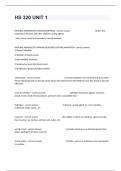
NATURAL NONSPECIFIC IMMUNE RESPONSE - correct answer - body's first response to bacteria and other disease-causing agents - skin, mucus, body fluid secretion, friendly bacteria NATURAL NONSPECIFIC IMMUNE RESPONSE FOR INFLAMMATION - correct answer 1) Injury/ Infection 2) dilation of blood vessels 3) permeability increases 4) Leukocytes leave the blood vessel 5) phagocytes destroy foreign material Chemotaxis - correct answer chemical mediators are released and draw white blood cells/leukocytes to the site of the injury (the white blood cells HAVE to leave the vessel to become effective) chain of infection - correct answer pathogen (infectious agent), reservoir, portal of exit, mode of transmission, portal of entry, susceptible host Pathogen - correct answer A disease causing agent. ex. virus, bacteria, rickettsiae, fungi, yeasts, etc. reservoir - correct answer the habitat in which an infectious agent normally lives or grows. ex. human, animals, soil, water, etc. portal of exit - correct answer any body opening on an infected person that allows pathogens to leave reservoir Transmission - correct answer Transfer, such as of a disease, from one person to another. direct transmission - correct answer Transmission of blood or body fluids through touching (including shaking hands), kissing, coughing, sneezing, and talking. indirect transmission - correct answer Transmission of blood or body fluids through contact with an intermediate contaminated object such as a razor, extractor, nipper, or an environmental surface, airborne portal of entry - correct answer a way for the causative agent to enter a new reservoir or host. breathing in, eating it, licking it, rubbing eyes, sex susceptible host - correct answer a person likely to get an infection or disease, usually because body defenses are weak fungi - correct answer Present in soil, air, or water. Thrive in warm, dark, moist environments Tinea Corporis (ringworm), Tinea Pedis (athlete's foot) Rickettsiae - correct answer Bacteria-like organisms transmitted through a vector like through the bites of fleas, lice, ticks mosquitoes, and mites Rocky Mountain Spotted Fever Parasites - correct answer - Protozoa Microscopic single-celled parasitic animals Release toxins/enzymes that destroy cells or interfere with function Malaria - Metazoa Multi-cellular parasitic animals (worms) Tapeworm, roundworms, flukes Lodge in various body parts - compete for the body's food Viruses - correct answer - Smallest disease causing agents seen with an electron microscope - Borrow cell's machinery to reproduce and burst out of cell or may stay in cell to synthesize new viruses without disturbing the cell - May coexist indefinitely in human peacefully - Outside factors may activate virus, leading to presence of actual disease. - Needs the cell to live Bacteria - correct answer Single-celled organism. Most are harmless, even beneficial. Classified by their shape. Chest Trauma - correct answer Penetrating wounds like knife, gunshot. Blunt-force trauma (car accident). Abdominopelvic Trauma - correct answer May cause hemorrhages of the internal organs including liver, spleen, pancreas, kidneys, stomach. Blood loss is a concern. Surgery is used to correct the injury. Neck and Spine Trauma - correct answer Fractures, dislocations, contusions, and compressions of the vertebral column. Could cause paralysis. Extremities Trauma - correct answer Sprains, strains, and fracture of arms or legs Other things besides pathogens & Injuries that cause diseases: - correct answer Extreme Heat and Cold Ionizing Radiation Extremes of Atmospheric Pressure Electric Shock Poisoning Near-drowning Bites of Insects, Spiders, and Snakes Asphyxiation Burns neoplasm - correct answer new growth benign - correct answer mild, not cancerous malignant - correct answer cancerous, can break off and spread throughout the body humoral immunity - correct answer specific immunity produced by B cells that produce antibodies that circulate in body fluids. binds to pathogens and mark them for destruction cell-mediated immunity - correct answer type of immunity produced by T cells that attack infected or abnormal body cells and attack foreign material acquire immunity - correct answer immunity developed by the body over a period of time active - correct answer body produces own antibodies passive - correct answer you are given antibodies natural - correct answer no medical intervention artificial - correct answer need the help of medical intervention active-natural - correct answer ex. naturally exposed to chickenpox and produce own antibodies active-artifical - correct answer vaccination passive natural - correct answer breastmilk and placenta passive artifical - correct answer given an injection or inoculation of antibodies allergy - correct answer overactive or misdirected immune system response, sensitivity to shock urticaria - correct answer allergic reaction of the skin characterized by the eruption of pale red or white, elevated patches called wheals or hives Anaphylaxis - correct answer a severe response to an allergen in which the symptoms develop quickly, and without help, the patient can die within a few minutes. pruritus - correct answer severe itching erythema - correct answer redness of the skin edema - correct answer soft tissue swelling stridor - correct answer strained, high-pitched sound heard on inspiration caused by obstruction in the pharynx or larynx Dyspnea - correct answer difficult or labored breathing acute pain - correct answer NOT about length of time. Acute is the normal expected amount of time for pain considering the specific injury. Sudden, onset pain chronic pain - correct answer pain that continues beyond the normal expected time for resolution nociceptive pain - correct answer tissue pain neuropathic pain - correct answer nerve pain angina - correct answer suffocating chest pain breakthrough pain - correct answer pain restarts or escalates after a previous injury has already been resolved malignant pain - correct answer cancer pain phantom pain - correct answer pain or discomfort felt in an amputated limb Psychogenetic Pain - correct answer stressed out assessing pain (acronym) - correct answer P-Place Point to the pain A- Amount Quantify the pain on a scale of 0-10 I- Interactions What worsens the pain? N- Neutralizers What lessens the pain?
Written for
- Institution
- HS 320
- Module
- HS 320
Document information
- Uploaded on
- July 23, 2024
- Number of pages
- 6
- Written in
- 2023/2024
- Type
- Exam (elaborations)
- Contains
- Questions & answers
Subjects

Also available in package deal