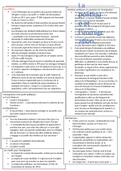
Gender 16 marker essay plans
Androgyny and BSRI
AO1: Androgyny = masculine and feminine characteristics e.g. masculine characteristics =
dominant, aggressive, and feminine characteristic = submissive, domestic, Sandra Bem
created scale that had 20 masculine traits, 20 feminine traits, and 20
androgynous/adaptable traits. Rates on the scale depended on how true the statements
were to the surveyor. Bem believed that those who are highly androgynous are more
psychologically healthy and have better mental health than those who are strongly
masculine or feminine.
AO3: BSRI scale is valid and reliable, traits outlined were based on what actual men and
women defined as masculine and feminine traits, so it was representative of real life, it was
piloted on 1000 students whose answers corresponded with the data collected, it has test
re-test reliability. It was created almost 40 years ago, so lacks temporal validity as what
would be assumed traditionally masculine and feminine has changed. It was developed in
USA so is not generalisable to all cultures as Mead’s study shows how gender stereotypes
differ across cultures. Self-report technique of collecting data allows for subjective data and
space for participants to have the need to be socially desirable. Androgyny was seen as
healthy back then, bias, and valued amongst people so participants may have adapted their
answers yet in modern society it is masculine traits that are prioritised e.g. assertiveness.
Discuss the role of chromosomes and hormones in sex and gender (2022)
AO1: Women = XX whilst men = XY, egg contains X chromosome and sperm contains Y or X
chromosome so determines gender. Y chromosome contains SRY gene which develops
testes and helps produce androgens (male sex hormone). Prenatal hormones develop
reproductive organs and during puberty higher levels of hormones are released which
creates secondary sexual characteristics. Men and women both produce the same
hormones but in different concentrations, so women produce more oestrogen and men
produce more testosterone. Testosterone controls the development of male sex organs
during foetal development and oestrogen controls female sexual characteristics and
menstruation. Women also release more oxytocin hormones than men especially during
labour and post-birth as it helps with lactation and decreasing cortisol.
AO3: Wang et al researched around 200 men with hypogonadal who underwent
testosterone hormone therapy for 180 days and monitored their mood, libido, and physical
changes. Found an increase in muscle strength, overall mood, and sexual activity. Shows
that testosterone exerts influence on sexual and physical development of men during
adulthood. Case study of Bruce who had a botched circumcision, so his parents learnt about
John Money’s theory of gender identity that environment influence was more important
than biological traits of gender and grew him up as Brenda. When Brenda learnt the truth,
he transitioned back to a man as he was never satisfied with his life as a woman. Worked
against John Money’s theory and instead shows how biological influence is more important
than socialisation in determining gender. However, the role of chromosomes and hormones
in sex and gender can be seen as reductionist as it ignores other factors such as cultural
, influences, social learning, and psychodynamic approach. Gender is much more complicated
than just the biological approach.
Atypical sex chromosome patterns
AO1: Klinefelter’s syndrome = when men have extra X chromosome so XXY leading to
reduced body hair, gynaecomastia, long limbs, underdeveloped genitals, reduced reading
and language abilities, shy nature, and disinterest in sex. Turner’s syndrome is when women
have one less X chromosome so XO leading to short, pre-pubescent appearance, often
infertile as ovaries do not develop, high reading capabilities, poor memory, poor spatial
awareness, and sexually immature.
AO3: Benefits of understanding Klinefelter’s and Turner’s is that it allows for identification at
an early stage which eases management of the disease and can allow for hormone therapy
to be introduced. Weaknesses of understanding the disorders is that it can impair a person’s
actual potential as if they know they have the disorder they may underestimate their
abilities. Only extreme cases of the disorders are understood so more research needs to be
done into the spectrum of the disorder. Many traits associated with the disorder could be
due to social influence and the treatment received by society rather than the actual
disorder for example, shy nature could be because of isolation rather than because of the
disease. Thus, the relationship between atypical chromosome patterns and the disorder is
not causal.
Describe and evaluate Kohlberg’s explanation for gender development (2019) (2017
specimen 1)
AO1: Kohlberg’s cognitive development explanation for gender development states that
understanding of gender becomes more sophisticated with age as a child biologically
develops and their cognitive abilities enhance so does their understanding of gender. There
are three stages to his theory: the gender identity stage is when a child identifies their own
gender as a girl or a boy but does not realise this is constant e.g. a boy may say he wants to
be a mum when he is older. The gender stability stage is when children know they will
remain the same gender for the rest of their lives but cannot apply this principle to others
e.g. calling a man with long hair a woman. They have not reached CONSERVATION (knowing
that although appearances change, properties remain the same). At the gender constancy
stage children can apply that everyone will remain the same gender. They also start to
develop gender stereotyping behaviour and identify themselves with same gender role
models to exhibit gender appropriate behaviour themselves.
AO3: There is research support for Kohlberg’s theory – Damon showed children a picture of
George playing with dolls and kids under the age of 4 said this was okay whilst kids 6 and
above disagreed with the behaviour. This support the stages of Kohlberg’s theory and how
when gender constancy is reached gender stereotyping is common. Slaby and Frey also
showed children pictures of women and men doing tasks and found younger children
focused on both genders whereas older children focused on the same gender role models.
This support Kohlberg’s assumption that children seek out same gender role models at
gender constancy stage. However a variation of Damon’s study showed children even under
the age of 4 showed gender stereotyping behaviour disputing Kohlberg’s theory that gender
constancy only happens at a certain age. Kohlberg’s theory also ignores other factors such
Androgyny and BSRI
AO1: Androgyny = masculine and feminine characteristics e.g. masculine characteristics =
dominant, aggressive, and feminine characteristic = submissive, domestic, Sandra Bem
created scale that had 20 masculine traits, 20 feminine traits, and 20
androgynous/adaptable traits. Rates on the scale depended on how true the statements
were to the surveyor. Bem believed that those who are highly androgynous are more
psychologically healthy and have better mental health than those who are strongly
masculine or feminine.
AO3: BSRI scale is valid and reliable, traits outlined were based on what actual men and
women defined as masculine and feminine traits, so it was representative of real life, it was
piloted on 1000 students whose answers corresponded with the data collected, it has test
re-test reliability. It was created almost 40 years ago, so lacks temporal validity as what
would be assumed traditionally masculine and feminine has changed. It was developed in
USA so is not generalisable to all cultures as Mead’s study shows how gender stereotypes
differ across cultures. Self-report technique of collecting data allows for subjective data and
space for participants to have the need to be socially desirable. Androgyny was seen as
healthy back then, bias, and valued amongst people so participants may have adapted their
answers yet in modern society it is masculine traits that are prioritised e.g. assertiveness.
Discuss the role of chromosomes and hormones in sex and gender (2022)
AO1: Women = XX whilst men = XY, egg contains X chromosome and sperm contains Y or X
chromosome so determines gender. Y chromosome contains SRY gene which develops
testes and helps produce androgens (male sex hormone). Prenatal hormones develop
reproductive organs and during puberty higher levels of hormones are released which
creates secondary sexual characteristics. Men and women both produce the same
hormones but in different concentrations, so women produce more oestrogen and men
produce more testosterone. Testosterone controls the development of male sex organs
during foetal development and oestrogen controls female sexual characteristics and
menstruation. Women also release more oxytocin hormones than men especially during
labour and post-birth as it helps with lactation and decreasing cortisol.
AO3: Wang et al researched around 200 men with hypogonadal who underwent
testosterone hormone therapy for 180 days and monitored their mood, libido, and physical
changes. Found an increase in muscle strength, overall mood, and sexual activity. Shows
that testosterone exerts influence on sexual and physical development of men during
adulthood. Case study of Bruce who had a botched circumcision, so his parents learnt about
John Money’s theory of gender identity that environment influence was more important
than biological traits of gender and grew him up as Brenda. When Brenda learnt the truth,
he transitioned back to a man as he was never satisfied with his life as a woman. Worked
against John Money’s theory and instead shows how biological influence is more important
than socialisation in determining gender. However, the role of chromosomes and hormones
in sex and gender can be seen as reductionist as it ignores other factors such as cultural
, influences, social learning, and psychodynamic approach. Gender is much more complicated
than just the biological approach.
Atypical sex chromosome patterns
AO1: Klinefelter’s syndrome = when men have extra X chromosome so XXY leading to
reduced body hair, gynaecomastia, long limbs, underdeveloped genitals, reduced reading
and language abilities, shy nature, and disinterest in sex. Turner’s syndrome is when women
have one less X chromosome so XO leading to short, pre-pubescent appearance, often
infertile as ovaries do not develop, high reading capabilities, poor memory, poor spatial
awareness, and sexually immature.
AO3: Benefits of understanding Klinefelter’s and Turner’s is that it allows for identification at
an early stage which eases management of the disease and can allow for hormone therapy
to be introduced. Weaknesses of understanding the disorders is that it can impair a person’s
actual potential as if they know they have the disorder they may underestimate their
abilities. Only extreme cases of the disorders are understood so more research needs to be
done into the spectrum of the disorder. Many traits associated with the disorder could be
due to social influence and the treatment received by society rather than the actual
disorder for example, shy nature could be because of isolation rather than because of the
disease. Thus, the relationship between atypical chromosome patterns and the disorder is
not causal.
Describe and evaluate Kohlberg’s explanation for gender development (2019) (2017
specimen 1)
AO1: Kohlberg’s cognitive development explanation for gender development states that
understanding of gender becomes more sophisticated with age as a child biologically
develops and their cognitive abilities enhance so does their understanding of gender. There
are three stages to his theory: the gender identity stage is when a child identifies their own
gender as a girl or a boy but does not realise this is constant e.g. a boy may say he wants to
be a mum when he is older. The gender stability stage is when children know they will
remain the same gender for the rest of their lives but cannot apply this principle to others
e.g. calling a man with long hair a woman. They have not reached CONSERVATION (knowing
that although appearances change, properties remain the same). At the gender constancy
stage children can apply that everyone will remain the same gender. They also start to
develop gender stereotyping behaviour and identify themselves with same gender role
models to exhibit gender appropriate behaviour themselves.
AO3: There is research support for Kohlberg’s theory – Damon showed children a picture of
George playing with dolls and kids under the age of 4 said this was okay whilst kids 6 and
above disagreed with the behaviour. This support the stages of Kohlberg’s theory and how
when gender constancy is reached gender stereotyping is common. Slaby and Frey also
showed children pictures of women and men doing tasks and found younger children
focused on both genders whereas older children focused on the same gender role models.
This support Kohlberg’s assumption that children seek out same gender role models at
gender constancy stage. However a variation of Damon’s study showed children even under
the age of 4 showed gender stereotyping behaviour disputing Kohlberg’s theory that gender
constancy only happens at a certain age. Kohlberg’s theory also ignores other factors such