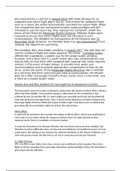
Ami entered into a contract in August 2017 with State Airways for an
outbound and return flight within the EU. She missed her outbound flight
and, as a result, the airline automatically cancelled her return flight. When
she complained that she had booked another outbound flight and still
intended to use the return leg, they rejected her complaint. Under the
terms of the (fictional) Passenger Rights Directive, Member States were
required to ensure that return flights were not cancelled in such
circumstances. The deadline for transposition of the Directive was 31
December 2016. However, her Member State has not implemented it and
national law requires no such thing.
Her husband, Ben, also made a booking in August 2017, but with Jetty Air
and his outbound flight was badly delayed. His airline – a private carrier –
offered him a sandwich, a plastic cup for the airport public drinking
fountain, and a basic bed in a youth hostel. Ben also complained but was
told by Jetty Air that their offer complied with national law, which requires
airlines, in the event of major delays, to provide food, water and
accommodation and to provide appropriate compensation if they do not
do so. Under the terms of the Passenger Rights Directive, Ben is entitled
to a full meal and drink and overnight hotel accommodation. He refused
Jetty Air’s offer and bought himself a three course meal, a Cola drink, and
a room at a nearby airport hotel.
Advise Ami and Ben whether EU law might be of assistance to them.
This discussion concerns a topic on Directive, particularly the actions of direct effect, indirect
effect and state liability. This question requires a discussion on the complaints or loss
suffered by Ami (A) and Ben (B): A’s return flight was cancelled and B was not provided full
meal and drink and overnight hotel. Thus, A and B will be advised to consider relying on the
Passenger Rights Directive (PRD) which gives A better right since there was no national law
governing this area and better rights for B than the national law.
Direct effect
A and B will be advised to first consider the option of direct effect, which was established in
Van Gend en Loos which allows EU citizens to enforce their EU rights directly at their
national courts. This is to establish a Common Market.
In order for Directives to be directly effective, the Van Gend criteria must be satisfied: the
Directive must be sufficiently clear, precise and unconditional. Unconditional means it is not
subjected to the takings of any measure by national institution or the MS per Wolkerei; and
clear and precise means the Directive is set out in unequivocal terms per Marshall.
A v State Airways:
OTF, the PRD is most likely to be clear, precise and conditional, which requires the return
flight to not be cancelled if the passenger missed her outbound flight. Hence, the Directive is
prima facie directly effective.
outbound and return flight within the EU. She missed her outbound flight
and, as a result, the airline automatically cancelled her return flight. When
she complained that she had booked another outbound flight and still
intended to use the return leg, they rejected her complaint. Under the
terms of the (fictional) Passenger Rights Directive, Member States were
required to ensure that return flights were not cancelled in such
circumstances. The deadline for transposition of the Directive was 31
December 2016. However, her Member State has not implemented it and
national law requires no such thing.
Her husband, Ben, also made a booking in August 2017, but with Jetty Air
and his outbound flight was badly delayed. His airline – a private carrier –
offered him a sandwich, a plastic cup for the airport public drinking
fountain, and a basic bed in a youth hostel. Ben also complained but was
told by Jetty Air that their offer complied with national law, which requires
airlines, in the event of major delays, to provide food, water and
accommodation and to provide appropriate compensation if they do not
do so. Under the terms of the Passenger Rights Directive, Ben is entitled
to a full meal and drink and overnight hotel accommodation. He refused
Jetty Air’s offer and bought himself a three course meal, a Cola drink, and
a room at a nearby airport hotel.
Advise Ami and Ben whether EU law might be of assistance to them.
This discussion concerns a topic on Directive, particularly the actions of direct effect, indirect
effect and state liability. This question requires a discussion on the complaints or loss
suffered by Ami (A) and Ben (B): A’s return flight was cancelled and B was not provided full
meal and drink and overnight hotel. Thus, A and B will be advised to consider relying on the
Passenger Rights Directive (PRD) which gives A better right since there was no national law
governing this area and better rights for B than the national law.
Direct effect
A and B will be advised to first consider the option of direct effect, which was established in
Van Gend en Loos which allows EU citizens to enforce their EU rights directly at their
national courts. This is to establish a Common Market.
In order for Directives to be directly effective, the Van Gend criteria must be satisfied: the
Directive must be sufficiently clear, precise and unconditional. Unconditional means it is not
subjected to the takings of any measure by national institution or the MS per Wolkerei; and
clear and precise means the Directive is set out in unequivocal terms per Marshall.
A v State Airways:
OTF, the PRD is most likely to be clear, precise and conditional, which requires the return
flight to not be cancelled if the passenger missed her outbound flight. Hence, the Directive is
prima facie directly effective.