
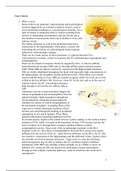
Case 4 stress
1. What is stress
- Stress refers to an organism’s physiological and psychological
reaction triggered by an external or internal stressor, such as
an environmental condition or a psychological stimulus. It is a
state of mental or emotional strain or tension resulting from
adverse or demanding circumstances and can last for just a
few minutes to hours (acute stress) up to months or even years
(chronic stress).
- The limbic structures as well as the prefrontal cortex have
connections to the hypothalamus which plays a crucial role
concerning the activation of a physiological stress response
induced by endocrinologic changes
- There are two main classes of stress hormones: (1) glucocorticoids (GCs;
corticosterone in rodents, cortisol in humans) and (2) catecholamines (epinephrine and
norepinephrine)
- There are two kinds of receptors which are targeted by GCs: (1) the low-affinity
mineralocorticoid receptor (MR) and (2) the high-affinity glucocorticoid receptor
(GR). While MRs are almost exclusively expressed in the hippocampal formation,
GRs are widely distributed throughout the brain with especially high concentrations in
the hippocampus, the amygdala, and the prefrontal cortex. When there is no current
stressor and the body is at rest, MRs are usually occupied, while GC levels are too low
to bind to the low-affinity GRs. However, when GC levels rise, such as in the case of
(chronic) stress, the GC concentration becomes
high enough to activate the low affinity GRs as
well.
- Autonomic nervous system activation triggers the
release of epinephrine and norepinephrine from the
adrenal medulla. Higher peripheral epinephrine
levels induced by emotional arousal indirectly
stimulate the release of central norepinephrine in
the basolateral amygdala. Ascending fibres of the
vagus nerve contain adrenergic receptors, which
become activated through the binding of peripheral
epinephrine in rats and in humans. These fibres
transmit information regarding heightened activity
in visceral sensory organs to the central nervous system, namely, to the nucleus tractus
solitarius (NTS), which is located in the brainstem. In turn, NTS neurons activate the
locus coeruleus (LC) through direct synapses and thus influence central
norepinephrine activity. Since most of the noradrenergic terminals in the BLA
originate in the LC, the release of norepinephrine from the BLA seems to be mainly
influenced by the activity of the LC. Apart from its influence on the BLA, the LC also
has extensive connections to the hippocampus and the prefrontal cortex, regions which
are critically involved in memory processes. Vagus nerve to come into the brain.
- adult neurogenesis may be able to enhance the GC-mediated negative feedback
mechanism of the HPA axis and thus could eventually act as a buffer to stress. In
addition, GCs acting on GRs can result in the modulation of gene transcription
through several complex molecular pathways, some of which are also involved in
neurogenesis
1
, 2. How does your brain react to stress?
Article Wolf
- Stress leads to an enhanced activity of the hypothalamus–pituitary adrenal (HPA) axis
resulting in an increased release of glucocorticoids from the adrenal cortex. These
hormones influence target systems in the periphery as well as in the brain. The present
review paper describes the impact of the human stress hormone cortisol on episodic
longterm memory. Starting out with our early observation that stress as well as cortisol
treatment impaired declarative memory, experiments by the author are described,
which result in an enhanced understanding of how cortisol influences memory. The
main conclusions are that stress or cortisol treatment temporarily blocks memory
retrieval. The effect is stronger for emotional arousing material independent of its
valence. In addition cortisol only influences memory when a certain amount of testing
induced arousal occurs. A functional magnetic resonance imaging (fMRI) study
suggests that the neuronal correlate of the cortisol induced retrieval blockade is a
reduced activity of the hippocampus. In contrast to the effects on retrieval cortisol
enhances memory consolidation. Again this effect is often stronger for emotionally
arousing material and sometimes occurs at the cost of memory for neutral material. A
fMRI study revealed that higher cortisol levels were associated with a stronger
amygdala response to emotional stimuli. Thus stimulatory effects of cortisol on this
structure might underlie the cortisol induced enhancement of emotional memory
consolidation. The findings presented are in line with models derived from
experiments in rodents and are of relevance for our understanding of stress associated
psychiatric disorders
- a more pronounced cortisol response was associated with poorer declarative memory.
cortisol led to impairments in verbal and spatial declarative memory, while having no
effect on procedural (implicit) memory. stress induced cortisol increase was associated
with poorer memory retrieval of items learned before stress exposure. Cortisone
impaired delayed memory retrieval, while having no strong effect on encoding or
consolidation. cortisol can impair retrieval of material, which has been learned rather
recently (a little more than 1 h ago). In addition this effect occurs in young and older
subjects to a similar degree. psychosocial stress induced cortisol elevations block
memory retrieval.
- No support for the state dependent hypothesis and indicates that GCs block memory
retrieval independent of the hormonal state during the initial encoding of the learning
material.
- on average cortisol significantly impaired memory retrieval with the size of the effect
being medium. In contrast cortisol treatment before encoding on average had no
significant effect. cortisol treatment in the morning was associated with a significant
impairment in memory, while cortisol treatment in the afternoon was associated with
enhanced memory. This supports both phase dependent and circadian dependent
effects of cortisol on memory.
- cortisol impaired delayed free memory retrieval. Most interestingly cortisol
significantly impaired retrieval of negative words; while in contrast it had only a
2
1. What is stress
- Stress refers to an organism’s physiological and psychological
reaction triggered by an external or internal stressor, such as
an environmental condition or a psychological stimulus. It is a
state of mental or emotional strain or tension resulting from
adverse or demanding circumstances and can last for just a
few minutes to hours (acute stress) up to months or even years
(chronic stress).
- The limbic structures as well as the prefrontal cortex have
connections to the hypothalamus which plays a crucial role
concerning the activation of a physiological stress response
induced by endocrinologic changes
- There are two main classes of stress hormones: (1) glucocorticoids (GCs;
corticosterone in rodents, cortisol in humans) and (2) catecholamines (epinephrine and
norepinephrine)
- There are two kinds of receptors which are targeted by GCs: (1) the low-affinity
mineralocorticoid receptor (MR) and (2) the high-affinity glucocorticoid receptor
(GR). While MRs are almost exclusively expressed in the hippocampal formation,
GRs are widely distributed throughout the brain with especially high concentrations in
the hippocampus, the amygdala, and the prefrontal cortex. When there is no current
stressor and the body is at rest, MRs are usually occupied, while GC levels are too low
to bind to the low-affinity GRs. However, when GC levels rise, such as in the case of
(chronic) stress, the GC concentration becomes
high enough to activate the low affinity GRs as
well.
- Autonomic nervous system activation triggers the
release of epinephrine and norepinephrine from the
adrenal medulla. Higher peripheral epinephrine
levels induced by emotional arousal indirectly
stimulate the release of central norepinephrine in
the basolateral amygdala. Ascending fibres of the
vagus nerve contain adrenergic receptors, which
become activated through the binding of peripheral
epinephrine in rats and in humans. These fibres
transmit information regarding heightened activity
in visceral sensory organs to the central nervous system, namely, to the nucleus tractus
solitarius (NTS), which is located in the brainstem. In turn, NTS neurons activate the
locus coeruleus (LC) through direct synapses and thus influence central
norepinephrine activity. Since most of the noradrenergic terminals in the BLA
originate in the LC, the release of norepinephrine from the BLA seems to be mainly
influenced by the activity of the LC. Apart from its influence on the BLA, the LC also
has extensive connections to the hippocampus and the prefrontal cortex, regions which
are critically involved in memory processes. Vagus nerve to come into the brain.
- adult neurogenesis may be able to enhance the GC-mediated negative feedback
mechanism of the HPA axis and thus could eventually act as a buffer to stress. In
addition, GCs acting on GRs can result in the modulation of gene transcription
through several complex molecular pathways, some of which are also involved in
neurogenesis
1
, 2. How does your brain react to stress?
Article Wolf
- Stress leads to an enhanced activity of the hypothalamus–pituitary adrenal (HPA) axis
resulting in an increased release of glucocorticoids from the adrenal cortex. These
hormones influence target systems in the periphery as well as in the brain. The present
review paper describes the impact of the human stress hormone cortisol on episodic
longterm memory. Starting out with our early observation that stress as well as cortisol
treatment impaired declarative memory, experiments by the author are described,
which result in an enhanced understanding of how cortisol influences memory. The
main conclusions are that stress or cortisol treatment temporarily blocks memory
retrieval. The effect is stronger for emotional arousing material independent of its
valence. In addition cortisol only influences memory when a certain amount of testing
induced arousal occurs. A functional magnetic resonance imaging (fMRI) study
suggests that the neuronal correlate of the cortisol induced retrieval blockade is a
reduced activity of the hippocampus. In contrast to the effects on retrieval cortisol
enhances memory consolidation. Again this effect is often stronger for emotionally
arousing material and sometimes occurs at the cost of memory for neutral material. A
fMRI study revealed that higher cortisol levels were associated with a stronger
amygdala response to emotional stimuli. Thus stimulatory effects of cortisol on this
structure might underlie the cortisol induced enhancement of emotional memory
consolidation. The findings presented are in line with models derived from
experiments in rodents and are of relevance for our understanding of stress associated
psychiatric disorders
- a more pronounced cortisol response was associated with poorer declarative memory.
cortisol led to impairments in verbal and spatial declarative memory, while having no
effect on procedural (implicit) memory. stress induced cortisol increase was associated
with poorer memory retrieval of items learned before stress exposure. Cortisone
impaired delayed memory retrieval, while having no strong effect on encoding or
consolidation. cortisol can impair retrieval of material, which has been learned rather
recently (a little more than 1 h ago). In addition this effect occurs in young and older
subjects to a similar degree. psychosocial stress induced cortisol elevations block
memory retrieval.
- No support for the state dependent hypothesis and indicates that GCs block memory
retrieval independent of the hormonal state during the initial encoding of the learning
material.
- on average cortisol significantly impaired memory retrieval with the size of the effect
being medium. In contrast cortisol treatment before encoding on average had no
significant effect. cortisol treatment in the morning was associated with a significant
impairment in memory, while cortisol treatment in the afternoon was associated with
enhanced memory. This supports both phase dependent and circadian dependent
effects of cortisol on memory.
- cortisol impaired delayed free memory retrieval. Most interestingly cortisol
significantly impaired retrieval of negative words; while in contrast it had only a
2


