COHEN - Freedom & Money
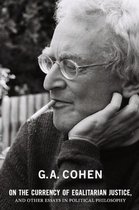
G. A. Cohen, “Freedom and Money” in G. A. Cohen, On the Currency of Egalitarian
Justice, and Other Essays in Political Philosophy, (Princeton, NJ: Princeton
University Press, 2011), pp.166-89. (23 pp)
a. What is Cohen’s principal contention in “Freedom and Money”?
Supplement and contradicts Berlin’s et Rawls’ views (see question c. to elaborate if needed)
→ Main contention: “Poverty carries with it lack of freedom”.
- According to Cohen, lack of money is not the only circumstance that restricts a
person’s freedom, but it is one of the most important.
- He states that “economic freedom” (i.e., as the freedom to buy/sell goods and
services in a market economy) is not a fundamental right, but a right depending on
the prior distribution of economic resources.
- Therefore, if economic resources are distributed unequally, the economic freedom of
the wealthy will outweigh and come at the expense of the economic freedom of the
less fortunate.
- Non-poor intellectuals refuse to acknowledge that lack of money = lack of freedom.
This refusal would stem from an unconscious willingness to reduce the guilt they feel
when confronted with less-fortunate ppl.
b. Why does the Left think that poor people are only formally free? What is the Right’s
response to that view?
Left’s view: “Poor people are only formally free”
- Their explanation:
- Poor people are formally free to exercise their freedom in a sense that they
are not really free to do so
- Practically, there are a lot of things poor ppl are deprived of because of their
lack of money
- Therefore: economic freedom requires a certain level of economic equality in
order to be meaningful.
- According to the left, it is the duty of the State to rectify this lack of freedom by
setting the ground for a certain economic equality between citizens.
Right’s view: Economic freedom is a fundamental right that should be protected even in the
face of economic inequality. In other words, poor people still have economic freedom, they
are just not able to exercise it..
Propose 2 movements:
- Conceptual: economic freedom is compromised by other ppl, not by lack
of means. Therefore, as money is a means → lacking money is lacking
means SO lacking money is not lacking freedom.
- Normative: the government’s primary task is to protect citizens’ freedoms. As relief of
poverty is NOT one of the primary tasks of the gov, lacking money is not lacking
freedom.
1
G. A. Cohen, “Freedom and Money” in G. A. Cohen, On the Currency of Egalitarian
Justice, and Other Essays in Political Philosophy, (Princeton, NJ: Princeton
University Press, 2011), pp.166-89. (23 pp)
a. What is Cohen’s principal contention in “Freedom and Money”?
Supplement and contradicts Berlin’s et Rawls’ views (see question c. to elaborate if needed)
→ Main contention: “Poverty carries with it lack of freedom”.
- According to Cohen, lack of money is not the only circumstance that restricts a
person’s freedom, but it is one of the most important.
- He states that “economic freedom” (i.e., as the freedom to buy/sell goods and
services in a market economy) is not a fundamental right, but a right depending on
the prior distribution of economic resources.
- Therefore, if economic resources are distributed unequally, the economic freedom of
the wealthy will outweigh and come at the expense of the economic freedom of the
less fortunate.
- Non-poor intellectuals refuse to acknowledge that lack of money = lack of freedom.
This refusal would stem from an unconscious willingness to reduce the guilt they feel
when confronted with less-fortunate ppl.
b. Why does the Left think that poor people are only formally free? What is the Right’s
response to that view?
Left’s view: “Poor people are only formally free”
- Their explanation:
- Poor people are formally free to exercise their freedom in a sense that they
are not really free to do so
- Practically, there are a lot of things poor ppl are deprived of because of their
lack of money
- Therefore: economic freedom requires a certain level of economic equality in
order to be meaningful.
- According to the left, it is the duty of the State to rectify this lack of freedom by
setting the ground for a certain economic equality between citizens.
Right’s view: Economic freedom is a fundamental right that should be protected even in the
face of economic inequality. In other words, poor people still have economic freedom, they
are just not able to exercise it..
Propose 2 movements:
- Conceptual: economic freedom is compromised by other ppl, not by lack
of means. Therefore, as money is a means → lacking money is lacking
means SO lacking money is not lacking freedom.
- Normative: the government’s primary task is to protect citizens’ freedoms. As relief of
poverty is NOT one of the primary tasks of the gov, lacking money is not lacking
freedom.
1