Titration Revision AS
·
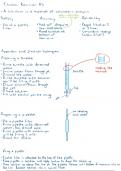
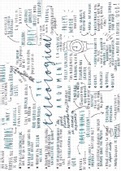
A titration is a method of volumetric analysis.
when indicator
Reliability
colour changes
Safety Accuracy
·
Use of a
pipette
·
Add solf dropwise ·
Repeat titration 2
filler near end point or 3 times
Read burette at Concordant
readings
·
bottom of (within 0 1cm2
.
meniscus .
Apparatus and practical techniques
Preparing a burette :
E -
· E the
water
burette
reading
meniscus
you'll be
filling it with /
E
the jet tap
pr
,
·
Discard solution n.
o-
·
Fill with solution
using
are
you
&
jet
Preparing a
pipette :
-
lineindicatinote
·
Use a filler
pipette -
·
Rinse pipette with deionised
water then discard water .
I
·
Rinse pipette with solution you
will be it with
filling
·
Discard this solution .
Using a
pipette :
hopethe solution
· Yom of meniscus it in
, Diluting a solution : line
indicating
exact
·
Pipette
solution into
volumetric flask
25cm3 of
a
.
original
clean
volume
&
·
Add deionised water to the
flask until the water is
just
below the line
.
Using disposable pipette add
·
a
deionised water
very slowly
until the bottom of meniscus is
-
on the line
.
·
Stopper the flask and invert
to mix
thoroughly .
See Clashcards for solution from of solid/volume
preparing a a mass
of a
liquid
.
Remember Idm" = I litre
-
Carrying out a titration :
First titration should be and overshoot
(by than 1(m3)
rough an no more
Next titrations should be concordant (within 0 1cm2) .
of each other .
Standard solutions are used.
S
↑ solution for which the concentration is accurately known .
Indicators :
Phenolphthalein Methyl
-
orange
In acid = colourless In acid = red
In alkali In
=
pink alkali-yellow
Used for Used for
If alkali is
strong bases
strong acids
If alkali is in the burette
in the burette : :
Colourless -
> Pink Red >
-
Yellow
If acid is in the burette : If acid is in the burette :
Pink >
-
colourless Yellow -
> Red
END OF AS REVISION
·
A titration is a method of volumetric analysis.
when indicator
Reliability
colour changes
Safety Accuracy
·
Use of a
pipette
·
Add solf dropwise ·
Repeat titration 2
filler near end point or 3 times
Read burette at Concordant
readings
·
bottom of (within 0 1cm2
.
meniscus .
Apparatus and practical techniques
Preparing a burette :
E -
· E the
water
burette
reading
meniscus
you'll be
filling it with /
E
the jet tap
pr
,
·
Discard solution n.
o-
·
Fill with solution
using
are
you
&
jet
Preparing a
pipette :
-
lineindicatinote
·
Use a filler
pipette -
·
Rinse pipette with deionised
water then discard water .
I
·
Rinse pipette with solution you
will be it with
filling
·
Discard this solution .
Using a
pipette :
hopethe solution
· Yom of meniscus it in
, Diluting a solution : line
indicating
exact
·
Pipette
solution into
volumetric flask
25cm3 of
a
.
original
clean
volume
&
·
Add deionised water to the
flask until the water is
just
below the line
.
Using disposable pipette add
·
a
deionised water
very slowly
until the bottom of meniscus is
-
on the line
.
·
Stopper the flask and invert
to mix
thoroughly .
See Clashcards for solution from of solid/volume
preparing a a mass
of a
liquid
.
Remember Idm" = I litre
-
Carrying out a titration :
First titration should be and overshoot
(by than 1(m3)
rough an no more
Next titrations should be concordant (within 0 1cm2) .
of each other .
Standard solutions are used.
S
↑ solution for which the concentration is accurately known .
Indicators :
Phenolphthalein Methyl
-
orange
In acid = colourless In acid = red
In alkali In
=
pink alkali-yellow
Used for Used for
If alkali is
strong bases
strong acids
If alkali is in the burette
in the burette : :
Colourless -
> Pink Red >
-
Yellow
If acid is in the burette : If acid is in the burette :
Pink >
-
colourless Yellow -
> Red
END OF AS REVISION