Economics Ch 6
Ch 6 – Elasticity
6.1 Introduction
We use demand and supply curve to:
- Explain a number of economic phenomena (how the price of x is determined)
- Predict what will happen if an economic variable changes
- Analyse the effects of policy decisions
We have concentrated on analysing the direction of change when supply or demand changes. We should also
be interested in the magnitude of the change. We want to know by how much the quantity demanded and
the quantity supplied will change in response to changes in price.
A General Definition Of Elasticity
Elasticity is a measure of responsiveness or sensitivity. When two variables are related, one often wants to
know how sensitive or responsive the first is to changes in the second.
How responsive is investment spending to changes in the interest rate? How responsive is the quantity of
labour supplied to changes in the wage rate?
Technical definition = Percentage change in a dependent variable (the one that is effected) if the
relevant independent variable (the one that causes the change) changes by one percent.
Elasticity = % change in dependent variable / % change in independent variable
4 types of elasticity:
- Price elasticity of demand
- Income elasticity of demand
- Cross elasticity of demand
- Price elasticity of supply
6.2 Price elasticity of demand
Market demand curve is expressed as: Qd = f(Px, Pg, Y, T, N, …) OR Qd = f(Px)ceteris paribus
Price elasticity of demand is concerned w the sensitivity of the quality demanded(dependent variable) to
change in the price of the product (independent variable). The price of elasticity of demand is the
percentage change in the quantity demanded if the price of the product changes by one per cent,
ceteris paribus.
Ep = % change in quantity demanded of product / % change in the price of product
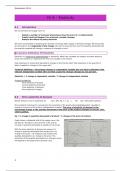
Graph shows a rightward shift of the supply curve, this
will lead to decrease in price from P1 to P2, and an
increase in quantity demanded at equilibrium Q1 to Q2.
With the price elasticity of demand we measure %
change in quantity demanded that results from a %
change in the price – we measure how sensitive the
quantity demanded is to change in the price. The
sensitivity of the quantity demanded to a change in price
will depend on the slope of the demand curve.
1
, Economics Ch 6
The price elasticity of demand is very important for businesses.
- If they decrease the price of a g/s, they know the quantity demanded will tend to increase (law of
demand).
- If the firms are rational they will want to maximise profit, and the change in the quantity demanded
and sold will directly influence their revenue and this their profit.
Some important aspects and implications of the definition of price elasticity of demand must be emphasised:
- Elasticity is calculated by using % changes, which are relative changes, not absolute changes. If we
use percentage changes, the units in which prices and quantities are measured do not affect the result
- Elasticity coefficients enable us to compare how consumers react to changes in the prices of
different goods and services. We cannot compare a change in the absolute quantity of matches
demanded w a change in the number of cars demanded.
- The measured price of elasticity of demand has a negative sign.
o Since the change in the price of a product and the change in the quantity demanded move in
opposite directions. When the price increases, the quantity demanded falls, and when the
price falls, the quantity demanded increases.
o We ignore the negative sign and concentrate on the absolute value.
o When we say that the price elasticity of the demand for tomatoes is 0.5, we mean that a one
per cent increase in the price of tomatoes will lead to a 0.5 per cent decrease in the quantity
demanded (or that a one per cent decrease in the price of tomatoes will lead to a 0.5 per cent
increase in the quantity demanded).
CALCULATING PRICE ELASTICITY OF DEMAND
To calculate the price elasticity of demand, we must calculate the percentage change in the quantity
demanded and divide it by the percentage change in the price of the product. If we denote the
quantity demanded by Q, and the change in quantity demanded by Q, the price of the product by P, and
elasticity of demand as the change in price by P, we can calculate the price elasticity of demand as:
Point Elasticity Formula – used to calculate the price elasticity of demand if the price changes are relatively
small. Note that the change of quantity divided by change in price is the inverse of the slope of the demand curve,
ΔQ P
Ep= ×
∆P Q
Arc Elasticity Formula – Large fluctuations in the price
( Q2−Q 1)/(Q 1+Q 2)
Ep=
(P 2−P1)/(P 1+ P 2)
PRICE ELASTICITY OF DEMAND AND TOTAL REVENUE / TOTAL EXPENDITURE
The price elasticity of demand can be used to determine by how much the total expenditure of
consumers on a product (which is also the total revenue of the firms producing that product) changes
when the price of the product changes.
The total revenue (TR) accruing to the suppliers of a g/s is equal to the price (P) of the g/s multiplied by the
quantity sold (Q). There is an inverse relationship between the quantity demanded and the price of the product.
Any change in price leads to a change in the quantity demanded in the opposite direction to the change in
price.
- If the change in price P leads to a proportional greater change in quantity demanded Q (if the price
elasticity of demand is greater than one), total revenue TR (= PQ) will change in the opposite direction
to the price change.
- If the change in price leads to an equi-proportion change in the quantity demanded (ie if the price
elasticity of demand is equal to one), total revenue will remain unchanged.
- If the change in price leads to a proportional smaller change in the quantity demanded (ie if the price
elasticity of demand is smaller than one), total revenue will change in the same direction as the price
change.
Important things to note:
2
Ch 6 – Elasticity
6.1 Introduction
We use demand and supply curve to:
- Explain a number of economic phenomena (how the price of x is determined)
- Predict what will happen if an economic variable changes
- Analyse the effects of policy decisions
We have concentrated on analysing the direction of change when supply or demand changes. We should also
be interested in the magnitude of the change. We want to know by how much the quantity demanded and
the quantity supplied will change in response to changes in price.
A General Definition Of Elasticity
Elasticity is a measure of responsiveness or sensitivity. When two variables are related, one often wants to
know how sensitive or responsive the first is to changes in the second.
How responsive is investment spending to changes in the interest rate? How responsive is the quantity of
labour supplied to changes in the wage rate?
Technical definition = Percentage change in a dependent variable (the one that is effected) if the
relevant independent variable (the one that causes the change) changes by one percent.
Elasticity = % change in dependent variable / % change in independent variable
4 types of elasticity:
- Price elasticity of demand
- Income elasticity of demand
- Cross elasticity of demand
- Price elasticity of supply
6.2 Price elasticity of demand
Market demand curve is expressed as: Qd = f(Px, Pg, Y, T, N, …) OR Qd = f(Px)ceteris paribus
Price elasticity of demand is concerned w the sensitivity of the quality demanded(dependent variable) to
change in the price of the product (independent variable). The price of elasticity of demand is the
percentage change in the quantity demanded if the price of the product changes by one per cent,
ceteris paribus.
Ep = % change in quantity demanded of product / % change in the price of product
Graph shows a rightward shift of the supply curve, this
will lead to decrease in price from P1 to P2, and an
increase in quantity demanded at equilibrium Q1 to Q2.
With the price elasticity of demand we measure %
change in quantity demanded that results from a %
change in the price – we measure how sensitive the
quantity demanded is to change in the price. The
sensitivity of the quantity demanded to a change in price
will depend on the slope of the demand curve.
1
, Economics Ch 6
The price elasticity of demand is very important for businesses.
- If they decrease the price of a g/s, they know the quantity demanded will tend to increase (law of
demand).
- If the firms are rational they will want to maximise profit, and the change in the quantity demanded
and sold will directly influence their revenue and this their profit.
Some important aspects and implications of the definition of price elasticity of demand must be emphasised:
- Elasticity is calculated by using % changes, which are relative changes, not absolute changes. If we
use percentage changes, the units in which prices and quantities are measured do not affect the result
- Elasticity coefficients enable us to compare how consumers react to changes in the prices of
different goods and services. We cannot compare a change in the absolute quantity of matches
demanded w a change in the number of cars demanded.
- The measured price of elasticity of demand has a negative sign.
o Since the change in the price of a product and the change in the quantity demanded move in
opposite directions. When the price increases, the quantity demanded falls, and when the
price falls, the quantity demanded increases.
o We ignore the negative sign and concentrate on the absolute value.
o When we say that the price elasticity of the demand for tomatoes is 0.5, we mean that a one
per cent increase in the price of tomatoes will lead to a 0.5 per cent decrease in the quantity
demanded (or that a one per cent decrease in the price of tomatoes will lead to a 0.5 per cent
increase in the quantity demanded).
CALCULATING PRICE ELASTICITY OF DEMAND
To calculate the price elasticity of demand, we must calculate the percentage change in the quantity
demanded and divide it by the percentage change in the price of the product. If we denote the
quantity demanded by Q, and the change in quantity demanded by Q, the price of the product by P, and
elasticity of demand as the change in price by P, we can calculate the price elasticity of demand as:
Point Elasticity Formula – used to calculate the price elasticity of demand if the price changes are relatively
small. Note that the change of quantity divided by change in price is the inverse of the slope of the demand curve,
ΔQ P
Ep= ×
∆P Q
Arc Elasticity Formula – Large fluctuations in the price
( Q2−Q 1)/(Q 1+Q 2)
Ep=
(P 2−P1)/(P 1+ P 2)
PRICE ELASTICITY OF DEMAND AND TOTAL REVENUE / TOTAL EXPENDITURE
The price elasticity of demand can be used to determine by how much the total expenditure of
consumers on a product (which is also the total revenue of the firms producing that product) changes
when the price of the product changes.
The total revenue (TR) accruing to the suppliers of a g/s is equal to the price (P) of the g/s multiplied by the
quantity sold (Q). There is an inverse relationship between the quantity demanded and the price of the product.
Any change in price leads to a change in the quantity demanded in the opposite direction to the change in
price.
- If the change in price P leads to a proportional greater change in quantity demanded Q (if the price
elasticity of demand is greater than one), total revenue TR (= PQ) will change in the opposite direction
to the price change.
- If the change in price leads to an equi-proportion change in the quantity demanded (ie if the price
elasticity of demand is equal to one), total revenue will remain unchanged.
- If the change in price leads to a proportional smaller change in the quantity demanded (ie if the price
elasticity of demand is smaller than one), total revenue will change in the same direction as the price
change.
Important things to note:
2