INTRODUCTION TO GENERAL MANAGEMENT
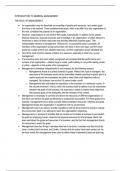
THE ROLE OF MANAGEMENT
• An organisation may be described as consisting of people and resources, and certain goals
that have to be reached. These predetermined goals, which may differ from one organisation to
the next, constitute the purpose of an organisation.
• However, organisations do not achieve their goals automatically. In addition to the people,
physical resources, financial resources and knowledge in an organisation, a further element is
necessary to direct all these resources and activities effectively towards goals. That
indispensable element is management. Without this, no purposeful action is possible. All
members of the organisation would pursue their own ends in their own ways, and the result
would be a waste of time and valuable resources, and the organisation would ultimately fail.
• One of the most common causes of failure in a business, especially a small one, is poor
management.
• It is becoming more and more widely recognized and accepted that the performance and
success of an organisation - whether large or small, profit-making or non-profit-making private
or public - depends on the quality of its management.
• Management is therefore indispensable to any business for the following reasons:
o Management directs a business towards its goals. Without the input of managers, the
resources of the business would not be channelled towards reaching its goals, and in a
market economy few businesses are able to reach their profit objectives without
managers. No business can survive if it cannot make a profit
o Management sets and keeps the operations of the business on a balanced course. In
the microenvironment - that is, within the business itself-a balance must be maintained
between the goals of the business, the resources it needs to realise those objectives,
the personal goals of the employees and the interests of the owners.
• Management is necessary to combine and direct the resources of different organisations so
that each can achieve its goals as efficiently or productively as possible. For these goals to be
reached, management has to strike a proper balance between resources, interests and goals.
Management keeps the organisation in equilibrium with its environment.
• Management may try to achieve a better equilibrium with the environment by trying to change
the environment itself, in an attempt to reach the organisation's objectives.
• Management is a process of activities that are carried out to enable a business to accomplish
its goals by employing human, financial and physical resources for that purpose. Much has
been said about the goals and resources of a business, and the fact that management directs
the resources to reach the goals.
• Management does four things: it decides what has to be done; it decides how this should be
done; it orders that it be done; and, finally, it checks that its orders have been carried out. As
we have noted, the management terms used to define these fundamental tasks are planning,
, organising, leading and control. These are the basic tasks of a manager
• The following brief description of the fundamental management functions elucidates the
concept of management and the management process:
o Planning determines the mission and goals of the business, including the ways in
which the goals are to be reached in the long term, and the resources needed for this
task. It includes determining the future position of the business, and guidelines or plans
on how that position is to be reached.
o Organising is the second step in the management process. After goals and plans have
been determined, the human, financial and physical resources of the business have to
be allocated by management to the relevant departments or persons, duties must be
defined, and procedures fixed, to enable the business to reach its goals.
• Organising therefore includes developing a framework or organisational structure to indicate
how people, equipment and materials should be employed to reach the predetermined goals.
Because the goals and resources of different businesses differ greatly, it makes sense that
each must have an organisational structure suited to its own peculiar needs.
o Leading entails directing the human resources of the business and motivating them.
Leaders align the actions of employees with predetermined goals and plans. The part
played by leadership in getting and keeping things going in motivating and influencing
staff through good communication and relations between management and staff, and
among staff, has a decisive effect on the culture prevailing in a business. Managers do
not only give orders. As leaders they collaborate with their superiors, equals and
employees who report to them, as well as with individuals and groups to reach the
goals of the business.
o Control means that managers should constantly establish whether the business is on a
proper course towards the accomplishment of its goals. At the same time, control
forces management to ensure that activities and performance conform to the plans for
reaching predetermined goals. Control also enables management to detect any
deviations from the plans and to correct them. It also obliges management constantly
to reconsider its goals and plans.
THE DIFFERENT LEVELS OF MANAGEMENT
• They, in turn, oversee a number of employees who report directly to them. A business also has
different types of managers, each responsible for the management of a specialised group of
activities.
• Top management comprises the relatively small group 'of executives who control the business
and in whom the final authority and responsibility for the execution of the management process
rests - Top management is normally responsible for the business as a whole and for
THE ROLE OF MANAGEMENT
• An organisation may be described as consisting of people and resources, and certain goals
that have to be reached. These predetermined goals, which may differ from one organisation to
the next, constitute the purpose of an organisation.
• However, organisations do not achieve their goals automatically. In addition to the people,
physical resources, financial resources and knowledge in an organisation, a further element is
necessary to direct all these resources and activities effectively towards goals. That
indispensable element is management. Without this, no purposeful action is possible. All
members of the organisation would pursue their own ends in their own ways, and the result
would be a waste of time and valuable resources, and the organisation would ultimately fail.
• One of the most common causes of failure in a business, especially a small one, is poor
management.
• It is becoming more and more widely recognized and accepted that the performance and
success of an organisation - whether large or small, profit-making or non-profit-making private
or public - depends on the quality of its management.
• Management is therefore indispensable to any business for the following reasons:
o Management directs a business towards its goals. Without the input of managers, the
resources of the business would not be channelled towards reaching its goals, and in a
market economy few businesses are able to reach their profit objectives without
managers. No business can survive if it cannot make a profit
o Management sets and keeps the operations of the business on a balanced course. In
the microenvironment - that is, within the business itself-a balance must be maintained
between the goals of the business, the resources it needs to realise those objectives,
the personal goals of the employees and the interests of the owners.
• Management is necessary to combine and direct the resources of different organisations so
that each can achieve its goals as efficiently or productively as possible. For these goals to be
reached, management has to strike a proper balance between resources, interests and goals.
Management keeps the organisation in equilibrium with its environment.
• Management may try to achieve a better equilibrium with the environment by trying to change
the environment itself, in an attempt to reach the organisation's objectives.
• Management is a process of activities that are carried out to enable a business to accomplish
its goals by employing human, financial and physical resources for that purpose. Much has
been said about the goals and resources of a business, and the fact that management directs
the resources to reach the goals.
• Management does four things: it decides what has to be done; it decides how this should be
done; it orders that it be done; and, finally, it checks that its orders have been carried out. As
we have noted, the management terms used to define these fundamental tasks are planning,
, organising, leading and control. These are the basic tasks of a manager
• The following brief description of the fundamental management functions elucidates the
concept of management and the management process:
o Planning determines the mission and goals of the business, including the ways in
which the goals are to be reached in the long term, and the resources needed for this
task. It includes determining the future position of the business, and guidelines or plans
on how that position is to be reached.
o Organising is the second step in the management process. After goals and plans have
been determined, the human, financial and physical resources of the business have to
be allocated by management to the relevant departments or persons, duties must be
defined, and procedures fixed, to enable the business to reach its goals.
• Organising therefore includes developing a framework or organisational structure to indicate
how people, equipment and materials should be employed to reach the predetermined goals.
Because the goals and resources of different businesses differ greatly, it makes sense that
each must have an organisational structure suited to its own peculiar needs.
o Leading entails directing the human resources of the business and motivating them.
Leaders align the actions of employees with predetermined goals and plans. The part
played by leadership in getting and keeping things going in motivating and influencing
staff through good communication and relations between management and staff, and
among staff, has a decisive effect on the culture prevailing in a business. Managers do
not only give orders. As leaders they collaborate with their superiors, equals and
employees who report to them, as well as with individuals and groups to reach the
goals of the business.
o Control means that managers should constantly establish whether the business is on a
proper course towards the accomplishment of its goals. At the same time, control
forces management to ensure that activities and performance conform to the plans for
reaching predetermined goals. Control also enables management to detect any
deviations from the plans and to correct them. It also obliges management constantly
to reconsider its goals and plans.
THE DIFFERENT LEVELS OF MANAGEMENT
• They, in turn, oversee a number of employees who report directly to them. A business also has
different types of managers, each responsible for the management of a specialised group of
activities.
• Top management comprises the relatively small group 'of executives who control the business
and in whom the final authority and responsibility for the execution of the management process
rests - Top management is normally responsible for the business as a whole and for