1
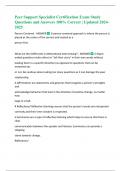
PEER SUPPORT SPECIALIST CERTIFICATION
EXAM STUDY Questions and Answers Latest
updates 2024
1. Person-Centered: A person-centered approach is where the person is placed at
the center of the service and treated as a
person first.
2. What are the OARS tools in Motivational Interviewing?: O Open-ended ques-
tions invite others to "tell their story" in their own words without
leading them in a specific direction (as opposed to questions that can be answered
yes
or no). Be cautious about asking too many questions as it can damage the peer
relationship.
A Affirmations are statements and gestures that recognize a person's strengths and
acknowledge behaviors that lead in the direction of positive change, no matter how
large or small.
R Reflections/ Reflective listening ensures that the person's words are interpreted
1/7
, 2
correctly and their inner wisdom is respected.
S Summaries are a type of reflective listening which helps to ensure that there is
clear
communication between the speaker and listener. Summaries can provide a step-
ping
stone towards change.
Reflections/
3. What is the tool "Elicit- Provide-Elicit" in Motivational Interviewing?: Elic-
it—Ask permission to give information or ask which information the person is asking
for.
Ï "Would it be all right if I tell you about a few self-help support groups that have
worked
for other people?'
Ï "Would you like to know about. .. ?"
Ï "What would you like to know about... ?"
4. What are whole health goals?: Whole person health involves looking at the
whole person instead of looking at health as fragments of
diseases, symptoms and problems. It is shifting from only thinking about 'What is the
matter with you?'
2/7
, 3
to thinking about what matters to you.
5. What are the basic five stages in the recovery process?: Pre-Contemplation
Not ready
Contemplation Getting ready
Preparation Ready
Action Making change
Maintenance Keeping up change
3/7
PEER SUPPORT SPECIALIST CERTIFICATION
EXAM STUDY Questions and Answers Latest
updates 2024
1. Person-Centered: A person-centered approach is where the person is placed at
the center of the service and treated as a
person first.
2. What are the OARS tools in Motivational Interviewing?: O Open-ended ques-
tions invite others to "tell their story" in their own words without
leading them in a specific direction (as opposed to questions that can be answered
yes
or no). Be cautious about asking too many questions as it can damage the peer
relationship.
A Affirmations are statements and gestures that recognize a person's strengths and
acknowledge behaviors that lead in the direction of positive change, no matter how
large or small.
R Reflections/ Reflective listening ensures that the person's words are interpreted
1/7
, 2
correctly and their inner wisdom is respected.
S Summaries are a type of reflective listening which helps to ensure that there is
clear
communication between the speaker and listener. Summaries can provide a step-
ping
stone towards change.
Reflections/
3. What is the tool "Elicit- Provide-Elicit" in Motivational Interviewing?: Elic-
it—Ask permission to give information or ask which information the person is asking
for.
Ï "Would it be all right if I tell you about a few self-help support groups that have
worked
for other people?'
Ï "Would you like to know about. .. ?"
Ï "What would you like to know about... ?"
4. What are whole health goals?: Whole person health involves looking at the
whole person instead of looking at health as fragments of
diseases, symptoms and problems. It is shifting from only thinking about 'What is the
matter with you?'
2/7
, 3
to thinking about what matters to you.
5. What are the basic five stages in the recovery process?: Pre-Contemplation
Not ready
Contemplation Getting ready
Preparation Ready
Action Making change
Maintenance Keeping up change
3/7