

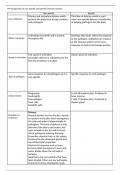
M4 Comparison of non-specific and specific immune systems
Non-specific Specific
Primary and secondary defence which Third line of defence which is used
Line of defence protects the body from foreign particles when non-specific defence is ineffective
and pathogens. at keeping pathogens out the body.
It develops from birth and is present Develops after birth. When first exposed
When it develops throughout life to the pathogen, antibodies are created
as the immune system carries out a
response to destroy the foreign particle.
Fast speed of activation. Slower speed of activation
Speed of activation Secondary defence is activated once the
first line of defence is broken.
Same response for all pathogens as it is Specific response to each pathogen
Type of pathogen non-specific.
Phagocytes B cells (B lymphocytes). Produced in
Cells involved Neutrophils bone marrow.
Macrophages T cells (T lymphocytes). Produced in
Mast cells thymus gland
Dendritic cells
Primary
Examples of Physical barriers such as the skin. Keratin
responses is a protein in the skin which strengthens
the cells and makes it impermeable to
pathogens. This form of defence is only
effective if the skin is not broken. Any
open wounds in the skin will increase
risk of pathogens entering the body.
Protective chemical such as the sebum.
Produced by the sebaceous glands and
has antibacterial properties.
Mechanical response such as tears.
Enzyme called lysozyme is in tears and
saliva. Breaks down the cell wall of
bacteria.
Nasal hairs trap any particles that have
been inhaled. Filters out any pathogens
to prevent it from entering the lungs.
, Secondary
Blood clotting- 3 stages involve vascular
spasms, platelet plug formation, and
coagulation.
Inflammation. White blood cells release
chemicals in the blood to protect the
body from pathogens. Mast cells release
cytokines and histamines.
Phagocytosis, opsonin, fevers, and
cytokines. Once a phagocyte engulfs a
pathogen, cytokines are produced. This
enzyme signals to other phagocytes that
the body has been invaded by
pathogens. Cytokines increase body
temperature.
Similarities/ Non-specific responses are present Specific responses develop after birth as
differences through the individual's life and develop the body encounters different
before birth. pathogens.
Fast speed of activation. Non-specific are immediate response to
Same response for all pathogens. pathogens, whereas specific responses
Different cells are involved- Phagocytes, are tailored responses to specific
neutrophils, macrophages, mast cells, antigens on pathogens. Non-specific
and dendritic cells. responses like inflammation and
phagocytosis are not specific to the
pathogen and do not involve memory
cells. This means they are much slower
compared to specific responses as
specific responses have faster defence if
exposed to the same pathogen.
The immune system has multiple layers
which work to defend the body against
pathogens. The layers are separated
into 2 categories: innate immunity, and
adaptive immunity. Innate immunity
consists of physical barriers, chemical
barriers, cellular defence, and
inflammatory response. Physical
barriers such as the skin are the first line
of defence which prevent pathogens
from entering the body. If the pathogen
manages to enter the body, chemical
barriers like gastric acid, mucus and
saliva will help trap and destroy
pathogens. Cellular defences such as
macrophages, neutrophils, and dendritic
cells destroy pathogens. Adaptive
immunity consists of lymphocytes and
memory cells. B cells produce
antibodies which neutralise pathogens
by binding to the specific antigens. T
helper cells help B cells and assist
cytotoxic T cells and regulatory T cells.
Non-specific Specific
Primary and secondary defence which Third line of defence which is used
Line of defence protects the body from foreign particles when non-specific defence is ineffective
and pathogens. at keeping pathogens out the body.
It develops from birth and is present Develops after birth. When first exposed
When it develops throughout life to the pathogen, antibodies are created
as the immune system carries out a
response to destroy the foreign particle.
Fast speed of activation. Slower speed of activation
Speed of activation Secondary defence is activated once the
first line of defence is broken.
Same response for all pathogens as it is Specific response to each pathogen
Type of pathogen non-specific.
Phagocytes B cells (B lymphocytes). Produced in
Cells involved Neutrophils bone marrow.
Macrophages T cells (T lymphocytes). Produced in
Mast cells thymus gland
Dendritic cells
Primary
Examples of Physical barriers such as the skin. Keratin
responses is a protein in the skin which strengthens
the cells and makes it impermeable to
pathogens. This form of defence is only
effective if the skin is not broken. Any
open wounds in the skin will increase
risk of pathogens entering the body.
Protective chemical such as the sebum.
Produced by the sebaceous glands and
has antibacterial properties.
Mechanical response such as tears.
Enzyme called lysozyme is in tears and
saliva. Breaks down the cell wall of
bacteria.
Nasal hairs trap any particles that have
been inhaled. Filters out any pathogens
to prevent it from entering the lungs.
, Secondary
Blood clotting- 3 stages involve vascular
spasms, platelet plug formation, and
coagulation.
Inflammation. White blood cells release
chemicals in the blood to protect the
body from pathogens. Mast cells release
cytokines and histamines.
Phagocytosis, opsonin, fevers, and
cytokines. Once a phagocyte engulfs a
pathogen, cytokines are produced. This
enzyme signals to other phagocytes that
the body has been invaded by
pathogens. Cytokines increase body
temperature.
Similarities/ Non-specific responses are present Specific responses develop after birth as
differences through the individual's life and develop the body encounters different
before birth. pathogens.
Fast speed of activation. Non-specific are immediate response to
Same response for all pathogens. pathogens, whereas specific responses
Different cells are involved- Phagocytes, are tailored responses to specific
neutrophils, macrophages, mast cells, antigens on pathogens. Non-specific
and dendritic cells. responses like inflammation and
phagocytosis are not specific to the
pathogen and do not involve memory
cells. This means they are much slower
compared to specific responses as
specific responses have faster defence if
exposed to the same pathogen.
The immune system has multiple layers
which work to defend the body against
pathogens. The layers are separated
into 2 categories: innate immunity, and
adaptive immunity. Innate immunity
consists of physical barriers, chemical
barriers, cellular defence, and
inflammatory response. Physical
barriers such as the skin are the first line
of defence which prevent pathogens
from entering the body. If the pathogen
manages to enter the body, chemical
barriers like gastric acid, mucus and
saliva will help trap and destroy
pathogens. Cellular defences such as
macrophages, neutrophils, and dendritic
cells destroy pathogens. Adaptive
immunity consists of lymphocytes and
memory cells. B cells produce
antibodies which neutralise pathogens
by binding to the specific antigens. T
helper cells help B cells and assist
cytotoxic T cells and regulatory T cells.



