ICS 800D National Response Framework:
An Introduction
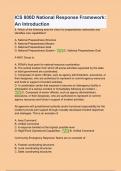
8. Which of the following sets the vision for preparedness nationwide and
identifies core capabilities?
A. National Preparedness Structure
B. National Preparedness Mission
✅✅-C. National Preparedness Goal
C. National Preparedness Goal
D. National Preparedness System -
A MAC Group is:
A. FEMA's focal point for national resource coordination.
B. The central location from which off-scene activities supported by the state
or tribal government are coordinated.
C. Composed of senior officials, such as agency administrators, executives, or
their designees, who are authorized to represent or commit agency resources
and funds in support of incident activities.
D. A coordination center that expands to become an interagency facility in
✅✅
anticipation of a serious incident or immediately following an incident. -
-C. Composed of senior officials, such as agency administrators,
executives, or their designees, who are authorized to represent or commit
agency resources and funds in support of incident activities.
All agencies with jurisdictional authority and/or functional responsibility for the
incident provide joint support through mutually developed incident objectives
and strategies. This is an example of:
A. Area Command
B. Unified Command
✅✅
C. A response handled at the highest possible level
D. Rigid/Fixed Operational Capabilities - -B. Unified Command
Community Emergency Response Teams are an example of:
A. Federal coordinating structures
B. Local coordinating structures
C. State coordinating structures
, D. Regional coordinating structures - ✅✅-B. Local coordinating structures
Critical infrastructure such as utilities and banking are which partners
responsibility?
A. Federal government
B. Private sector
✅✅
C. Local government
D. State government - -B. Private sector
For non-Stafford Act Incidents, who activates the appropriate coordinating
structures?
A. Agency with the most responders
B. First responding agency
✅✅-B. First responding agency
C. Federal government
D. Agency with primary legal authority -
In order to help form a common operating picture of the incident and secure
additional resources the Incident Commander relays requirements to:
A. Surrounding Regional Response Coordination Centers (RRCC)
B. Local emergency operations center
✅✅
C. Neighboring states/jurisdictions
D. National Response Coordination Center (NRCC) - -B. Local
emergency operations center
One premise of the National Response Framework is Tiered Response. Tiered
Response can best be described as:
A. Incidents are generally handled at the lowest jurisdictional level. Incidents
begin and end locally.
B. Federal responders are the first in and bring in state and local responders
as necessary.
C. State responders have lead and will bring in Federal and local responders
as necessary.
✅✅
D. Is applicable to only natural disasters that require all level of government. -
-A. Incidents are generally handled at the lowest jurisdictional level.
Incidents begin and end locally.
Select one of the three core capabilities that spans all Mission Areas?
An Introduction
8. Which of the following sets the vision for preparedness nationwide and
identifies core capabilities?
A. National Preparedness Structure
B. National Preparedness Mission
✅✅-C. National Preparedness Goal
C. National Preparedness Goal
D. National Preparedness System -
A MAC Group is:
A. FEMA's focal point for national resource coordination.
B. The central location from which off-scene activities supported by the state
or tribal government are coordinated.
C. Composed of senior officials, such as agency administrators, executives, or
their designees, who are authorized to represent or commit agency resources
and funds in support of incident activities.
D. A coordination center that expands to become an interagency facility in
✅✅
anticipation of a serious incident or immediately following an incident. -
-C. Composed of senior officials, such as agency administrators,
executives, or their designees, who are authorized to represent or commit
agency resources and funds in support of incident activities.
All agencies with jurisdictional authority and/or functional responsibility for the
incident provide joint support through mutually developed incident objectives
and strategies. This is an example of:
A. Area Command
B. Unified Command
✅✅
C. A response handled at the highest possible level
D. Rigid/Fixed Operational Capabilities - -B. Unified Command
Community Emergency Response Teams are an example of:
A. Federal coordinating structures
B. Local coordinating structures
C. State coordinating structures
, D. Regional coordinating structures - ✅✅-B. Local coordinating structures
Critical infrastructure such as utilities and banking are which partners
responsibility?
A. Federal government
B. Private sector
✅✅
C. Local government
D. State government - -B. Private sector
For non-Stafford Act Incidents, who activates the appropriate coordinating
structures?
A. Agency with the most responders
B. First responding agency
✅✅-B. First responding agency
C. Federal government
D. Agency with primary legal authority -
In order to help form a common operating picture of the incident and secure
additional resources the Incident Commander relays requirements to:
A. Surrounding Regional Response Coordination Centers (RRCC)
B. Local emergency operations center
✅✅
C. Neighboring states/jurisdictions
D. National Response Coordination Center (NRCC) - -B. Local
emergency operations center
One premise of the National Response Framework is Tiered Response. Tiered
Response can best be described as:
A. Incidents are generally handled at the lowest jurisdictional level. Incidents
begin and end locally.
B. Federal responders are the first in and bring in state and local responders
as necessary.
C. State responders have lead and will bring in Federal and local responders
as necessary.
✅✅
D. Is applicable to only natural disasters that require all level of government. -
-A. Incidents are generally handled at the lowest jurisdictional level.
Incidents begin and end locally.
Select one of the three core capabilities that spans all Mission Areas?