Stroke
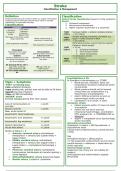
Classification & Management
Definition Classification
Stroke/Cerebrovascular accident (CVA) is a sudden interruption Oxford Stroke Classification based on initial symptoms
in blood supply to the brain. Neural tissue relies on aerobic Assess
metabolism irreversible damage
1. Unilateral hemiparesis
Classification 2. Homonymous hemianopia
Ischaemic Haemorrhagic 3. Higher cognition dysfunction e.g. dysphasia
< 24 hours
> 24 hours
Transient
Ischaemic TACI Involves middle + anterior cerebral arteries
Ischaemic
stroke
Attack (TIA)
(15%) + 3/3 criteria
Blockage in the blood vessel Smaller arteries of anterior circulation e.g.
Blood vessels burst PACI
stops blood flow upper + lower division of MCA
reduction in blood flow (25%)
+ 2/3 criteria
85% proportion of strokes Perforating arteries around internal capsule,
15% proportion of strokes thalamus, basal ganglia
LACI + 1/3 of:
Thrombotic (25%) 1. Unilateral weakness
Thrombosis from large Intracerebral 2. Pure sensory stroke
vessels e.g. carotid Bleeding within the brain 3. Ataxic hemiparesis
Embolic Subarachnoid Vertebrobasilar arteries
Usually a blood clot, but fat, Bleeding on the surface of + 1/3 criteria of:
air/clumps of bacteria may the brain POCI
1. Cerebellar/brainstem syndromes
act as an embolus (25%) 2. LOC
3. Isolated homonymous hemianopia
RF General RF for CVS +
Age, HTN, smoking, RF Age, HTN, AV
hyperlipidaemia, DM malformation,
RF for cardio-embolism: anticoagulation therapy
AF
Investigations & Mx
Ix Emergency neuroimaging e.g. CT/MRI
Signs + Symptoms Blood glucose, hydration, SpO2 and
‘FAST’ screening tool temperature should be maintained within
Face unilateral drooping normal limits
Arms weak/numb, patient may not be able to lift them Blood pressure should not be lowered
Speech slurring of speech unless there are complications e.g.
Time call 999 immediately Hypertensive encephalopathy
‘ROSIER’ score Aspirin 300mg rectal/oral as soon as
Exclude hypoglycaemia first, then assess: haemorrhagic stroke excluded
Cholesterol >3.5 mmol/L statin
Ischaemic stroke
Loss of consciousness or -1 point
Patient presents within 4.5 hours of onset
syncope
of symptoms
Seizure activity -1 point Patient has not had a previous
New, acute onset of: intracranial haemorrhage, uncontrolled
Asymmetric facial weakness HTN, pregnant etc. THROMBOLYSIS w/
Alteplase
Asymmetric arm weakness +1 point Aspirin + antiplatelet (once haemorrhagic
Asymmetric leg weakness +1 point stroke excluded)
Secondary prevention
Speech disturbance +1 point Clopidogrel Aspirin + MR Dipyridamole
Visual field defect +1 point Dipyridamole alone
Carotid artery endarterectomy (carotid stenosis
Stroke is likely if > 0
>70%)
Anterior cerebral artery contralateral
hemiparesis + sensory loss (Lower limbs > TIA
Upper limbs) Immediate therapy = 300mg Aspirin
Middle cerebral artery contralateral >1 TIA/ suspected cardio-embolic source/ severe
hemiparesis + sensory loss (Upper limbs > carotid stenosis = admission + observation by
Lower limbs) + contralateral hemianopia + stroke specialist
agnosia Haemorrhagic stroke
Posterior cerebral artery contralateral Supportive care (many are not suitable for
homonymous hemianopia w/ macular sparing + surgery)
visual agnosia Anticoagulant and antithrombotic stopped
Retinal/Ophthalmic artery Amaurosis fugax BP lowered
Basilar artery ‘Locked-in’ syndrome
Classification & Management
Definition Classification
Stroke/Cerebrovascular accident (CVA) is a sudden interruption Oxford Stroke Classification based on initial symptoms
in blood supply to the brain. Neural tissue relies on aerobic Assess
metabolism irreversible damage
1. Unilateral hemiparesis
Classification 2. Homonymous hemianopia
Ischaemic Haemorrhagic 3. Higher cognition dysfunction e.g. dysphasia
< 24 hours
> 24 hours
Transient
Ischaemic TACI Involves middle + anterior cerebral arteries
Ischaemic
stroke
Attack (TIA)
(15%) + 3/3 criteria
Blockage in the blood vessel Smaller arteries of anterior circulation e.g.
Blood vessels burst PACI
stops blood flow upper + lower division of MCA
reduction in blood flow (25%)
+ 2/3 criteria
85% proportion of strokes Perforating arteries around internal capsule,
15% proportion of strokes thalamus, basal ganglia
LACI + 1/3 of:
Thrombotic (25%) 1. Unilateral weakness
Thrombosis from large Intracerebral 2. Pure sensory stroke
vessels e.g. carotid Bleeding within the brain 3. Ataxic hemiparesis
Embolic Subarachnoid Vertebrobasilar arteries
Usually a blood clot, but fat, Bleeding on the surface of + 1/3 criteria of:
air/clumps of bacteria may the brain POCI
1. Cerebellar/brainstem syndromes
act as an embolus (25%) 2. LOC
3. Isolated homonymous hemianopia
RF General RF for CVS +
Age, HTN, smoking, RF Age, HTN, AV
hyperlipidaemia, DM malformation,
RF for cardio-embolism: anticoagulation therapy
AF
Investigations & Mx
Ix Emergency neuroimaging e.g. CT/MRI
Signs + Symptoms Blood glucose, hydration, SpO2 and
‘FAST’ screening tool temperature should be maintained within
Face unilateral drooping normal limits
Arms weak/numb, patient may not be able to lift them Blood pressure should not be lowered
Speech slurring of speech unless there are complications e.g.
Time call 999 immediately Hypertensive encephalopathy
‘ROSIER’ score Aspirin 300mg rectal/oral as soon as
Exclude hypoglycaemia first, then assess: haemorrhagic stroke excluded
Cholesterol >3.5 mmol/L statin
Ischaemic stroke
Loss of consciousness or -1 point
Patient presents within 4.5 hours of onset
syncope
of symptoms
Seizure activity -1 point Patient has not had a previous
New, acute onset of: intracranial haemorrhage, uncontrolled
Asymmetric facial weakness HTN, pregnant etc. THROMBOLYSIS w/
Alteplase
Asymmetric arm weakness +1 point Aspirin + antiplatelet (once haemorrhagic
Asymmetric leg weakness +1 point stroke excluded)
Secondary prevention
Speech disturbance +1 point Clopidogrel Aspirin + MR Dipyridamole
Visual field defect +1 point Dipyridamole alone
Carotid artery endarterectomy (carotid stenosis
Stroke is likely if > 0
>70%)
Anterior cerebral artery contralateral
hemiparesis + sensory loss (Lower limbs > TIA
Upper limbs) Immediate therapy = 300mg Aspirin
Middle cerebral artery contralateral >1 TIA/ suspected cardio-embolic source/ severe
hemiparesis + sensory loss (Upper limbs > carotid stenosis = admission + observation by
Lower limbs) + contralateral hemianopia + stroke specialist
agnosia Haemorrhagic stroke
Posterior cerebral artery contralateral Supportive care (many are not suitable for
homonymous hemianopia w/ macular sparing + surgery)
visual agnosia Anticoagulant and antithrombotic stopped
Retinal/Ophthalmic artery Amaurosis fugax BP lowered
Basilar artery ‘Locked-in’ syndrome