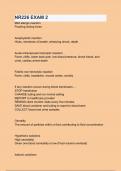
NR226 EXAM 2
Mild allergic reaction
Flushing itching hives
Anaphylactic reaction
Hives, shortness of breath, wheezing shock, death
Acute intravascular hemolytic reaction
Fever, chills, lower back pain, low blood pressure, shock blood, and
urine, cardiac arrest death
Febrile non-hemolytic reaction
Fever, chills, headache, muscle aches, anxiety
If any reaction occurs during blood transfusion....
STOP transfusion
CHANGE tubing and run normal sailing
REPORT to healthcare provider
REMAIN client monitor vitals every five minutes
SAVE blood container and tubing to report to blood bank
COLLECT blood and urine samples
Osmality
The amount of particles within a fluid contributing to fluid concentration
Hypertonic solutions
High osmolality
Given one blood osmolality is low (Fluid volume overload)
Isotonic solutions
, Balanced osmolality
Have equal particles and water
Most common is normal saline
Hypotonic solution
Have less particles than water
Given when blood osmolality (dehydration)
Urine Specific Gravity
1.005-1.030
Hematocrit
the percentage of RBC in plasma
Higher hematocrit higher blood osmolality (dehydrated)
Low hematocrit low blood osmolality (fluid volume overload)
Electrolyte imbalance causes
Vomiting, diarrhea, sweating unable to replenish fluids, side effects from
medication's, excessive urination, kidney failure
Potassium range
3.5-5.0 mEq/L
Magnesium range
1.3-2.1 mEq/L
Sodium range
136-145 mEq/L
Mild allergic reaction
Flushing itching hives
Anaphylactic reaction
Hives, shortness of breath, wheezing shock, death
Acute intravascular hemolytic reaction
Fever, chills, lower back pain, low blood pressure, shock blood, and
urine, cardiac arrest death
Febrile non-hemolytic reaction
Fever, chills, headache, muscle aches, anxiety
If any reaction occurs during blood transfusion....
STOP transfusion
CHANGE tubing and run normal sailing
REPORT to healthcare provider
REMAIN client monitor vitals every five minutes
SAVE blood container and tubing to report to blood bank
COLLECT blood and urine samples
Osmality
The amount of particles within a fluid contributing to fluid concentration
Hypertonic solutions
High osmolality
Given one blood osmolality is low (Fluid volume overload)
Isotonic solutions
, Balanced osmolality
Have equal particles and water
Most common is normal saline
Hypotonic solution
Have less particles than water
Given when blood osmolality (dehydration)
Urine Specific Gravity
1.005-1.030
Hematocrit
the percentage of RBC in plasma
Higher hematocrit higher blood osmolality (dehydrated)
Low hematocrit low blood osmolality (fluid volume overload)
Electrolyte imbalance causes
Vomiting, diarrhea, sweating unable to replenish fluids, side effects from
medication's, excessive urination, kidney failure
Potassium range
3.5-5.0 mEq/L
Magnesium range
1.3-2.1 mEq/L
Sodium range
136-145 mEq/L