ENWC Exam 1: Reading Questions with Verified Answers
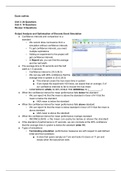
ENWC Exam 1: Reading Questions with Verified Answers Ch 14- Define lifelong monogamy. Where individuals pair with a single mate for that breeding season and for all subsequent breeding seasons as long as both individuals are alive. Ch 14- Define serial monogamy. A specific case of monogamy in which individuals pair with only a single mate during a breeding season but that mate changes per season. Ch 14- What are the costs and benefits of defending a territory? Costs are lost time, lost opportunities elsewhere, energetic costs, and catastrophic risk of territory lost, benefits are the access to resources of territory such as food, nutrients, dens, nests, mates and space. Ch 14- What is intrasexual competition? Competing with members of the same sex in order to gain a mate, competition results in intrasexual selection for traits that enhance success in physical combat (such as horns, size and claws) Ch 14- What is mate defense polygamy? A form of polygamy in which the sex that has multiple mates defends against potential competitors. Ch 14- What is sexual dimorphism? The differences between the sexes expressed in one or more traits. Ch 14- What is sexual segregation? Sexual segregation is when the sexes live apart during certain seasons. Ch 14- What is the "Landscape of Fear"? A virtual landscape created by prey in which they perceive different levels of predation risk in different locations. Prey may adjust their behavior as they move through areas with higher and lower risk. ch. 1 - What are the four different goals of wildlife management? 1. Increase population numbers when population is too low 2. Reduce the population when population is too high 3. Manage the population for a sustained yield (ex. Hunting) 4. Do nothing except monitor the population ch. 11 - What is basal metabolic rate? the rate at which the body uses energy while at rest to keep vital functions going -such as breathing and keeping warm ch. 11 - What is the importance of protein? -major constituent of the animal body -enable movement of muscle fibers + biochemical reactions with enzymes ch. 11 - Why do small and young animals require more energy per unit mass than older, or larger animals? Young animals must obtain a size that is sufficient for them to survive winter, juvenile size directly affects adult body mass and age of first reproduction. They also have higher metabolic rates
Written for
- Institution
- ENWC
- Course
- ENWC
Document information
- Uploaded on
- June 12, 2024
- Number of pages
- 11
- Written in
- 2023/2024
- Type
- Exam (elaborations)
- Contains
- Questions & answers
Subjects
-
enwc exam 1 reading questions with verified answ

Also available in package deal