Summary #6 morals
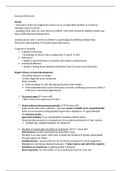
Morals
= learning to make fair judgements and to act as a responsible member or society by
showing respect to others.
= grasping what rules are, how they are justified, when they should be applied, people may
have conflicting moral perspectives.
Learning moral rules = central to children’s (psychological) wellbeing relationships
Full moral understanding morally responsible person
3 aspects of morality
1. Cognitive/reasoning
= knowledge of ethical rules & judgement of ‘good’ & ‘bad’
2. Behavioral
= people’s actual behavior in situation that relate to ethical issues
3. Emotional/affective
= people’s feeling about situations/behaviors that in involve moral decisions
Piaget’s theory of moral development
- Unvarying sequence of stages
- Current stage has to be completed
- Study morality:
Understanding of rules through games/play with marbles
Moral vignettes/short stories that pose a morally conflicting scenario on which a
child has to comment/judge/discuss
1. Pre-moral stage (0-5 years old)
= little concern for/awareness of rules
2. Moral realism/ heteronomous morality (5-8/10 years old)
- apply moral rules under authority = perceive power of adults to be unquestionable
- Rules are permanent/unchangeable/require strict obedience rigid/inflexible
imminent justice
- Egocentric thinking no consideration intentions behind action
- Moral decisions based on consequences of an action/punishment of ‘bad’ actions
SUPERFICIAL UNDERSTANDING OF MORALITY
3. Morality of cooperation/morality of reciprocity (10/11 + years old)
- Autonomous morality during formal operations stage
- Morality is a 2-way street, with rules to which all members of society agree/abide
- Mutual respect for others
- Equalitarianism = equal justice for all, should be considered in moral judgement
- Obedience is not always desires/necessary alter rules to suit will of the majority
- Intentions are important in judging people’s behavior
- Ideal reciprocity: do unto others as you would have them do unto you
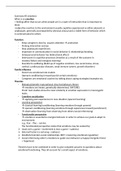
Morals
= learning to make fair judgements and to act as a responsible member or society by
showing respect to others.
= grasping what rules are, how they are justified, when they should be applied, people may
have conflicting moral perspectives.
Learning moral rules = central to children’s (psychological) wellbeing relationships
Full moral understanding morally responsible person
3 aspects of morality
1. Cognitive/reasoning
= knowledge of ethical rules & judgement of ‘good’ & ‘bad’
2. Behavioral
= people’s actual behavior in situation that relate to ethical issues
3. Emotional/affective
= people’s feeling about situations/behaviors that in involve moral decisions
Piaget’s theory of moral development
- Unvarying sequence of stages
- Current stage has to be completed
- Study morality:
Understanding of rules through games/play with marbles
Moral vignettes/short stories that pose a morally conflicting scenario on which a
child has to comment/judge/discuss
1. Pre-moral stage (0-5 years old)
= little concern for/awareness of rules
2. Moral realism/ heteronomous morality (5-8/10 years old)
- apply moral rules under authority = perceive power of adults to be unquestionable
- Rules are permanent/unchangeable/require strict obedience rigid/inflexible
imminent justice
- Egocentric thinking no consideration intentions behind action
- Moral decisions based on consequences of an action/punishment of ‘bad’ actions
SUPERFICIAL UNDERSTANDING OF MORALITY
3. Morality of cooperation/morality of reciprocity (10/11 + years old)
- Autonomous morality during formal operations stage
- Morality is a 2-way street, with rules to which all members of society agree/abide
- Mutual respect for others
- Equalitarianism = equal justice for all, should be considered in moral judgement
- Obedience is not always desires/necessary alter rules to suit will of the majority
- Intentions are important in judging people’s behavior
- Ideal reciprocity: do unto others as you would have them do unto you