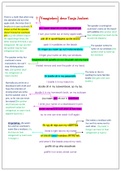
The Captain of the 1964 Top of the Form Team:
Form and Structure: Grammar and Syntax:
- “The Captain of the 1964 Top of the Form Team”: - “How can we know the dancer from this dance?
retrospective account on the speaker's past, Nobody.”: The speaker fires interrogatives. The minor
demonstrating the peak of their life (glory, success and sentence “nobody” affirms key points.
knowledge) of grammar school.
- “My country.”: Minor sentence- egocentric tone is
- Poem is written in free verse- 4 stanzas of equal length. represented (1st person possessive
- Form and Structure techniques: enjambment, internal determiner-ownership and nationalism).
rhyme and half rhyme. (longing for the past)
- “I want it back.”: The simple sentence suggests the
- Dramatic monologue-spoken in the moment (assumes a speaker is not happy in the present. This represents time
silent listener). as bleak.
- “Sir!...Correct.”: quoting others for validation (reported
speech, implied dialogue) - “Try me. Come on.”: minor imperatives-challenging.
Lexis and Semantics: Phonology:
- “Do Wah Diddy Diddy”: Asserts credentials, context is - “Bzz.”-Onomatopoeic (reminiscent of the sound imagery
deeply rooted in the time period. of a quiz buzzer).
- “Fizzing hope”, “Vimto”: This metaphor represents the
speaker’s bubbly excitement in reference to the new,
trendy, fashionable drink. - “I can give you the B-side”: Creates a smug/snobbish
- “Smell of my satchel”: Connotations of school and tone (showing off).
academics, power of multisensory imagery and nostalgia
(olfactory imagery).
- “The white sleeve of my shirt saluted again”: The - “My thick kids wince.”: Harsh, cacophonic sound created
personification of the shirt suggests it has a mind of its through the short plosives.
own, reinforcing the repetitive nature of the routine.
, Nostalgia:
Form and Structure: Grammar and Syntax:
- 3 free verse stanzas,a mix of short and long sentences - The third person pronoun “it” dehumanises the soldiers,
(use of enjambment throughout the poem) it makes their experiences appear impersonal.
- Third person narrator telling the story of the
Mercenaries. - Deictic references-third person plural pronoun “they”
allows for the reader to fill in the gap.
- Cyclical structure: full cycle of mercenary (ambiguity).
- “It was killing them.”: Conflict (dissonance) between
- Representation of past and present (human simple sentences and complexity of this situation. Past
experiences-contemplation, sentimentality, visual tense-given up (death of soul).
representations of working memory).
- “It was given a name.”: Monosyllabic, simple sentence.
- Direct address: engages the reader to empathise with - “Where maybe you met a girl, or searched for a yellow
the experience of nostalgia. ball”: complex sentence-complexity of emotions.
Lexis and Semantics: Phonology:
- “Wrong taste”, “wrong sounds”, “wrong smells” “wrong - “Money, dull crude coins clenched in the teeth”:
light”: repetition of “wrong”-incorrect, sinful (multisensory Plosives-represents the speaker’s disgust (cacophonic
language-gustatory, olfactory, auditory, visual language). language). Presents a sinister and cynical tone.
- Emotive verbs “pined” and “wept” demonstrate the pain
and arduous journey. (representative) - “How it hurt”: Aspirance-reflects how it is hard to breathe
- “Sweet pain in the heart”: Oxymoronic qualities- fond in the altitudes (lack of oxygen)-further presents the
memories (pining, lust). experience as wistful (sighing).
- “Searched for a yellow ball in long grass”: Yearn for
childhood-fantasy elements through the metaphorical - “A sack on his back”: Plosive sounds create a
representation of sunshine, connoting happiness. cacophonic tone, the simplicity of the noun “sack”
- Reference to key figures of society: “priest”, combined with the critical tone could emphasise the
“schoolteacher”. speaker’s judgement.
- Repetition of “same”-questions value of going away.
Form and Structure: Grammar and Syntax:
- “The Captain of the 1964 Top of the Form Team”: - “How can we know the dancer from this dance?
retrospective account on the speaker's past, Nobody.”: The speaker fires interrogatives. The minor
demonstrating the peak of their life (glory, success and sentence “nobody” affirms key points.
knowledge) of grammar school.
- “My country.”: Minor sentence- egocentric tone is
- Poem is written in free verse- 4 stanzas of equal length. represented (1st person possessive
- Form and Structure techniques: enjambment, internal determiner-ownership and nationalism).
rhyme and half rhyme. (longing for the past)
- “I want it back.”: The simple sentence suggests the
- Dramatic monologue-spoken in the moment (assumes a speaker is not happy in the present. This represents time
silent listener). as bleak.
- “Sir!...Correct.”: quoting others for validation (reported
speech, implied dialogue) - “Try me. Come on.”: minor imperatives-challenging.
Lexis and Semantics: Phonology:
- “Do Wah Diddy Diddy”: Asserts credentials, context is - “Bzz.”-Onomatopoeic (reminiscent of the sound imagery
deeply rooted in the time period. of a quiz buzzer).
- “Fizzing hope”, “Vimto”: This metaphor represents the
speaker’s bubbly excitement in reference to the new,
trendy, fashionable drink. - “I can give you the B-side”: Creates a smug/snobbish
- “Smell of my satchel”: Connotations of school and tone (showing off).
academics, power of multisensory imagery and nostalgia
(olfactory imagery).
- “The white sleeve of my shirt saluted again”: The - “My thick kids wince.”: Harsh, cacophonic sound created
personification of the shirt suggests it has a mind of its through the short plosives.
own, reinforcing the repetitive nature of the routine.
, Nostalgia:
Form and Structure: Grammar and Syntax:
- 3 free verse stanzas,a mix of short and long sentences - The third person pronoun “it” dehumanises the soldiers,
(use of enjambment throughout the poem) it makes their experiences appear impersonal.
- Third person narrator telling the story of the
Mercenaries. - Deictic references-third person plural pronoun “they”
allows for the reader to fill in the gap.
- Cyclical structure: full cycle of mercenary (ambiguity).
- “It was killing them.”: Conflict (dissonance) between
- Representation of past and present (human simple sentences and complexity of this situation. Past
experiences-contemplation, sentimentality, visual tense-given up (death of soul).
representations of working memory).
- “It was given a name.”: Monosyllabic, simple sentence.
- Direct address: engages the reader to empathise with - “Where maybe you met a girl, or searched for a yellow
the experience of nostalgia. ball”: complex sentence-complexity of emotions.
Lexis and Semantics: Phonology:
- “Wrong taste”, “wrong sounds”, “wrong smells” “wrong - “Money, dull crude coins clenched in the teeth”:
light”: repetition of “wrong”-incorrect, sinful (multisensory Plosives-represents the speaker’s disgust (cacophonic
language-gustatory, olfactory, auditory, visual language). language). Presents a sinister and cynical tone.
- Emotive verbs “pined” and “wept” demonstrate the pain
and arduous journey. (representative) - “How it hurt”: Aspirance-reflects how it is hard to breathe
- “Sweet pain in the heart”: Oxymoronic qualities- fond in the altitudes (lack of oxygen)-further presents the
memories (pining, lust). experience as wistful (sighing).
- “Searched for a yellow ball in long grass”: Yearn for
childhood-fantasy elements through the metaphorical - “A sack on his back”: Plosive sounds create a
representation of sunshine, connoting happiness. cacophonic tone, the simplicity of the noun “sack”
- Reference to key figures of society: “priest”, combined with the critical tone could emphasise the
“schoolteacher”. speaker’s judgement.
- Repetition of “same”-questions value of going away.