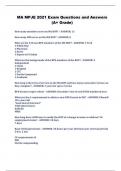
1 Review Questions to practice for CSOWM Questions and Answers | Already passed | Latest Update Roux -en-Y gastric bypass surgery (RYGB) accounts for about 80% of bariatric procedures in the US and is usually done laparoscopically. During RYGB, a small part of the proximal stomach is detached from the rest of the stomach, creating a stomach pouch of < 30 mL. Which of the following preexisting conditions has been shown to go into remission in up to 62% of patients 6 yr after RYGB? a. Hypertension b. Diabetes c. Obesity d. Obstructive Sleep Apnea 🗸🗸: Answer: B: Diabetes is particu larly likely to remit. Remission rates are up to 62% after 6 yr. A and D: Other comorbid conditions that tend to abate or resolve after bariatric surgery include cardiovascular risk factors (eg, dyslipidemia, hypertension [A], diabetes), cardiovascular dis orders, obstructive sleep apnea (D), osteoarthritis, and depression. C: For RYGB, weight loss is 50 to 65% after 2 yr; weight loss after RYGB is maintained for up to 10 yr. All -cause mortality decreases by 25%, primarily because cardiovascular and cancer m ortality is reduced. 2 Which of the following procedures is being used increasingly in the US as definitive treatment for severe obesity (eg, in patients with a body mass index [BMI] > 60)? a. Sleeve Gastrectomy b. Roux -en Y Gastric Bypass c. Adjustable Gas tric Banding d. Vertical Banded Gastroplasty 🗸🗸: Answer: A: Sleeve gastrectomy; because this procedure causes substantial and sustained weight loss, it is being used increasingly in the US as definitive treatment for severe obesity. Part of the stomach is removed, creating a tubular stomach passage. The procedure does not involve anatomic changes to the small intestine. B: Nonetheless, Roux -en-Y gastric bypass surgery accounts for about 80% of bariatric procedures in the US. C: Use of adjustable gastric banding has dramatically decreased in the US. D: Vertical banded gastroplasty is no longer commonly done because complication rates are high and the resulting weight loss is insufficient. Contraindications to bariatric surgery include which of the following? a. Body mass index (BMI) < 30 kg/m2 b. Current drug or alcohol abuse c. Obstructive sleep apnea d. High -risk lipid profile 🗸🗸: Answer: B: Current drug or alcohol abuse. A: The use of bariatric surgery is controversial in patients with a BMI < 30. C and D: To qualify for bariatric surgery, patients should have a BMI of > 3 40 or a BMI of > 35 plus a serious complication (eg, diabetes, hypertension, obstructive sleep apnea [C], high -risk lipid profile [D]). Bariatric Surgery Key Points 🗸🗸: Consider weight loss surgery if patients are motivated, have not succeeded using nonsurgical treatments, and have a BMI of > 40 kg/m2 or a BMI of > 35 kg/m2 plus a serious complication (eg, diabetes, hypertension, obstructive sleep apnea, high -risk lipid profile) or a BMI of 30 to 34.9 with type 2 diabetes and inadequate glycemic control despite optimal lifestyle and medical therapy. Weight loss surgery is contraindicated if patients have an uncontro lled psychiatric disorder (eg, major depression), drug or alcohol abuse, cancer that is not in remission, or another life -threatening disorder or if they cannot comply with nutritional requirements (including life -long vitamin replacement when indicated). The most common procedures are sleeve gastrectomy and Roux -en-Y gastric bypass; use of adjustable gastric banding has decreased dramatically in the US. Monitor patients regularly after surgery for maintenance of weight loss, resolution of weight -related comorbid disorders, and complications of surgery (eg, nutritional deficiencies, metabolic bone disease, gout, cholelithiasis, nephrolithiasis, depression, alcohol abuse). Which of the following increases the risk of cardiovascular disorders in patients wi th obesity? 4 a. Osteoporosis b. Excess abdominal fat c. Psychological disorders d. Gastric Ulcer 🗸🗸: Answer: B: Excess abdominal fat. Complications, including coronary artery disease, are more likely in patients with fat that is concentrated abdominally. Choices A, C, and D do not increase the risk of cardiovascular disorders in patients with obesity. What is the role of ghrelin in food intake -regulating pathways? a. It increases food intake. b. It decreases food intake. c. Level decreases when weight is lost. d. It integrates energy balance signals. 🗸🗸: Answer: A: Ghrelin, secreted primarily by the stomach, increases food intake. B, C, and D: Other hormones and regulatory substances have these effects. Which type of exercise is MOST effective for increasing BMR? a. Aerobic exercise b. Resistance exercise c. Balancing exercise d. Flexibility exercise
Exam (elaborations)
Review Questions to practice for CSOWM Questions and Answers | Already passed | Latest Update
Rating
Sold
-
Pages
37
Grade
A+
Uploaded on
08-06-2024
Written in
2023/2024
Roux-en-Y gastric bypass surgery (RYGB) accounts for about 80% of bariatric procedures in the US and is usually done laparoscopically. During RYGB, a small part of the proximal stomach is detached from the rest of the stomach, creating a stomach pouch of < 30 mL. Which of the following preexisting conditions has been shown to go into remission in up to 62% of patients 6 yr after RYGB? a. Hypertension b. Diabetes c. Obesity d. Obstructive Sleep Apnea : Answer: B: Diabetes is particularly likely to remit. Remission rates are up to 62% after 6 yr. A and D: Other comorbid conditions that tend to abate or resolve after bariatric surgery include cardiovascular risk factors (eg, dyslipidemia, hypertension [A], diabetes), cardiovascular disorders, obstructive sleep apnea (D), osteoarthritis, and depression. C: For RYGB, weight loss is 50 to 65% after 2 yr; weight loss after RYGB is maintained for up to 10 yr. All-cause mortality decreases by 25%, primarily because cardiovascular and cancer mortality is reduced. 2 Which of the following procedures is being used increasingly in the US as definitive treatment for severe obesity (eg, in patients with a body mass index [BMI] > 60)? a. Sleeve Gastrectomy b. Roux-en Y Gastric Bypass c. Adjustable Gastric Banding d. Vertical Banded Gastroplasty : Answer: A: Sleeve gastrectomy; because this procedure causes substantial and sustained weight loss, it is being used increasingly in the US as definitive treatment for severe obesity. Part of the stomach is removed, creating a tubular stomach passage. The procedure does not involve anatomic changes to the small intestine. B: Nonetheless, Roux-en-Y gastric bypass surgery accounts for about 80% of bariatric procedures in the US. C: Use of adjustable gastric banding has dramatically decreased in the US. D: Vertical banded gastroplasty is no longer commonly done because complication rates are high and the resulting weight loss is insufficient. Contraindications to bariatric surgery include which of the following? a. Body mass index (BMI) < 30 kg/m2 b. Current drug or alcohol abuse c. Obstructive sleep apnea d. High-risk lipid profile : Answer: B: Current drug or alcohol abuse. A: The use of bariatric surgery is controversial in patients with a BMI < 30. C and D: To qualify for bariatric surgery, patients should have a BMI of > 3 40 or a BMI of > 35 plus a serious complication (eg, diabetes, hypertension, obstructive sleep apnea [C], high-risk lipid profile [D]). Bariatric Surgery Key Points : Consider weight loss surgery if patients are motivated, have not succeeded using nonsurgical treatments, and have a BMI of > 40 kg/m2 or a BMI of > 35 kg/m2 plus a serious complication (eg, diabetes, hypertension, obstructive sleep apnea, high-risk lipid profile) or a BMI of 30 to 34.9 with type 2 diabetes and inadequate glycemic control despite optimal lifestyle and medical therapy. Weight loss surgery is contraindicated if patients have an uncontrolled psychiatric disorder (eg, major depression), drug or alcohol abuse, cancer that is not in remission, or another life-threatening disorder or if they cannot comply with nutritional requirements (including life-long vitamin replacement when indicated). The most common procedures are sleeve gastrectomy and Roux-en-Y gastric bypass; use of adjustable gastric banding has decreased d
Show more
Read less
Institution
CSOWM
Course
CSOWM
Whoops! We can’t load your doc right now. Try again or contact support.
Written for
- Institution
- CSOWM
- Course
- CSOWM
Document information
- Uploaded on
- June 8, 2024
- Number of pages
- 37
- Written in
- 2023/2024
- Type
- Exam (elaborations)
- Contains
- Questions & answers
Subjects
-
review questions to practice for csowm questions a
Content preview
$14.29
Get access to the full document:
100% satisfaction guarantee
Immediately available after payment
Both online and in PDF
No strings attached

Also available in package deal
Package deal
CSOWM Exam Complete Bundle – 14 Study Guides with Questions and Correct Answers (Modules 1–6, Digestion, Metabolism, Exercise, Pregnancy, Surgery & More | Passed Exam, 2025 Update) CSOWM exam bundle obesity and weight management CDR certification prep dig
4
14
2024
$ 189.96
More info