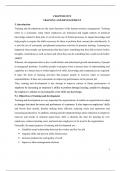
Julia Andrea C. Quiao
BSN2-I
NCM 207 GROWTH &
DEVELOPMENT Cognitive Development
ability to:
❏ Introduction - learn or understand
💚•💚•💚•💚•💚•💚•💚•💚•💚•💚•💚•💚
DEFINITION
Growth - physical change and increase in size
- includes height, weight, dentition, and bone age.
Development - an increase in the complexity of function
and skill progression
- an increase in skill or the ability to function or a
qualitative change
Maturation - An increase in competence and adaptability PRINCIPLES OF GROWT
- To function at a higher level DEVELOPMENT
Psychosexual development - Developing instinct or
sensual pleasure ✓G&D are continuous processes fro
- Freudian theory conception until death
✓G&D proceed in an orderly manne
✓Children pass through the predic
stages at diff. rates
✓ All body systems do not develop
same rate = Ex: neural tube - dev
of gestation
nervous system - neural processing
during infancy and childhood, reac
Psychosocial
about age 15.
Development
- Erikson’s stages
✓ Dev’t is cephalocaudal = head to
of personality
✓ Dev’t proceeds from proximal to
development
body parts = from center to outer
,💚•💚•💚•💚•💚•💚•💚•💚•💚•💚•💚•💚💚•💚•💚•💚•💚•💚•💚•💚•💚•💚
FACTORS AFFECTING GROWTH &
DEVELOPMENT
1. GENETICS - Family history of diseases may be
inherited
- Chromosomes carry genes that determine
physical characteristics, intellectual
potential, and personality.
- Sex, race, and nationality
1a. Gender – girls are born lighter & shorter
than boys
1b. Health – a child who inherits genetically
transmitted disease may not grow as
rapidly or develop as a fully healthy child
4. TEMPERAMENT - the way
1c. Intelligence – children with high
intelligence do not generally grow faster
physically than other children
2. NUTRITION - The greatest influence on physical
and intellectual development.
- poor maternal nutrition may limit growth &
intelligence potential
3. ENVIRONMENT
3.1 Harmful Pre-Natal Env’t
a. Nutritional deficiencies
b. Mechanical problems their internal and external e
c. Metabolic endocrine disturbances - inborn characterist
d. Medical treatment - not developed by sta
e. Infectious diseases/illness during = Ex:
Eczema, Vaginal Yeast pregnancy REACTION PATTERNS
f. Faulty placental implantation/malfunction - Activity Level – level of ac
, 💚•💚•💚•💚•💚•💚•💚•💚•💚•💚•💚•💚💚•💚•💚•💚•💚•💚•💚•💚•💚•💚
- Mood Quality – a happy child has a positive mood METHODS OF STUDYING
quality
- Adaptability - the ability to change one’s reaction CROSS-SECTIONAL STUDIES
to stimuli over time - Participants of different age
same time.
5. CULTURE - habits, beliefs, language, values, and LONGITUDINAL STUDIES
attitudes of cultural groups influence the child’s - One group of people studied
G & D
PATTERNS OF GROWTH
6. HEALTH – illness, injury, or other congenital
DEVELOPMENT
conditions can affect G & D
A. Directional Trends
7. FAMILY - the purpose of the family is to provide
1. Cephalocaudal - head to tail
support and safety for the child
2. Proximodistal - near to far / cen
7.1 Parental Attitudes
3. Differentiation - from simple to
7.2 Child-rearing Philosophies
operations and functions
STAGES OF HUMAN DEVELOPMENT
STAGES AGE
NEWBORN Birth to 28 days
INFANCY 1 to 12 months
TODDLER 1 to 3 years
PRESCHOOL-AGE 3 to 6 years
SCHOOL-AGE 6 to 12 years
ADOLESCENCE 12 to 20 years
EARLY ADULT 20 to 40 years
MIDDLE ADULT 40 to 65 years
, 💚•💚•💚•💚•💚•💚•💚•💚•💚•💚•💚•💚💚•💚•💚•💚•💚•💚•💚•💚•💚•💚
E. Individual Differences DEVELOPMENT OF ORG
- Rates of growth vary
Respiratory, digestive, renal & m
BIOLOGIC GROWTH & PHYSICAL circulatory tissue
DEVELOPMENT - Pattern for general growth p
in childhood
Linear growth or height
- occurs as a result of skeletal growth Neurologic tissues
Weight - Grow rapidly in the 1 st 2 y
- Birthweight is a reflection of intrauterine Env’t - Brain reaches mature pro
- In general,
- it doubles by 4-7 mos. Lymphoid tissues
- triples by the end of the 1 st yr - Grow rapidly during infan
- by 2-2.5yrs birthweight quadruples
Skeletal growth & maturation
Bone Age - Provides the best estimate
- determined by comparing the mineralization of
ossification centers MOTOR DEVELOPMENT
Dentition Gross Motor Skills F
- Major stages:
Balance, Coordination Smal
1. Growth
move
2. Calcification
finge
3. Eruption
4. Attrition Physical strength, progressive Scrib
movement dres
Walking, running, jumping, Hold
skipping etc.
- process wherein children lea
integrate their muscles in pu
BSN2-I
NCM 207 GROWTH &
DEVELOPMENT Cognitive Development
ability to:
❏ Introduction - learn or understand
💚•💚•💚•💚•💚•💚•💚•💚•💚•💚•💚•💚
DEFINITION
Growth - physical change and increase in size
- includes height, weight, dentition, and bone age.
Development - an increase in the complexity of function
and skill progression
- an increase in skill or the ability to function or a
qualitative change
Maturation - An increase in competence and adaptability PRINCIPLES OF GROWT
- To function at a higher level DEVELOPMENT
Psychosexual development - Developing instinct or
sensual pleasure ✓G&D are continuous processes fro
- Freudian theory conception until death
✓G&D proceed in an orderly manne
✓Children pass through the predic
stages at diff. rates
✓ All body systems do not develop
same rate = Ex: neural tube - dev
of gestation
nervous system - neural processing
during infancy and childhood, reac
Psychosocial
about age 15.
Development
- Erikson’s stages
✓ Dev’t is cephalocaudal = head to
of personality
✓ Dev’t proceeds from proximal to
development
body parts = from center to outer
,💚•💚•💚•💚•💚•💚•💚•💚•💚•💚•💚•💚💚•💚•💚•💚•💚•💚•💚•💚•💚•💚
FACTORS AFFECTING GROWTH &
DEVELOPMENT
1. GENETICS - Family history of diseases may be
inherited
- Chromosomes carry genes that determine
physical characteristics, intellectual
potential, and personality.
- Sex, race, and nationality
1a. Gender – girls are born lighter & shorter
than boys
1b. Health – a child who inherits genetically
transmitted disease may not grow as
rapidly or develop as a fully healthy child
4. TEMPERAMENT - the way
1c. Intelligence – children with high
intelligence do not generally grow faster
physically than other children
2. NUTRITION - The greatest influence on physical
and intellectual development.
- poor maternal nutrition may limit growth &
intelligence potential
3. ENVIRONMENT
3.1 Harmful Pre-Natal Env’t
a. Nutritional deficiencies
b. Mechanical problems their internal and external e
c. Metabolic endocrine disturbances - inborn characterist
d. Medical treatment - not developed by sta
e. Infectious diseases/illness during = Ex:
Eczema, Vaginal Yeast pregnancy REACTION PATTERNS
f. Faulty placental implantation/malfunction - Activity Level – level of ac
, 💚•💚•💚•💚•💚•💚•💚•💚•💚•💚•💚•💚💚•💚•💚•💚•💚•💚•💚•💚•💚•💚
- Mood Quality – a happy child has a positive mood METHODS OF STUDYING
quality
- Adaptability - the ability to change one’s reaction CROSS-SECTIONAL STUDIES
to stimuli over time - Participants of different age
same time.
5. CULTURE - habits, beliefs, language, values, and LONGITUDINAL STUDIES
attitudes of cultural groups influence the child’s - One group of people studied
G & D
PATTERNS OF GROWTH
6. HEALTH – illness, injury, or other congenital
DEVELOPMENT
conditions can affect G & D
A. Directional Trends
7. FAMILY - the purpose of the family is to provide
1. Cephalocaudal - head to tail
support and safety for the child
2. Proximodistal - near to far / cen
7.1 Parental Attitudes
3. Differentiation - from simple to
7.2 Child-rearing Philosophies
operations and functions
STAGES OF HUMAN DEVELOPMENT
STAGES AGE
NEWBORN Birth to 28 days
INFANCY 1 to 12 months
TODDLER 1 to 3 years
PRESCHOOL-AGE 3 to 6 years
SCHOOL-AGE 6 to 12 years
ADOLESCENCE 12 to 20 years
EARLY ADULT 20 to 40 years
MIDDLE ADULT 40 to 65 years
, 💚•💚•💚•💚•💚•💚•💚•💚•💚•💚•💚•💚💚•💚•💚•💚•💚•💚•💚•💚•💚•💚
E. Individual Differences DEVELOPMENT OF ORG
- Rates of growth vary
Respiratory, digestive, renal & m
BIOLOGIC GROWTH & PHYSICAL circulatory tissue
DEVELOPMENT - Pattern for general growth p
in childhood
Linear growth or height
- occurs as a result of skeletal growth Neurologic tissues
Weight - Grow rapidly in the 1 st 2 y
- Birthweight is a reflection of intrauterine Env’t - Brain reaches mature pro
- In general,
- it doubles by 4-7 mos. Lymphoid tissues
- triples by the end of the 1 st yr - Grow rapidly during infan
- by 2-2.5yrs birthweight quadruples
Skeletal growth & maturation
Bone Age - Provides the best estimate
- determined by comparing the mineralization of
ossification centers MOTOR DEVELOPMENT
Dentition Gross Motor Skills F
- Major stages:
Balance, Coordination Smal
1. Growth
move
2. Calcification
finge
3. Eruption
4. Attrition Physical strength, progressive Scrib
movement dres
Walking, running, jumping, Hold
skipping etc.
- process wherein children lea
integrate their muscles in pu