WJEC Level 3 Diploma in Criminology
Unit 3, AC: 1.2
Model Write-up
Mark: 18/20
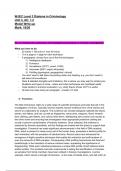
AC 1.2: Assess the usefulness of investigative techniques in criminal investigations
What you have to do:
- 20 marks = 100 mins (1 hour 40 mins)
- ¾ of a page to 1 page for each technique
- 4 paragraphs: choose four out of the five techniques:
1) Intelligence databases
2) Forensics
3) Surveillance (CCTV, covert, CHIS)
4) Interviews (EWT, expert witnesses)
5) Profiling (typological, geographical, clinical)
- You don’t need to talk about everything under one heading, e.g. you don’t need to
talk about all surveillance
- Clear & detailed strengths and limitations, this is where you may want to embed your
situations and types of crime - where and when techniques are most/least useful
- Case studies to enhance evaluation, e.g. Libby Squire shows CCTV is useful
- At least one case study per paragraph - at least 4 in total
1) Forensics
The field of forensics refers to a wide range of scientific techniques and tests that aid in the
investigation of crimes. Typically, forensic experts recover evidence from crime scenes and
send it to a laboratory for analysis. This evidence can include biological materials like blood,
semen, skin flakes, and hair, as well as fingerprints, shoe prints, weapons, fibres, threads
from clothing, paint flakes, and various other items. Maintaining strict control over access to
the crime scene and ensuring that investigators wear appropriate protective clothing are
crucial to prevent contamination of forensic evidence. Once collected, the evidence is
examined by forensic specialists, and the findings are shared with the police to support their
investigation. Forensics has made significant advancements in the field of DNA analysis.
DNA, which is present in nearly every cell of the human body, possesses a distinct profile for
each individual, with the exception of identical twins. Recent years have witnessed the
emergence of highly sensitive techniques that enable the extraction and swift analysis of
even tiny amounts of DNA samples. Consequently, DNA profiling has become the foremost
breakthrough in the resolution of serious criminal cases, surpassing the significance of
fingerprinting. While each individual possesses a unique DNA profile, blood relatives share
similar profiles. This similarity has been instrumental in aiding the identification of criminals,
as samples from family members have been utilised in forensic investigations. A prime
example, which shows a strength of forensics, is the case of Colette Aram, who fell victim to
, rape and murder in 1983, a time when DNA profiling was not yet available. However,
advancements in DNA technology enabled the police to develop a profile of her assailant by
2008. This breakthrough occurred when Hutchinson's son was apprehended for a motoring
offence, and a routine DNA sample partially matched the DNA obtained from the crime
scene. Consequently, Hutchinson's father was arrested and convicted for the heinous crime.
Therefore, this shows the effectiveness of forensic techniques as the utilisation of DNA
profiles from blood relatives has also played a crucial role in identifying deceased victims of
homicides, suicides, and accidents. Another strength of forensic techniques is it can be
utilised in many different situations, such as crime scenes because evidence such as blood,
DNA and fingerprints will be fresh. It can also be used in laboratories, the evidence taken
from the crime scene will be analysed to link to the suspect. Police stations also use these
techniques when collecting fingerprints, taking clothes and analysing for DNA like fibres.
Finally, forensic techniques can be used on the street when analysing dumped weapons,
tyre marks and footprints. There are also a wide range of crimes that forensic techniques are
useful in, such as violent crimes as any bodily fluids can be analysed such as blood
samples, skin cells and hairs to find a match. E-crimes may also use forensic techniques as
there are digital forensics that can help trace people online. Finally, this technique can be
used to help solve property crimes as the fingerprints can be analysed from windows, doors,
handles and more. However, forensic techniques may not always be useful in criminal
investigations, as the case of David Butler shows. David Butler faced charges for the
homicide of Anne Marie Foy, a sex worker, as a result of a partial DNA match. He spent a
period of 8 months in custody, but during the trial, his legal team presented evidence
highlighting the unreliability of DNA collection and the poor quality of the evidence.
Additionally, Butler suffered from a dry skin condition that caused him to shed large skin
flakes, which demonstrated how easily DNA could be transferred. It is worth noting that
Butler also worked as a taxi driver, raising the possibility that he may have transported a
passenger to the Red Light District where the victim worked, leading to the transfer of DNA
through the exchange of money. Therefore this highlights the potential limitation of forensic
techniques as it is possible that trace amounts of DNA can falsely implicate someone.
2) Surveillance techniques
Surveillance refers to the act of closely monitoring something or someone, such as utilising
(CCTV) to observe the individuals entering and exiting a building. Law enforcement agencies
frequently rely on CCTV footage during criminal investigations due to its ability to provide
continuous coverage of a specific location, thereby creating a visual record of the crime and
aiding in the identification of the culprit. In high-profile cases like murder inquiries or
instances of civil unrest, CCTV images can be made public, accompanied by appeals to the
general public to report any recognizable individuals. However, it is important to note that
CCTV cameras have limitations. They are stationary and cannot track a subject around
corners. Additionally, these cameras are often conspicuous, allowing criminals to either
avoid them or alter their appearance. Moreover, the quality of recorded images is not always
optimal, which can make the process of identification challenging or even impossible. Unlike
CCTV monitoring, which is generally spontaneous and records incidents as they occur,
covert surveillance is meticulously planned in advance and executed in a manner that
ensures the subjects being monitored remain unaware. Covert surveillance can manifest in
various ways, such as attaching tracking devices to vehicles and utilising GPS technology to
Unit 3, AC: 1.2
Model Write-up
Mark: 18/20
AC 1.2: Assess the usefulness of investigative techniques in criminal investigations
What you have to do:
- 20 marks = 100 mins (1 hour 40 mins)
- ¾ of a page to 1 page for each technique
- 4 paragraphs: choose four out of the five techniques:
1) Intelligence databases
2) Forensics
3) Surveillance (CCTV, covert, CHIS)
4) Interviews (EWT, expert witnesses)
5) Profiling (typological, geographical, clinical)
- You don’t need to talk about everything under one heading, e.g. you don’t need to
talk about all surveillance
- Clear & detailed strengths and limitations, this is where you may want to embed your
situations and types of crime - where and when techniques are most/least useful
- Case studies to enhance evaluation, e.g. Libby Squire shows CCTV is useful
- At least one case study per paragraph - at least 4 in total
1) Forensics
The field of forensics refers to a wide range of scientific techniques and tests that aid in the
investigation of crimes. Typically, forensic experts recover evidence from crime scenes and
send it to a laboratory for analysis. This evidence can include biological materials like blood,
semen, skin flakes, and hair, as well as fingerprints, shoe prints, weapons, fibres, threads
from clothing, paint flakes, and various other items. Maintaining strict control over access to
the crime scene and ensuring that investigators wear appropriate protective clothing are
crucial to prevent contamination of forensic evidence. Once collected, the evidence is
examined by forensic specialists, and the findings are shared with the police to support their
investigation. Forensics has made significant advancements in the field of DNA analysis.
DNA, which is present in nearly every cell of the human body, possesses a distinct profile for
each individual, with the exception of identical twins. Recent years have witnessed the
emergence of highly sensitive techniques that enable the extraction and swift analysis of
even tiny amounts of DNA samples. Consequently, DNA profiling has become the foremost
breakthrough in the resolution of serious criminal cases, surpassing the significance of
fingerprinting. While each individual possesses a unique DNA profile, blood relatives share
similar profiles. This similarity has been instrumental in aiding the identification of criminals,
as samples from family members have been utilised in forensic investigations. A prime
example, which shows a strength of forensics, is the case of Colette Aram, who fell victim to
, rape and murder in 1983, a time when DNA profiling was not yet available. However,
advancements in DNA technology enabled the police to develop a profile of her assailant by
2008. This breakthrough occurred when Hutchinson's son was apprehended for a motoring
offence, and a routine DNA sample partially matched the DNA obtained from the crime
scene. Consequently, Hutchinson's father was arrested and convicted for the heinous crime.
Therefore, this shows the effectiveness of forensic techniques as the utilisation of DNA
profiles from blood relatives has also played a crucial role in identifying deceased victims of
homicides, suicides, and accidents. Another strength of forensic techniques is it can be
utilised in many different situations, such as crime scenes because evidence such as blood,
DNA and fingerprints will be fresh. It can also be used in laboratories, the evidence taken
from the crime scene will be analysed to link to the suspect. Police stations also use these
techniques when collecting fingerprints, taking clothes and analysing for DNA like fibres.
Finally, forensic techniques can be used on the street when analysing dumped weapons,
tyre marks and footprints. There are also a wide range of crimes that forensic techniques are
useful in, such as violent crimes as any bodily fluids can be analysed such as blood
samples, skin cells and hairs to find a match. E-crimes may also use forensic techniques as
there are digital forensics that can help trace people online. Finally, this technique can be
used to help solve property crimes as the fingerprints can be analysed from windows, doors,
handles and more. However, forensic techniques may not always be useful in criminal
investigations, as the case of David Butler shows. David Butler faced charges for the
homicide of Anne Marie Foy, a sex worker, as a result of a partial DNA match. He spent a
period of 8 months in custody, but during the trial, his legal team presented evidence
highlighting the unreliability of DNA collection and the poor quality of the evidence.
Additionally, Butler suffered from a dry skin condition that caused him to shed large skin
flakes, which demonstrated how easily DNA could be transferred. It is worth noting that
Butler also worked as a taxi driver, raising the possibility that he may have transported a
passenger to the Red Light District where the victim worked, leading to the transfer of DNA
through the exchange of money. Therefore this highlights the potential limitation of forensic
techniques as it is possible that trace amounts of DNA can falsely implicate someone.
2) Surveillance techniques
Surveillance refers to the act of closely monitoring something or someone, such as utilising
(CCTV) to observe the individuals entering and exiting a building. Law enforcement agencies
frequently rely on CCTV footage during criminal investigations due to its ability to provide
continuous coverage of a specific location, thereby creating a visual record of the crime and
aiding in the identification of the culprit. In high-profile cases like murder inquiries or
instances of civil unrest, CCTV images can be made public, accompanied by appeals to the
general public to report any recognizable individuals. However, it is important to note that
CCTV cameras have limitations. They are stationary and cannot track a subject around
corners. Additionally, these cameras are often conspicuous, allowing criminals to either
avoid them or alter their appearance. Moreover, the quality of recorded images is not always
optimal, which can make the process of identification challenging or even impossible. Unlike
CCTV monitoring, which is generally spontaneous and records incidents as they occur,
covert surveillance is meticulously planned in advance and executed in a manner that
ensures the subjects being monitored remain unaware. Covert surveillance can manifest in
various ways, such as attaching tracking devices to vehicles and utilising GPS technology to