Effects and Night Drive
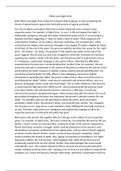
Both Effects and Night Drive create the semantic field of ageing, as well as exploring the
theme of powerlessness against the inevitable process of ageing and death.
The use of implicit and explicit references to death impact the tone created in each
respective poem. For example, in Night Drive, 'in case / it did not happen that night' is
deliberately ambiguous, because the reader instinctively suspects that 'it' is occurring in a
hospital, therefore suggesting 'it' refers to either a birth or death. These suspicions are
confirmed by 'thinking / of my mother, the bones stretching / her beautiful skin', which
reveals that the subject of the persona's thoughts is her ageing, ill mother, implied by 'bones
stretching'. At the end of the poem, the persona explicitly describes the reason for the 'night
drive': 'my mother / lay dying'. The position of this explicit description at the end of the
poem suggests that the persona may have struggled to coherently articulate her emotions
regarding her mother's death until this point, and instead resorted to euphemisms such as
'it'. Ambiguous, euphemistic language is also used in Effects, reflecting the difficulties
experienced by the persona in comprehending their mother's fate. For example, 'the last
words she had said' is understood in the context of the poem to reference the woman's final
words before her death, however in another context could be interpreted differently, not
necessarily involving death. The title, Effects is also ambiguous, because it could be
interpreted as describing the 'effect' the poem's subject had on those around her prior to
and following her death. 'Effects' could also be associated with personal effects, such as a
person's belongings, which remain after their death. This is further explored in the final line
'a nurse bring the little bag of her effects to me', which could describe the persona's grief
since their mother's life and identity has been reduced to a 'little bag'. It could also
reference the woman's metaphorical legacy, which remains long after her death. The use of
punctuation throughout the poem also represents the persona's attitude towards life and
death. For example, only two full stops feature within the poem, both occurring to
symbolise a death: firstly, the persona's father, and secondly their mother. This, alongside
the structure of one, long stanza, could symbolise a long, fulfilling life eventually coming to
an end. Therefore, both poems use ambiguous and euphemistic language to allow the
respective personas to coherently articulate their grief.
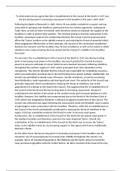
Both poems also present the negative effects of old age on the subject of each respective
poem. For example, in Night Drive, 'the bones stretching / her beautiful skin and her left eye
almost / closed' creates an uncomfortable, unpleasant image of the woman's appearance.
'Bones stretching' connotes a struggle, which could be interpreted as the woman's soul
attempting to escape the confinement of her ageing body. 'Left eye almost closed' suggests
an illness, but the adverb 'almost' creates a sense of hope because completely 'closed'
would symbolise the finality of death. Also, ageing is presented as inevitable by 'we might
have been waiting / for it all our lives', which suggests that, while the persona was not
emotionally prepared for the loss of their mother, they acknowledged this event would
undoubtedly occur. This could be likened to Effects, because the persona describes their
mother 'blinking unseeing at the wall', implying a loss of memory and ability to comprehend
situations. As a result, the persona, perhaps instinctively, attempt to compensate for this by
Both Effects and Night Drive create the semantic field of ageing, as well as exploring the
theme of powerlessness against the inevitable process of ageing and death.
The use of implicit and explicit references to death impact the tone created in each
respective poem. For example, in Night Drive, 'in case / it did not happen that night' is
deliberately ambiguous, because the reader instinctively suspects that 'it' is occurring in a
hospital, therefore suggesting 'it' refers to either a birth or death. These suspicions are
confirmed by 'thinking / of my mother, the bones stretching / her beautiful skin', which
reveals that the subject of the persona's thoughts is her ageing, ill mother, implied by 'bones
stretching'. At the end of the poem, the persona explicitly describes the reason for the 'night
drive': 'my mother / lay dying'. The position of this explicit description at the end of the
poem suggests that the persona may have struggled to coherently articulate her emotions
regarding her mother's death until this point, and instead resorted to euphemisms such as
'it'. Ambiguous, euphemistic language is also used in Effects, reflecting the difficulties
experienced by the persona in comprehending their mother's fate. For example, 'the last
words she had said' is understood in the context of the poem to reference the woman's final
words before her death, however in another context could be interpreted differently, not
necessarily involving death. The title, Effects is also ambiguous, because it could be
interpreted as describing the 'effect' the poem's subject had on those around her prior to
and following her death. 'Effects' could also be associated with personal effects, such as a
person's belongings, which remain after their death. This is further explored in the final line
'a nurse bring the little bag of her effects to me', which could describe the persona's grief
since their mother's life and identity has been reduced to a 'little bag'. It could also
reference the woman's metaphorical legacy, which remains long after her death. The use of
punctuation throughout the poem also represents the persona's attitude towards life and
death. For example, only two full stops feature within the poem, both occurring to
symbolise a death: firstly, the persona's father, and secondly their mother. This, alongside
the structure of one, long stanza, could symbolise a long, fulfilling life eventually coming to
an end. Therefore, both poems use ambiguous and euphemistic language to allow the
respective personas to coherently articulate their grief.
Both poems also present the negative effects of old age on the subject of each respective
poem. For example, in Night Drive, 'the bones stretching / her beautiful skin and her left eye
almost / closed' creates an uncomfortable, unpleasant image of the woman's appearance.
'Bones stretching' connotes a struggle, which could be interpreted as the woman's soul
attempting to escape the confinement of her ageing body. 'Left eye almost closed' suggests
an illness, but the adverb 'almost' creates a sense of hope because completely 'closed'
would symbolise the finality of death. Also, ageing is presented as inevitable by 'we might
have been waiting / for it all our lives', which suggests that, while the persona was not
emotionally prepared for the loss of their mother, they acknowledged this event would
undoubtedly occur. This could be likened to Effects, because the persona describes their
mother 'blinking unseeing at the wall', implying a loss of memory and ability to comprehend
situations. As a result, the persona, perhaps instinctively, attempt to compensate for this by