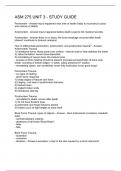
ASM 275 UNIT 3 - STUDY GUIDE
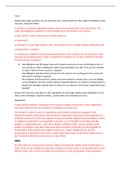
Perimortem - Answer-injury happened near time of death (helps to reconstruct cause and manner of death) Antemortem - Answer-injury happened before death (used to link medical records) Postmortem - Answer-there is no injury, the bone breakage occurred after death (doesn't contribute to forensic analysis) How to differentiate perimortem, antemortem, and postmortem trauma? - Answer-Antemortem Trauma 1) hematoma forms: blood pools over surface - internal scab to help stabilize the break 2) callus formation: woven bone deposited 3) remodeling of woven bone into mature bone - process of bone healing should be present (increase porosity/holes of bone near break, rounding of broken edges <1 week, callus presence 6+ weeks) - remodeling (years, can sometimes never fully heal/callus never goes away) Perimortem Trauma - no signs of heeling - green bone response 1) sharp edges of fracture and lines 2) hinging - not seen in postmortem fractures 3) fracture lines 4) angled broken ends 5) hematoma staining Postmortem Trauma - not related to death, occurs after death 1) do not have fracture lines 2) greenstick and hinge fractures absent 3) breaks occur at right angles to bone shaft Blunt Force Trauma: types of objects - Answer-- blunt instruments (crowbars, baseball bats) - car/train/airplane crashes - abrasions of all kinds ('Road Rash') -
Written for
- Institution
-
Arizona State University
- Module
-
ASM 275
Document information
- Uploaded on
- June 4, 2024
- Number of pages
- 13
- Written in
- 2023/2024
- Type
- Other
- Person
- Unknown
Subjects
-
asm 275 unit 3 study guide

Also available in package deal