Woodhouse College Naaila O. Muhammad
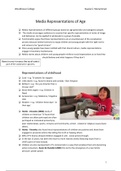
Media Representations of Age
❏ Media representations of different groups based on age generalise and categorise people.
❏ The media encourages audiences to assume that specific representations in terms of image
and behaviour can be applied to wholesale to a group of people.
❏ Functionalists argue that these representations are an essential part of the socialisation
process because media functions to equip children and young people with the right norms
and values to be “good citizens”
❏ Once young people have been instilled with that shared culture, media representations
engage in boundary maintenance.
❏ Media stories about children and young people reinforce social expectations as to how they
should behave and what happens if they don’t
Representations of childhood
❏ Cute = e.g. TV adverts for nappies
❏ Little devils = e.g. found in drama and comedy - Bart Simpson
❏ Brilliant = e.g. ‘Are you Smarter than a
10 year old?”
❏ Brave little angels = e.g. Children in
Need
❏ Accessories = e.g. Madonna / Angelina
Jolie
❏ Modern = e.g. ‘children these days’ ‘at
their age.’
❏ Heintz - Knowles (2002) study of
children on American TV found that
children are often portrayed are often
portrayed as motivated primarily by
peer relationships, sports, romance and community, school - related or religious issues (least
often).
❏ Heintz - Knowles also found most representations of children are positive and show them
engaged in prosocial actions like telling the truth or helping others.
❏ 40% of TV drama showed children engaged in anti - social actions though.
❏ In the last 15 years, has been the move to more realistic drama featuring issues from a
child’s point of view instead.
❏ children are also represented in TV commercials in a way that socialises them into becoming
active consumers. Evans & Chandler (2006) this led to the emergence of a new family
pressure: pester power.
1
Media Representations of Age
❏ Media representations of different groups based on age generalise and categorise people.
❏ The media encourages audiences to assume that specific representations in terms of image
and behaviour can be applied to wholesale to a group of people.
❏ Functionalists argue that these representations are an essential part of the socialisation
process because media functions to equip children and young people with the right norms
and values to be “good citizens”
❏ Once young people have been instilled with that shared culture, media representations
engage in boundary maintenance.
❏ Media stories about children and young people reinforce social expectations as to how they
should behave and what happens if they don’t
Representations of childhood
❏ Cute = e.g. TV adverts for nappies
❏ Little devils = e.g. found in drama and comedy - Bart Simpson
❏ Brilliant = e.g. ‘Are you Smarter than a
10 year old?”
❏ Brave little angels = e.g. Children in
Need
❏ Accessories = e.g. Madonna / Angelina
Jolie
❏ Modern = e.g. ‘children these days’ ‘at
their age.’
❏ Heintz - Knowles (2002) study of
children on American TV found that
children are often portrayed are often
portrayed as motivated primarily by
peer relationships, sports, romance and community, school - related or religious issues (least
often).
❏ Heintz - Knowles also found most representations of children are positive and show them
engaged in prosocial actions like telling the truth or helping others.
❏ 40% of TV drama showed children engaged in anti - social actions though.
❏ In the last 15 years, has been the move to more realistic drama featuring issues from a
child’s point of view instead.
❏ children are also represented in TV commercials in a way that socialises them into becoming
active consumers. Evans & Chandler (2006) this led to the emergence of a new family
pressure: pester power.
1