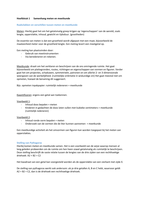
ATI Proctored Exam: Community Health (Public Health) With Complete Verified Solution
ATI Proctored Exam: Community Health (Public Health) With Complete Verified Solution Community Health Nursing Theories - Nightingale's Theory of Environment - Health Belief Model - Likelihood of Taking Action Factors Nightingale's Theory of Environment: Focuses on impact of a person's environment on their health. Focus in on preventative care (washing hands, clean environment). Health Belief Model: Assumes a persons primary motivation in taking positive health actions is to avoid getting a disease. Likelihood of taking action is based on: 1. Modifying variables (age, gender, race, economy, education) 2. Perceived severity and susceptibility of getting the disease 3. Perceived benefits vs. barriers of taking action 4. Cues to action (i.e. advice of doctor, media campaign) Community-Based Nursing versus Community-Oriented Nursing The community or population is the "client" in community health nursing. Community-Based Nursing: Focused on ILLNESS care (acute or chronic conditions) for individuals and families. - Examples: Home Health nurse doing wound care, School nurse administering epi-pen. *Community-Oriented Nursing: Focused on improving the collective health of the community. - Examples: Health education and promotion, disease prevention activities. No illness care! Community-oriented nursing = public health nursing. Community Health Nursing versus Public Health Nursing Community Health Nursing: Delivers health care services to individuals, families, and groups. Includes community-based nursing (illness care for individuals and families) AND community-oriented nursing (community focused care, with an emphasis on education and disease prevention). Public Health Nursing: Disease prevention and health promotion of communities and populations. They re not providing direct care to individuals! Public health nursing = community-oriented nursing. Four Ethical Principles in Community Health Nursing - Respect for Autonomy - Non-Maleficence - Beneficence - Distributive Justice Respect for Authority: Respect a patient's right to self-determination. Non-Maleficence: Do no harm Beneficence: Do what is best (i.e. maximize benefits) Distributive Justice: Fair allocation of resources in community. Epidemiology and Components of Epidemiology Triangle Epidemiology: Study of spread, transmission, and incidence of disease/injury. Components of Epidemiology Triangle - Agent: What is causing the disease (i.e. bacteria, toxin, noise) - Host: Human/animal being affected by the disease - Environment: Physical environment (water/food supply, geography). Social environment (access to health care, work conditions, poverty). Incidence vs. Prevalence Incidence: Number of NEW case of disease/injury in a population during a specified period of time. Prevalence: Number of ALL cases (new and pre-existing) of disease/injury in a population during a specified period of time. Community Health Education and Healthy People 2020 Community Health Education - Obstacles: Age culture, illiteracy, language barriers, lack of access, lack of motivation. - Learning Styles: visual (video, presentations), auditory (verbal lectures, discussions), tactile-kinesthetic (hands-on, return demonstration). Healthy People 2020: Includes national health goals based on major risk to health and wellness of U.S. population (i.e.: Diabetes,Cancer, Older Adults, LGBT health). Primary vs. Secondary vs. Tertiary Prevention Primary Prevention: Prevents initial occurrence of disease. - i.e. education, immunizations, prenatal classes. Secondary Prevention: Focuses on early detection of disease, limiting severity of disease. - i.e. screenings, disease surveillance, control of outbreaks. Tertiary Prevention: Maximize recovery after an injury/illness. - i.e. rehabilitation, PT/OT, support groups - Acculturation - Ethnocentrism - Cultural Assessment - Interpreter Acculturation: Adopting the traits of a different culture. Ethnocentrism: The belief that one's own culture is superior to all others. View world from their own cultural viewpoint. Culture Assessment: Ask about patient's ethnic background, religious preference, family structure, food patterns, and health practices. Incorporate patient preferences into care whenever possible. Interpreter: Use of family members in not recommended, interpreters need to have knowledge of health terminology. Patient teaching materials should be available in their primary language. Environmental Risks and Environmental Assessment Environmental Risks - Toxins (i.e. lead, pesticides, asbestos, radon) - Air pollution (i.e. carbon monoxide, tobacco smoke, lead) - Water pollution (i.e. waste products, chemical runoff from soil) Environmental Assessment Questions: - Condition of housing. Remodeling activities? - Water heater temperature less than 120 degrees F? - Tobacco smoke present in home? - Quality of drinking water? Lead Exposure Key Points - Pre-1978 housing at risk for lead-based paints!! - Screen children 6 months - 5 years for blood lead levels. - Avoid playing in soil right outside home. - Wet mop floors 9vs. vacuuming floors) - Use wet sanding technique (vs. dry sanding) - Make sure children get enough iron and calcium in diet, as this decreases absorption of lead in the body. - Use cold water (vs. hot water) because lead dissolves more quickly in hot water. Medicare and Medicaid Medicare Eligibility: - Older than 65 years old - Receiving disability for at least two years - Diagnosed with Amyotrophic Lateral Sclerosis (ALS) or End-stage Real Disease (ESRD) and receiving dialysis. - Part A: Inpatient hospital, limited SNF, home health care. - Part B: Outpatient care, diagnostic services, PT/OT. - Part C: Combines part A and B, provided through private insurance. - Part D: Prescription drug coverage ( Think D for drugs). Medicaid Eligibility: Those with low socioeconomic status and no other insurance, based on household size and income. State Department of Health State Board of Nursing Local Health Department State Health Department: manages WIC program, CHIP, Medicaid program. Reports notifiable communicable disease to CDC (voluntary). State Bo
Geschreven voor
- Instelling
- ATI Community Health
- Vak
- ATI Community Health
Documentinformatie
- Geüpload op
- 1 juni 2024
- Aantal pagina's
- 10
- Geschreven in
- 2023/2024
- Type
- Tentamen (uitwerkingen)
- Bevat
- Vragen en antwoorden
Onderwerpen
-
ati proctored exam community health public healt