3.5 Population size and ecosystems
Populations
Factors affecting population size
● Population size = birth rate + immigration - death rate + emigration
○ Population = total number of organisms of a single species interbreeding within a
habitat
■ Habitat - physical place where an organism lives
○ Birth rate - number of new individuals derived from reproduction per unit of time
○ Immigration - movement of individuals into a population
○ Death rate - number of individuals dying per unit of time
○ Emigration - movement of individuals out of a population
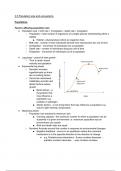
● Lag phase - period of slow growth
○ Time to reach sexual
maturity and gestation
● Exponential log phase
○ Numbers increase
logarithmically as there
are no limiting factors
○ Cannot be maintained
indefinitely as biotic and
abiotic factors reduce
growth
■ Biotic factors - a
living factor that
may influence a
population e.g.
predator or pathogen
■ Abiotic factors - a non-living factor that may influence a population e.g.
soil pH, light intensity, temperature
● Stationary phase
○ Population has reached its maximum size
■ Carrying capacity - the maximum number to which a population can be
sustained in a given environment i.e. maximum population size an
environment can sustain
■ Birth and death rates are equal
○ Numbers fluctuate around this number in response to environmental changes
■ Negative feedback - occurs in an equilibrium where the corrective
mechanism is in the opposite direction to the direction of change
● e.g. Predator-prey interactions - if prey numbers decrease ⇾
predator numbers decrease ⇾ prey numbers increase
, ● Death phase
○ Death exceeds births ⇾ population size
decreases
○ Factors that have reduced population
growth become more significant
○ A population crash is a sudden
decrease in population numbers
■ Occurs when a population
greatly exceeds its carrying
capacity
■ After a population crash the
carrying capacity for that
environment will be lower, due to damaged caused by overpopulation
Strategies for population growth
● Fugitive species
○ Cannot tolerate competition
○ Increase numbers by rapid reproduction and effective dispersal mechanisms ⇾
invade new environments rapidly
○ E.g. algae & weeds
● Equilibrium species
○ Control population by competition within a stable habitat
○ Have a one-step growth curve (sigmoid, S-shaped) rabbits and bacteria
populations show this kind of growth
Calculating population increase from a graph
Growth rate = growth
time
Growth rate = antilog10 large population - antilog10 small population
number of days
Growth rate = 105 - 102 ⇾ 19,980 per day
5
Antilog = [shift] [log] [number]
Density-dependant & density-independent factors
Density-dependant
● Their effect increases as the density of the population increases
● Biotic factors
○ Disease is more easily spread
Populations
Factors affecting population size
● Population size = birth rate + immigration - death rate + emigration
○ Population = total number of organisms of a single species interbreeding within a
habitat
■ Habitat - physical place where an organism lives
○ Birth rate - number of new individuals derived from reproduction per unit of time
○ Immigration - movement of individuals into a population
○ Death rate - number of individuals dying per unit of time
○ Emigration - movement of individuals out of a population
● Lag phase - period of slow growth
○ Time to reach sexual
maturity and gestation
● Exponential log phase
○ Numbers increase
logarithmically as there
are no limiting factors
○ Cannot be maintained
indefinitely as biotic and
abiotic factors reduce
growth
■ Biotic factors - a
living factor that
may influence a
population e.g.
predator or pathogen
■ Abiotic factors - a non-living factor that may influence a population e.g.
soil pH, light intensity, temperature
● Stationary phase
○ Population has reached its maximum size
■ Carrying capacity - the maximum number to which a population can be
sustained in a given environment i.e. maximum population size an
environment can sustain
■ Birth and death rates are equal
○ Numbers fluctuate around this number in response to environmental changes
■ Negative feedback - occurs in an equilibrium where the corrective
mechanism is in the opposite direction to the direction of change
● e.g. Predator-prey interactions - if prey numbers decrease ⇾
predator numbers decrease ⇾ prey numbers increase
, ● Death phase
○ Death exceeds births ⇾ population size
decreases
○ Factors that have reduced population
growth become more significant
○ A population crash is a sudden
decrease in population numbers
■ Occurs when a population
greatly exceeds its carrying
capacity
■ After a population crash the
carrying capacity for that
environment will be lower, due to damaged caused by overpopulation
Strategies for population growth
● Fugitive species
○ Cannot tolerate competition
○ Increase numbers by rapid reproduction and effective dispersal mechanisms ⇾
invade new environments rapidly
○ E.g. algae & weeds
● Equilibrium species
○ Control population by competition within a stable habitat
○ Have a one-step growth curve (sigmoid, S-shaped) rabbits and bacteria
populations show this kind of growth
Calculating population increase from a graph
Growth rate = growth
time
Growth rate = antilog10 large population - antilog10 small population
number of days
Growth rate = 105 - 102 ⇾ 19,980 per day
5
Antilog = [shift] [log] [number]
Density-dependant & density-independent factors
Density-dependant
● Their effect increases as the density of the population increases
● Biotic factors
○ Disease is more easily spread