2024 Q&A: ATI Level 2 Exam Study Guide 100% Correct
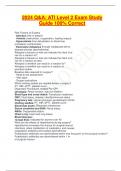
2024 Q&A: ATI Level 2 Exam Study Guide 100% Correct Risk Factors of Surgery - Infection (risk of sepsis) - Anemia (malnutrition, oxygenation, healing impact) - Hypovolemia from dehydration or blood loss (circulatory compromise) - Electrolyte imbalance through inadequate diet or disease process (dysrhythmias) Allergies to banana or kiwi can indicate the client is at risk for a reaction to? Allergies to banana or kiwi can indicate the client is at risk for a reaction to latex Allergies to shellfish can result in a reaction to? Allergies to shellfish can result in a reaction to povidone-iodine. Baseline data required for surgery? - Head-to-toe assessment - Vital signs - Oxygen saturations Which clotting studies are needed before a surgery? PT, INR, aPTT, platelet count Diagnostic Procedures needed Pre-OP? Urinalysis: Renal function, rule out infection Blood type and cross match: Transfusion readiness CBC: Fluid status, anemia, infection/immune status Pregnancy test: Human chorionic gonadotropin (HCG) Clotting studies: PT, INR, aPTT, platelet count Electrolyte levels: Electrolyte imbalances Serum creatinine and BUN: Renal status ABGs: Oxygenation status Chest x-ray: Heart and lung status Blood Glucose: 12-lead ECG: Indicated for anyone over 40 What are the effects of Hypothermia during surgery? Hypothermia increases the chance for surgical wound infections, alters metabolism of medication, and causes coagulation problems and cardiac dysrhythmias Prophylactic antibiotics are administered within how long prior to first surgical incision? Prophylactic antibiotics are administered within 1 hr of surgical incision Would asking a patient to sign Pre-Op documents be acceptable once the patient has been administered medications? No What are priority teachings related to prevention of thrombi and respiratory complications post surgery? Demonstrate and teach the importance of range-of-motion exercises and early ambulation Post surgery a patient begins to show signs of Respiratory depression, drowsiness and dizziness. What would be priority nursing interventions? - Monitor respiratory rate and oxygen saturation. - Administer oxygen. - Administer a reversal agent, flumazenil. (Used for reversal of conscious sedatives) A patient post surgery presents with the following symptoms, what type of medication can be causing the adverse effects? Respiratory depression - Drowsiness - Dizziness, - Constipation
Written for
- Institution
- ATI
- Course
- ATI
Document information
- Uploaded on
- May 29, 2024
- Number of pages
- 5
- Written in
- 2023/2024
- Type
- Exam (elaborations)
- Contains
- Questions & answers
Subjects
-
2024 qa ati level 2 exam study guide 100 corre

Also available in package deal