N 528 Assessment #2 Fluid, Electrolyte, and Acid-Base – ATI Exam Questions With 100% Correct Answers
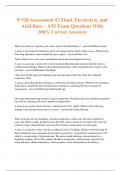
N 528 Assessment #2 Fluid, Electrolyte, and Acid-Base – ATI Exam Questions With 100% Correct Answers What assessment is a priority to do with a client with Dehydration ? - answerMental status A nurse is reviewing the laboratory report of a client who has fluid volume excess. Which of the following laboratory values should the nurse expect? - answerHct 34% Fluid volume excess can cause hemodilution and a decreased hematocrit level A nurse is assessing a client who is receiving hydrochlorothiazide and notes that the client is confused and lethargic. Which of the following laboratory values should the nurse report to the provider? - answerSodium 128 mEq/L The nurse should report this finding to the provider and monitor the client for weakened respiratory effort A nurse is providing dietary teaching to a client who has kidney disease. Which of the following food choices should the nurse include in the teaching as containing the lowest amount of magnesium? - answerOne large hard-boiled egg One large hard-boiled egg contains 5 mg of magnesium. Therefore, the nurse should recommend this food as containing the lowest amount of magnesium. A nurse is assessing a client who has a calcium level of 8.1 mg/dL. Which of the following findings is the priority for the nurse to assess? - answerCardiac Rhythm When using the airway, breathing, circulation approach to client care, the nurse should first assess the client's cardiac rhythm because this total serum calcium level is below the expected reference range. Hypocalcemia can cause ECG changes, bradycardia, or tachycardia A nurse is caring for a client who has a sodium level of 155 mEq/L. Which of the following IV fluids should the nurse anticipate the provider to prescribe? - answerA sodium level of 155 mEq/L is an indication of hypernatremia. The nurse should anticipate a prescription for a hypotonic solution. The 0.45% sodium chloride is a hypotonic solution used to provide free water and treat cellular dehydration, which promotes waste elimination by the kidneys. A nurse is assessing a client who has hypomagnesemia. Which of the following findings should the nurse expect? - answerHyperactive deep-tendon reflexes. Other expected findings include muscle cramps, numbness, and tingling. Increased BP, Decreased bowel sounds and insomnia A nurse is assessing a client who has a phosphorus level of 2.4 mg/dL. Which of the following findings should the nurse expect? - answerThis phosphorus level is below the expected reference range. The nurse should expect the client to have slow peripheral pulses. Decrease in cardiac output. Weakness of skeletal muscles and rhabdomyolysis, which is acute muscle breakdown. Assess for manifestations of kidney failure. A nurse is caring for a client who is experiencing respiratory distress as a result of pulmonary edema. Which of the following actions should the nurse take first? - answerInitiate high-flow oxygen therapy by face mask at 5 to 6 L/min to keep the client's oxygen saturation above 90%. cardiac manifestations of pulmonary edema - answerpremature ventricular contractions and dysrhythmias A nurse is planning care for a client who has a potassium level of 3.0 mEq/L. The nurse should plan to monitor the client for which of the following findings? - answerorthostatic hypotension, which places them at risk for falls. Weakening of the respiratory muscles and shallow respirations, weak and thready pulse. weak hand grip strength and weak deep-tendon reflexes. A nurse is providing teaching to a client who is at risk for developing respiratory acidosis following surgery. Which of the following statements by the client indicates an understanding of the teaching? - answer"I will use the incentive spirometer every hour." Respiratory depression and limited chest expansion are both causes of respiratory acidosis. Using an incentive spirometer will promote adequate chest expansion. Dehydration can cause what type of acid-base imbalance - answermetabolic acidosis The client is short of breath, appears restless, and has a respiratory rate of 28/min. The client's ABG results are pH 7.52, PaO2 89 mm Hg, PaCO2 28 mm Hg, and HCO3- 24 mEq/L. Which of the following actions should the nurse take? - answerCalming the client should decrease the respiratory rate, which will cause the client's carbon dioxide levels to increase to expected levels of 35 to 45 mm Hg and lower the pH to expected levels of 7.35 to 7.45. A nurse is reviewing the medical record of a client who has diabetes mellitus and is receiving regular insulin by continuous IV infusion to treat diabetic ketoacidosis. Which of the following findings should the nurse report to the provider? - answerSerum potassium 3.0 mEq/L. Hypokalemia is a serious complication that can occur when a client who has diabetic
Written for
- Institution
- Fluid and Electrolytes
- Course
- Fluid and Electrolytes
Document information
- Uploaded on
- May 28, 2024
- Number of pages
- 18
- Written in
- 2023/2024
- Type
- Exam (elaborations)
- Contains
- Questions & answers
Subjects
-
n 528 assessment 2 fluid electrolyte and acid b

Also available in package deal