anking 7 Wise Money [f BML PsyPal i Application univers.. { AnkWeb. [} Play & Learn Chess...[ ome ]unmatched. Oifce of Clinical Re... @ UWorld - Login Q
_-mzs
Question Id: 20932
Pia <
Previous
>
Next
PDF Compressor Free Version
A13-y · ' ' 'e e'a' 'A e '6 gr 4 e' t =' '$} '= 4'% t = '$ ' 0' 're, ' @ 'g ]'=I =4
receIv Exhibit Display
Increa
exam
adeno
Histo
, 7 Wise Money [f BML i
anking zyxwvutsrqponmlkjihgfedcbaZYXWVUTSRQPONMLKJIHGFEDCBA
PsyPal Application univers.. { AnkWeb. [} Play & Learn Chess...[ ome ]unmatched. @ UWorld - Login Q
Oifce of Clinical Re... zyxwvutsrqponmlkjihgfedcb
Item 2 of 2
Question Id: 20932
aPwan Previous
PDF Compressor Free Version
¢
ၑ
.
ts 't
~' e!»,
क
• ° 92)
zyxwvutsrqponmlkjihgfedcbaZYXWVUTSRQPONMLKJIHGFEDCBA
क
क
j,
. ,-._._.r --
i5it
's
z £3@i
2t3 .it
4"
±.#
zyxwvutsrqponm
Gs
gs
s
ar.
2,
;f!/'.l
llt.
{iE ..--n-•: • ---...•...,_ _
... ... •
ၑ
ti.. .<£
@uwore F e? ?). 7
Which of the following is the most likely cause of this patient's presentation?
A. Aspergillus fumigatus
Q B. Bartonella henselae
@ C. Cryptococcus neoformans
Q D. Epstein-Barr virus
, 7 Wise Money [f BML i
anking zyxwvutsrqponmlkjihgfedcbaZYXWVUTSRQPONMLKJIHGFEDCBA
PsyPal Application univers.. { AnkWeb. [} Play & Learn Chess...[ ome ]unmatched. @ UWorld - Login Q
Oifce of Clinical Re... zyxwvutsrqponmlkjihgfedcb
Item 2 of 2
Question Id: 20932
aPwan Previous
PDF Compressor Free Version
¢
ၑ
.
ts 't
~' e!»,
क
• ° 92)
zyxwvutsrqponmlkjihgfedcbaZYXWVUTSRQPONMLKJIHGFEDCBA
क
क
j,
. ,-._._.r --
i5it
's
z £3@i
2t3 .it
4"
±.#
zyxwvutsrqponm
Gs
gs
s
ar.
2,
;f!/'.l
llt.
{iE ..--n-•: • ---...•...,_ _
... ... •
ၑ
ti.. .<£
@uwore F e? ?). 7
Which of the following is the most likely cause of this patient's presentation?
Q A. Aspergillus fumigatus (5%)
B. Bartonella henselae (12%)
C. Cryptococcus neoformans (3%)
V@ D. Epstein-Barr virus (70%)
, 7 Wise Money [ BML &i Application univers... { AnkWeb. [} Play &zyxwvutsrqponmlkjihgfedcbaZYXWVUTSRQPONMLKJIHGFEDCBA
Learn Chess...[ ome ]unmatched. Oifce of Clinical Re... @ UWorld - Login
PayPal zyxwvutsrqponmlkjihgfedcbaZYXWVUTSRQPONMLKJIHGFEDCBA
anking zyxwvutsrqponmlkjihgfedcbaZYXWVUTSRQPONMLKJIHGFEDCBA Q
=- mzs
Question Id: 20932
Pia <
Previous
>
Next
PDF Compressor Free Version
Posttransplantation lymphoproliferative disorder
• Immunosuppression following solid-organ or hematopoietic stem cell
Etiology transplantation » suppressed cytotoxic T-cell immunosurveillance » Epstein-
Barr virus-encoded proteins drive unchecked B-cell growth/expansion
• Mononucleosis-like symptoms (eg, fever, night sweats, hepatosplenomegaly,
lymphadenopathy)
Manifestations
• Extranodal mass in approximately 50%
• Biopsy findings: polyclonal or monoclonal B-cell proliferation
This patient underwent solid organ transplantation and is on high-dose immunosuppressive medications due to
acute graft rejection. He subsequently developed mononucleosis-like symptoms (eg, fever, night sweats,
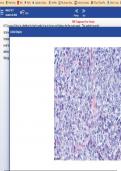
lymphadenopathy, hepatosplenomegaly, leukopenia) with biopsy showing large, atypical B cells completely
effacing the lymph node architecture. This constellation of findings likely indicates posttrans plantation
lymphoproliferative disorder (PTLD).
PTLD is a plasmocytic or lymphoid proliferation that occurs in the weeks or months following solid-organ or
hematopoietic stem cell transplantation. It is generally caused by proliferation of Epstein-Barr virus (EBV) in
donor or host cells due to reduced cytotoxic T-cell immunosurveillance from high dose immunosuppressive
therapy.
EBV replication promotes B-cell proliferation due to the expression of viral membrane proteins (latent membrane
protein 1/2A) that mimic B-cell antigen stimulation signals; it also promotes B-cell survival due to the expression
of viral nuclear transcription factors (EBNA-2/LP) that activate host survival genes. These virus-mediated changes
_-mzs
Question Id: 20932
Pia <
Previous
>
Next
PDF Compressor Free Version
A13-y · ' ' 'e e'a' 'A e '6 gr 4 e' t =' '$} '= 4'% t = '$ ' 0' 're, ' @ 'g ]'=I =4
receIv Exhibit Display
Increa
exam
adeno
Histo
, 7 Wise Money [f BML i
anking zyxwvutsrqponmlkjihgfedcbaZYXWVUTSRQPONMLKJIHGFEDCBA
PsyPal Application univers.. { AnkWeb. [} Play & Learn Chess...[ ome ]unmatched. @ UWorld - Login Q
Oifce of Clinical Re... zyxwvutsrqponmlkjihgfedcb
Item 2 of 2
Question Id: 20932
aPwan Previous
PDF Compressor Free Version
¢
ၑ
.
ts 't
~' e!»,
क
• ° 92)
zyxwvutsrqponmlkjihgfedcbaZYXWVUTSRQPONMLKJIHGFEDCBA
क
क
j,
. ,-._._.r --
i5it
's
z £3@i
2t3 .it
4"
±.#
zyxwvutsrqponm
Gs
gs
s
ar.
2,
;f!/'.l
llt.
{iE ..--n-•: • ---...•...,_ _
... ... •
ၑ
ti.. .<£
@uwore F e? ?). 7
Which of the following is the most likely cause of this patient's presentation?
A. Aspergillus fumigatus
Q B. Bartonella henselae
@ C. Cryptococcus neoformans
Q D. Epstein-Barr virus
, 7 Wise Money [f BML i
anking zyxwvutsrqponmlkjihgfedcbaZYXWVUTSRQPONMLKJIHGFEDCBA
PsyPal Application univers.. { AnkWeb. [} Play & Learn Chess...[ ome ]unmatched. @ UWorld - Login Q
Oifce of Clinical Re... zyxwvutsrqponmlkjihgfedcb
Item 2 of 2
Question Id: 20932
aPwan Previous
PDF Compressor Free Version
¢
ၑ
.
ts 't
~' e!»,
क
• ° 92)
zyxwvutsrqponmlkjihgfedcbaZYXWVUTSRQPONMLKJIHGFEDCBA
क
क
j,
. ,-._._.r --
i5it
's
z £3@i
2t3 .it
4"
±.#
zyxwvutsrqponm
Gs
gs
s
ar.
2,
;f!/'.l
llt.
{iE ..--n-•: • ---...•...,_ _
... ... •
ၑ
ti.. .<£
@uwore F e? ?). 7
Which of the following is the most likely cause of this patient's presentation?
Q A. Aspergillus fumigatus (5%)
B. Bartonella henselae (12%)
C. Cryptococcus neoformans (3%)
V@ D. Epstein-Barr virus (70%)
, 7 Wise Money [ BML &i Application univers... { AnkWeb. [} Play &zyxwvutsrqponmlkjihgfedcbaZYXWVUTSRQPONMLKJIHGFEDCBA
Learn Chess...[ ome ]unmatched. Oifce of Clinical Re... @ UWorld - Login
PayPal zyxwvutsrqponmlkjihgfedcbaZYXWVUTSRQPONMLKJIHGFEDCBA
anking zyxwvutsrqponmlkjihgfedcbaZYXWVUTSRQPONMLKJIHGFEDCBA Q
=- mzs
Question Id: 20932
Pia <
Previous
>
Next
PDF Compressor Free Version
Posttransplantation lymphoproliferative disorder
• Immunosuppression following solid-organ or hematopoietic stem cell
Etiology transplantation » suppressed cytotoxic T-cell immunosurveillance » Epstein-
Barr virus-encoded proteins drive unchecked B-cell growth/expansion
• Mononucleosis-like symptoms (eg, fever, night sweats, hepatosplenomegaly,
lymphadenopathy)
Manifestations
• Extranodal mass in approximately 50%
• Biopsy findings: polyclonal or monoclonal B-cell proliferation
This patient underwent solid organ transplantation and is on high-dose immunosuppressive medications due to
acute graft rejection. He subsequently developed mononucleosis-like symptoms (eg, fever, night sweats,
lymphadenopathy, hepatosplenomegaly, leukopenia) with biopsy showing large, atypical B cells completely
effacing the lymph node architecture. This constellation of findings likely indicates posttrans plantation
lymphoproliferative disorder (PTLD).
PTLD is a plasmocytic or lymphoid proliferation that occurs in the weeks or months following solid-organ or
hematopoietic stem cell transplantation. It is generally caused by proliferation of Epstein-Barr virus (EBV) in
donor or host cells due to reduced cytotoxic T-cell immunosurveillance from high dose immunosuppressive
therapy.
EBV replication promotes B-cell proliferation due to the expression of viral membrane proteins (latent membrane
protein 1/2A) that mimic B-cell antigen stimulation signals; it also promotes B-cell survival due to the expression
of viral nuclear transcription factors (EBNA-2/LP) that activate host survival genes. These virus-mediated changes