Femininity
-position of the prostitute
-Iago silencing of Emilia
-willow scene as an addition
Iago voyeurism!
racism
Iago’s silencing of women!
Treatment of Bianca
Self-dramatic Othello
reputation
EMILIA AD CASSIO
To turn turk
Othellophilia!
Women are possessions.
Iago motiveless
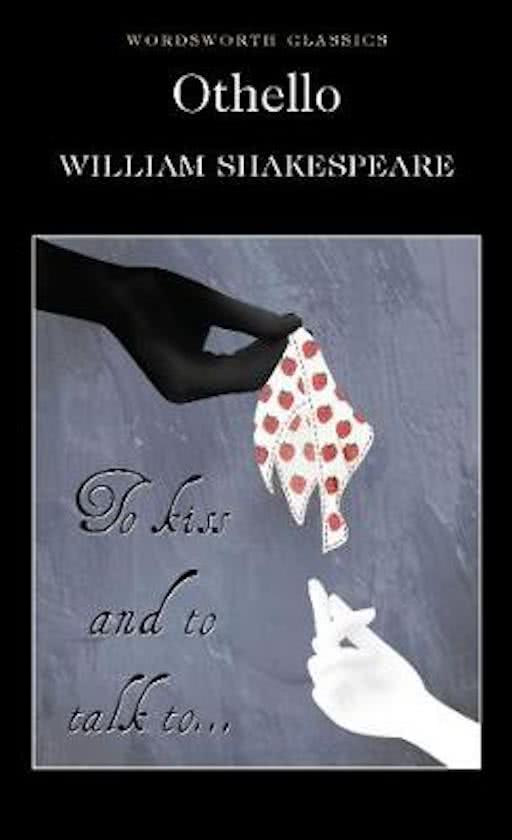
How is racism presented in Othello.
Shakespeare presents Iago as manipulating the pre-existent societal racist views within the Venetian society
to gain his own power and control over that of Othello. By continuously referring to Othello’s race in
derogatory terms, Iago gradually diminishes Othello’s power and reputation. Repetitively he dehumanises
Othello to ‘The Moor’ and references his distinguishing features: ‘thicklips’. Iago’s addressing of the
audience through metatextual comedic jokes and his soliloquies, also showcases his understanding of
societal beliefs and his ability to form his audience into accomplices. In addition to challenging the power
dynamic, Iago also challenges inter-racial relationships as unacceptable, describing Othello as ‘a black ram
tupping your white ewe’, here both Othello and Desdemona re animalised to ‘ram’ and ‘ewe’. He further
uses olfactory imagery to disparage the relationship to ‘smell in such a will most rank’, asserting his disgust
of Othello being with a white woman. Iago’s fear of Othello’s interracial relationship are not just with
Desdemona but with his own wife Emilia. Iago is successful in his efforts, as, through the course of the play
Othello internalises this racist language and eventually believes it: ‘what delight shall she have to look on
the devil?’ ‘devil’ here showcasing his now demonisation of himself. Othello further calls upon ‘black
vengeance, from hollow hell!’ clearly now associating blackness with the negative through the reference to
‘vengeance’ and ‘hell’. Iago therefore successfully manipulates and destroys Othello’s love for Desdemona
by drawing on the racist nature of Elizabethan England and the deemed unnaturally of interracial relations.
There is however, a divergence in views as to why Shakespeare uses Iago in this way or to why Iago
operates in this way. In the 1820s Coleridge expressed Iago as having a ‘motive hunting motiveless
malignity’, expressing Iago to be truly unmotivated and simply acting as an agent of chaos. Furthermore,
Coleridge believed Othello to be unlikely to be black, as the interracial relationship of Desdemona and
Othello appeared too unrealistic, and instead depicted Othello as having a lighter skin tone of North African
or Southern European decent, stemming the ‘bronze age of Othello’. However, J.R Andres contradicted the
‘motiveless’ behaviour depicted by Coleridge dictating: ‘Iago is not motiveless but clearly motivated by
racism and hatred’. Andres argues that Iago’s desperation to destruct Othello’s reputation is due to his
hatred of a black man disrupting the hierarchy of white patriarchy and holding the ability to dictate power
over him. However, Iago’s racist behaviour can be viewed not as a result of his personal inherent racism as
Andres suggests but instead his exploitation of pre-existent social racist constructs within Elizabethan and
Venecian society, simply to gain power, and highlighting the ease with which a white patriarchy can use
racism to dimmish black power. Iago poses the question: ‘I play the villain?’. However, Okri believes this
reading to leave behind Othello’s character of which is portrayed in a systemically racist manner, holding
significant stereotypes of the black man as volent and dangerous. Okri views Othello as ‘a white man’s
myth of the black man’, and therefore despite Iago’s provoking racist behaviours, Shakespeare’s writing
itself of Othello’s actions is formed from a racist ideology.
, [conclude with what you think of these different perspectives]
[don’t think you need this one] Kott draws on the power of Iago to destruct Othello and his relationships,
however views Iago as external to the boundaries of the play, depicting Iago as the ‘diabolical stage
manager’.
Emilia’s role within Othello, acts as a voice of feminism, exposing the unjust position of women within the
early modern society. She evokes to the misogynistic placement of women as the subordinate and
possessions of their husbands, through gustatory imagery: ‘they are all stomachs and we all but food; they
eat us hungerly and when they are full they belch us’. Women here are portrayed as inanimate objects that
are devoured for masculine pleasure, with no agency of their own, and thrown out when no longer needed.
Furthermore, the idea of an empty ‘stomach’ presents women as simply filling a hole to then be disposed:
‘they belch us’, the sexual undertones highlighting the focus on feminine physicality rather than love. This
gustatory imagery returns in the following act where Emilia dictates: ‘their wives have sense like them: they
see and smell and have their palates both for sweet and sour as husbands have’. Emilia expresses that alike
men, women too can have sexual desire (‘palates both for sweet and sour’). This was a belief that would
have been shamed upon within the Elizabethan context where women were dually presented as either the
pure and innocent ‘Madonnas’ or promiscuous ‘whores’, but never both. Within Othello, feminine sexuality
is heavily shamed by the male characters animalising sexual women to ‘foul toads’ ‘fitchews’ ‘beasts’ and
‘creatures’. From a male narrative, women are to blame for infidelity, yet Emilia not only expresses the
ability for women to have ‘affections…as men have’ but also addresses the husband’s fault ‘if their wives do
fall’: ‘they slack their duties and pour our treasures into foreign laps; or else break out in peevish jealousies,
throwing restraint upon us ; or say they strike us.’ Emilia draws on male infidelity: ‘pour our treasures into
foreign laps’, abuse: ‘or say they strike us’ and overall how the lack of love and respect from men within
these relationships is a dismissed factor in being cuckolded. Originally the willow scene, of which these
lines are spoken, was not included within the play, L. Jardine highlights how the addition of Emilia’s
damning social commentary allows the female characters to escape a ‘stylised, emberlancic representation
of female passivity’ and the hypophora and high rhetoric of Emilia’s speech acts alike a political speech.
Therefore arguably, Shakespeare’s Othello acts as a platform to explore the mistruths of the subordinate
feminine, and via the tragic ending of both the death of Emilia and Desdemona, Shakespeare highlights the
damage of silencing the female voice. However, in contrary opinion, Shakespeare as a man and writing his
female roles for an all male cast simply uses the aesthetic of feminine sacrifice as a means to enforce the
impact of Othello as a play and reminding his audience that there is no positive ending for these
protofeminist characters within the Elizabethan society.
Shakespeare expresses Cassio as a vehicle to present the masculine belief in the inherent duplicity of
women. Sigmund Freud in the early 1900s coined the Madonna-Whore complex, of which he found women
to be placed within the margins of either the virginious ‘Madonna’s’ or promiscuous ‘Whores’, Cassio
expresses clear accordance with this ideology, placing Desdemona and Bianca as the ‘Madonna’ and
‘Whore’. In the second act of the play, in response to Iago’s voyeuristic depiction of the lack of
consummation of Desdemona and Othello’s marriage, Cassio refers to her as ‘most fresh and delicate’. With
‘fresh’ and ‘delciate’ projecting Desdemona to be innocent and precious due to her virginity. When Iago
further describes her eyes sounding ‘a parley to provocation’ which Cassio revokes: ‘an inviting eye, and yet
methinks right modest’, once more evidencing his view of Desdemona as a ‘madonna’. He finishes the line
of conversation by describing Desdemona as ‘indeed perfection’. Contrarily two acts later in the play, Cassio
describes Bianca, his prostitute and therefore ‘whore’, with significantly different language. When Iago first
brings up Bianca he too dehumanises her to ‘a creature that dotes on Cassio’, the article ‘a’ here suggests
Cassio has a large range of women of whom ‘dotes on’ him, highlighting his desire for feminine physicality,
the use of ‘creature’ in reference to Bianca, projects her to being unhuman, due to her sexuality, which
once more enforces the patriarchal belief that a woman must be chaste to be of value. Iago continues to
express to Cassio, Bianca’s love for him and desire for Cassio to marry her, in response Cassio laughs,
dismissing Bianca as ever being eligible. He then refers to Bianca as ‘the monkey’, dehumanising her and
-position of the prostitute
-Iago silencing of Emilia
-willow scene as an addition
Iago voyeurism!
racism
Iago’s silencing of women!
Treatment of Bianca
Self-dramatic Othello
reputation
EMILIA AD CASSIO
To turn turk
Othellophilia!
Women are possessions.
Iago motiveless
How is racism presented in Othello.
Shakespeare presents Iago as manipulating the pre-existent societal racist views within the Venetian society
to gain his own power and control over that of Othello. By continuously referring to Othello’s race in
derogatory terms, Iago gradually diminishes Othello’s power and reputation. Repetitively he dehumanises
Othello to ‘The Moor’ and references his distinguishing features: ‘thicklips’. Iago’s addressing of the
audience through metatextual comedic jokes and his soliloquies, also showcases his understanding of
societal beliefs and his ability to form his audience into accomplices. In addition to challenging the power
dynamic, Iago also challenges inter-racial relationships as unacceptable, describing Othello as ‘a black ram
tupping your white ewe’, here both Othello and Desdemona re animalised to ‘ram’ and ‘ewe’. He further
uses olfactory imagery to disparage the relationship to ‘smell in such a will most rank’, asserting his disgust
of Othello being with a white woman. Iago’s fear of Othello’s interracial relationship are not just with
Desdemona but with his own wife Emilia. Iago is successful in his efforts, as, through the course of the play
Othello internalises this racist language and eventually believes it: ‘what delight shall she have to look on
the devil?’ ‘devil’ here showcasing his now demonisation of himself. Othello further calls upon ‘black
vengeance, from hollow hell!’ clearly now associating blackness with the negative through the reference to
‘vengeance’ and ‘hell’. Iago therefore successfully manipulates and destroys Othello’s love for Desdemona
by drawing on the racist nature of Elizabethan England and the deemed unnaturally of interracial relations.
There is however, a divergence in views as to why Shakespeare uses Iago in this way or to why Iago
operates in this way. In the 1820s Coleridge expressed Iago as having a ‘motive hunting motiveless
malignity’, expressing Iago to be truly unmotivated and simply acting as an agent of chaos. Furthermore,
Coleridge believed Othello to be unlikely to be black, as the interracial relationship of Desdemona and
Othello appeared too unrealistic, and instead depicted Othello as having a lighter skin tone of North African
or Southern European decent, stemming the ‘bronze age of Othello’. However, J.R Andres contradicted the
‘motiveless’ behaviour depicted by Coleridge dictating: ‘Iago is not motiveless but clearly motivated by
racism and hatred’. Andres argues that Iago’s desperation to destruct Othello’s reputation is due to his
hatred of a black man disrupting the hierarchy of white patriarchy and holding the ability to dictate power
over him. However, Iago’s racist behaviour can be viewed not as a result of his personal inherent racism as
Andres suggests but instead his exploitation of pre-existent social racist constructs within Elizabethan and
Venecian society, simply to gain power, and highlighting the ease with which a white patriarchy can use
racism to dimmish black power. Iago poses the question: ‘I play the villain?’. However, Okri believes this
reading to leave behind Othello’s character of which is portrayed in a systemically racist manner, holding
significant stereotypes of the black man as volent and dangerous. Okri views Othello as ‘a white man’s
myth of the black man’, and therefore despite Iago’s provoking racist behaviours, Shakespeare’s writing
itself of Othello’s actions is formed from a racist ideology.
, [conclude with what you think of these different perspectives]
[don’t think you need this one] Kott draws on the power of Iago to destruct Othello and his relationships,
however views Iago as external to the boundaries of the play, depicting Iago as the ‘diabolical stage
manager’.
Emilia’s role within Othello, acts as a voice of feminism, exposing the unjust position of women within the
early modern society. She evokes to the misogynistic placement of women as the subordinate and
possessions of their husbands, through gustatory imagery: ‘they are all stomachs and we all but food; they
eat us hungerly and when they are full they belch us’. Women here are portrayed as inanimate objects that
are devoured for masculine pleasure, with no agency of their own, and thrown out when no longer needed.
Furthermore, the idea of an empty ‘stomach’ presents women as simply filling a hole to then be disposed:
‘they belch us’, the sexual undertones highlighting the focus on feminine physicality rather than love. This
gustatory imagery returns in the following act where Emilia dictates: ‘their wives have sense like them: they
see and smell and have their palates both for sweet and sour as husbands have’. Emilia expresses that alike
men, women too can have sexual desire (‘palates both for sweet and sour’). This was a belief that would
have been shamed upon within the Elizabethan context where women were dually presented as either the
pure and innocent ‘Madonnas’ or promiscuous ‘whores’, but never both. Within Othello, feminine sexuality
is heavily shamed by the male characters animalising sexual women to ‘foul toads’ ‘fitchews’ ‘beasts’ and
‘creatures’. From a male narrative, women are to blame for infidelity, yet Emilia not only expresses the
ability for women to have ‘affections…as men have’ but also addresses the husband’s fault ‘if their wives do
fall’: ‘they slack their duties and pour our treasures into foreign laps; or else break out in peevish jealousies,
throwing restraint upon us ; or say they strike us.’ Emilia draws on male infidelity: ‘pour our treasures into
foreign laps’, abuse: ‘or say they strike us’ and overall how the lack of love and respect from men within
these relationships is a dismissed factor in being cuckolded. Originally the willow scene, of which these
lines are spoken, was not included within the play, L. Jardine highlights how the addition of Emilia’s
damning social commentary allows the female characters to escape a ‘stylised, emberlancic representation
of female passivity’ and the hypophora and high rhetoric of Emilia’s speech acts alike a political speech.
Therefore arguably, Shakespeare’s Othello acts as a platform to explore the mistruths of the subordinate
feminine, and via the tragic ending of both the death of Emilia and Desdemona, Shakespeare highlights the
damage of silencing the female voice. However, in contrary opinion, Shakespeare as a man and writing his
female roles for an all male cast simply uses the aesthetic of feminine sacrifice as a means to enforce the
impact of Othello as a play and reminding his audience that there is no positive ending for these
protofeminist characters within the Elizabethan society.
Shakespeare expresses Cassio as a vehicle to present the masculine belief in the inherent duplicity of
women. Sigmund Freud in the early 1900s coined the Madonna-Whore complex, of which he found women
to be placed within the margins of either the virginious ‘Madonna’s’ or promiscuous ‘Whores’, Cassio
expresses clear accordance with this ideology, placing Desdemona and Bianca as the ‘Madonna’ and
‘Whore’. In the second act of the play, in response to Iago’s voyeuristic depiction of the lack of
consummation of Desdemona and Othello’s marriage, Cassio refers to her as ‘most fresh and delicate’. With
‘fresh’ and ‘delciate’ projecting Desdemona to be innocent and precious due to her virginity. When Iago
further describes her eyes sounding ‘a parley to provocation’ which Cassio revokes: ‘an inviting eye, and yet
methinks right modest’, once more evidencing his view of Desdemona as a ‘madonna’. He finishes the line
of conversation by describing Desdemona as ‘indeed perfection’. Contrarily two acts later in the play, Cassio
describes Bianca, his prostitute and therefore ‘whore’, with significantly different language. When Iago first
brings up Bianca he too dehumanises her to ‘a creature that dotes on Cassio’, the article ‘a’ here suggests
Cassio has a large range of women of whom ‘dotes on’ him, highlighting his desire for feminine physicality,
the use of ‘creature’ in reference to Bianca, projects her to being unhuman, due to her sexuality, which
once more enforces the patriarchal belief that a woman must be chaste to be of value. Iago continues to
express to Cassio, Bianca’s love for him and desire for Cassio to marry her, in response Cassio laughs,
dismissing Bianca as ever being eligible. He then refers to Bianca as ‘the monkey’, dehumanising her and