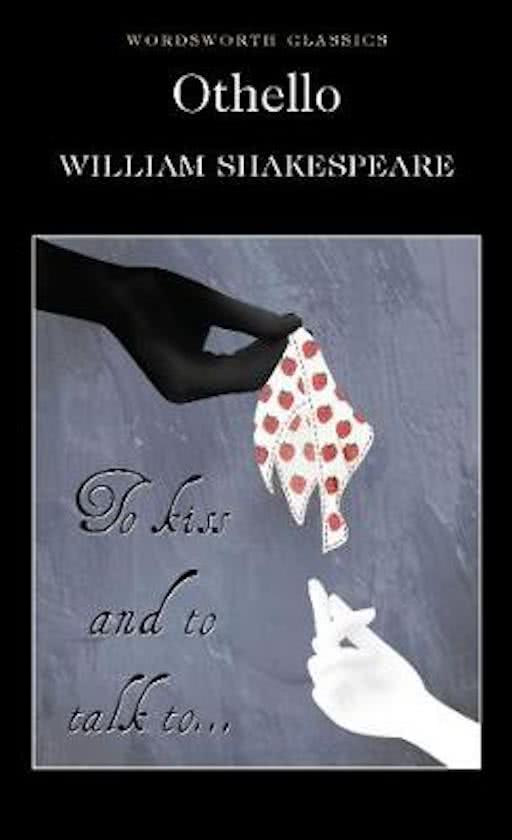
Jealousy
Shakespeare explores Iago’s perceived ‘motivelessness’ as a disguise for his
homosexually jealousy over Cassio and Desdemona, due to his unrequited love of Othello.
Through a queer reading Shakespeare arguably presents Iago’s homoerotic desire for Othello
as consequently resulting in his jealousy of Cassio and Desdemona and henceforth gifts him
with motive. Coleridge dictated in the beginning of the nineteenth century his belief of
Iago’s ‘motive hunting motiveless malignantly’ portraying Iago as truly unmotivated in his
actions towards Othello and instead an agent of chaos. However, Stanley Edgar Hyman
conflictingly explores homosexuality as motivation, he notes that cuckolding is an action of
indirect homosexual intimacy: ‘two men symbolically uniting sexually by sharing the body of
the same woman’, therefore suggesting that Iago holds an obsession of becoming intimate
with Othello. Iago’s jealousy of Desdemona, Hyman believed could be a result of Iago’s sense
of betrayal from Othello, after the homosocial bonds and loyalty they curated in the military.
Iago competes with Cassio to gain military promotions and therefore gain Othello’s
admiration. When Cassio wins Othello’s approval, Iago instantaneously showcases his
jealousy through his critiques of Cassio’s ability: ‘never set a squadron in the field nor the
division of a battle knows more than a spinster’, Iago attacks Cassio’s masculinity by equating
him to a ‘spinster’ and further calls him inept not only in the battlefield but also the
bedroom. This progresses into Iago’s infliction of blame onto Cassio for having slept with
Desdemona, as a means to form a hatred of Cassio in Othello’s mind.
Other performances, such as Laurence Olivier in 1938, David Suchet in 1985 and Sir Ian
McKellen in 1989 inferred the role similarly, due to Iago’s undying loyalty to his general: ‘I
am your own forever’, pleading himself as Othello’s property. Iago’s describing the imagined
dream of Cassio’s, Iago places himself as within the role of Desdemona, portraying his
subconscious jealousy of her too. He uses significant voyeuristic images to describe this
dream: ‘then kiss me hard, as if he plucked up kisses by the roots that grew upon my lips’
evoking a homoerotic image of Cassio and Iago. Shakespeare bases the play off of Gionvanni
Cinthio’s 1565 XXXXXX where ‘the ensign’ (Iago) yearns for Desdemona yet Shakespeare
purposely removes this plot line, perhaps in exchange for a suggested homoerotic reading.
Shakespeare explores Othello’s jealousy over Desdemona’s sexuality as being
fuelled by his position as a racial outsider and how Iago is able to exploit Othello’s
insecurities through racist stereotypes, eventually stimulating Othello’s self-doubt and
jealous reaction. Within 1570s Venice, where Shakespeare sets Othello, and the mirrored
audience of early 1600s England, blackness is undoubtably labelled as ‘other’ and interracial
relationships are deemed ‘unnatural’. This is replicated within the play where Othello is
immediately dehumanised to ‘the Moor’, the word ‘Moor’ here relating to the European
coloniser’s term for North African people. Iago describes within the opening scene the
horror of Desdemona and Othello’s relationship to Brabantio, Desdemona’s father: ‘an old
black ram is tupping your white ewe’. Here Othello is animalised to a ‘black ram’ with
emphasis on his race clearly expressing Iago’s belief in the inhumanity of this interracial
relationship.
Continuing this the crossing of races is seen to corrupt bloodlines as such a relationship
between Desdemona and Othello would result in Brabantio’s ‘nephews neighing’ to him,
Shakespeare explores Iago’s perceived ‘motivelessness’ as a disguise for his
homosexually jealousy over Cassio and Desdemona, due to his unrequited love of Othello.
Through a queer reading Shakespeare arguably presents Iago’s homoerotic desire for Othello
as consequently resulting in his jealousy of Cassio and Desdemona and henceforth gifts him
with motive. Coleridge dictated in the beginning of the nineteenth century his belief of
Iago’s ‘motive hunting motiveless malignantly’ portraying Iago as truly unmotivated in his
actions towards Othello and instead an agent of chaos. However, Stanley Edgar Hyman
conflictingly explores homosexuality as motivation, he notes that cuckolding is an action of
indirect homosexual intimacy: ‘two men symbolically uniting sexually by sharing the body of
the same woman’, therefore suggesting that Iago holds an obsession of becoming intimate
with Othello. Iago’s jealousy of Desdemona, Hyman believed could be a result of Iago’s sense
of betrayal from Othello, after the homosocial bonds and loyalty they curated in the military.
Iago competes with Cassio to gain military promotions and therefore gain Othello’s
admiration. When Cassio wins Othello’s approval, Iago instantaneously showcases his
jealousy through his critiques of Cassio’s ability: ‘never set a squadron in the field nor the
division of a battle knows more than a spinster’, Iago attacks Cassio’s masculinity by equating
him to a ‘spinster’ and further calls him inept not only in the battlefield but also the
bedroom. This progresses into Iago’s infliction of blame onto Cassio for having slept with
Desdemona, as a means to form a hatred of Cassio in Othello’s mind.
Other performances, such as Laurence Olivier in 1938, David Suchet in 1985 and Sir Ian
McKellen in 1989 inferred the role similarly, due to Iago’s undying loyalty to his general: ‘I
am your own forever’, pleading himself as Othello’s property. Iago’s describing the imagined
dream of Cassio’s, Iago places himself as within the role of Desdemona, portraying his
subconscious jealousy of her too. He uses significant voyeuristic images to describe this
dream: ‘then kiss me hard, as if he plucked up kisses by the roots that grew upon my lips’
evoking a homoerotic image of Cassio and Iago. Shakespeare bases the play off of Gionvanni
Cinthio’s 1565 XXXXXX where ‘the ensign’ (Iago) yearns for Desdemona yet Shakespeare
purposely removes this plot line, perhaps in exchange for a suggested homoerotic reading.
Shakespeare explores Othello’s jealousy over Desdemona’s sexuality as being
fuelled by his position as a racial outsider and how Iago is able to exploit Othello’s
insecurities through racist stereotypes, eventually stimulating Othello’s self-doubt and
jealous reaction. Within 1570s Venice, where Shakespeare sets Othello, and the mirrored
audience of early 1600s England, blackness is undoubtably labelled as ‘other’ and interracial
relationships are deemed ‘unnatural’. This is replicated within the play where Othello is
immediately dehumanised to ‘the Moor’, the word ‘Moor’ here relating to the European
coloniser’s term for North African people. Iago describes within the opening scene the
horror of Desdemona and Othello’s relationship to Brabantio, Desdemona’s father: ‘an old
black ram is tupping your white ewe’. Here Othello is animalised to a ‘black ram’ with
emphasis on his race clearly expressing Iago’s belief in the inhumanity of this interracial
relationship.
Continuing this the crossing of races is seen to corrupt bloodlines as such a relationship
between Desdemona and Othello would result in Brabantio’s ‘nephews neighing’ to him,