1
Slide 6 video
Mobile ads are leading in getting customers to go offline shopping and gaining more sales.
In a customer journey analysis, firms focus on how customers interact with multiple
touchpoints, moving from consideration, search, and purchase, to post- purchase,
consumption, and future engagement or repurchase.
Slide 8 Lemon & Verhoef
Pre-/Purchase/Post-purchase stages
Customer journey
Slide 9 till 11 | Herhausen et al, 2019. Channels + Touchpoints. FIC+CIC.
Channels. Customer contact points or the mediums through which the firm and the
customer interact (excludes one-way interactions).
Touchpoints. All types of one-way or two-way interactions between customers and firms
that involve any transactional or informational exchange (including customer-to-customer
interactions)
Brand-owned touch points? Website/app/stores
Social/external touch points? Reviews/WOM
Owned media. Website/app, channels you as a brand control
Paid media. Ads, channels the brand doesn’t control but can pay to appear in
Earned media. Reviews
Firm-Initiated Communication FIC. Ads/marketing emails (newsletters)
Customer-Initiated Communication CIC. Search/referrals
FIC to CIC indicates that you have caught the attention of the consumer.
Showrooming. Offline to online.
Webrooming. Online to offline
Moment of truth. Pivotal points that determine and shape a consumer's view of a brand
Slide 12 till 14 | ZMOT. Touchpoints
The Zero Moment of Truth. Between stimulus and point of sale (pre-shopping, in store, in
house)
Zero moments: moments in between seeing a marketing stimulus and going to the store /
point of sale (usually to get more information, look for discounts, compare brands etc.)
Touchpoints:
When moving through the customer journey to purchase, customers use and are exposed to
multiple touch points; each of these has direct and more indirect effects on purchase and
other customer behaviors.
It is important to identify critical touch points (“moments of truth”) throughout the customer
journey that have the most significant influence on key customer outcomes.
The effect of an individual touch point may depend on when it occurs in the overall customer
journey, on the type of consumer, on the type of product (e.g., hedonic or utilitarian) etc.
,Slide 15 till 19 | Herhausen et al. (2019) objectives
Identify customer segments based on the touchpoints used in the customer journey
Understand how the increasing importance of mobile devices affects these customer
segments.
Understand the relationships between product satisfaction, journey satisfaction, customer
inspiration (inspired in the store to buy something), and customer loyalty vary across the
different customer journey segments.
Slide 20 till end
Customer journey segments with very different characteristics (store-focused, multiple
touchpoint-, online-to-offline-, pragmatic online-, and extensive online segments)
No “showrooming” segment: the threat of showrooming may be overrated • Mobile devices
do not lead to a creation of a “mobile-only” segment. They are used as an additional search
channel that complements other touchpoints rather than replacing them.
Importance of physical stores despite increased usage of online & mobile
The retailer’s own touchpoints are rated as the most important for making the purchase
decision
Different levers should be used to increase loyalty across different segments
Customer experience is holistic, based on firm-initiated and customer initiated touchpoints
(Lemon & Verhoef 2016): Customer experience encompasses the total experience, including
the search, purchase, consumption, and after-sale phases of the experience, and may
involve multiple channels
Keypoints:
● Customer journeys
● Touchpoints
● Channels
● ZMOT
● Different types of customer journeys and implications for brands
● Herhausen et al. (2019) paper
2
Slide 4 | Customer journey analysis
● Look for moments of truth: points in the journey that are so important that the rest of
the experience might hinge on them
, ● Look for low points in the journey where expectations are not met
● Identify high points in the journey where expectations are exceeded.
● Evaluate time spent in major stages. Identify any unnecessary touchpoints or
interactions.
● Pinpoint high-friction channel transitions
Attribution challenge/problem. Where to give credit/which touchpoint should be given
credit for the sale
Slide 8 till 10 | Omnichannel
Exam example questions:
● Can you give an example that illustrates showrooming (webrooming) behavior?
● Are showrooming and webrooming behaviors bad for the firm? Why?
Research (omnichannel) shoppers. Customers that search in one channel and purchase
in another. E.g. Showrooming/Webrooming
●
Why does it (i.e. Showrooming/Webrooming) happen?
● Association of journey stages with different channels: customer needs and
characteristics/advantages of the channels
● Low channel lock-in (seamless transitions): how easy it is for consumers to switch
between channels from one journey stage to the next
Slide 11 | Multichannel vs Omnichannel strategy
Multichannel: the design, deployment, coordination and evaluation of each channel through
which the marketer acquires, retains and develops customers (Neslin et al., 2006). Focus
on managing and optimizing the performance of EACH channel.
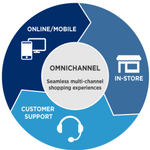
Omnichannel: the design, deployment, coordination and evaluation across the different
channels through which the marketer acquires, retains and develops customers (Ailawadi &
Farris, 2017). Focus on integrating activities ACROSS channels to correspond to how
consumers shop.
Slide 12 + 13
Customer centric, customer needs, start the customer journey online.
An omnichannel retailer (unlike a single-channel counterpart), caters to consumer
differences in preferences for whether the information and fulfillment (purchase & delivery)
functions should be carried out online, offline, or in mixed online–offline configurations.
, Slide 14 + 15 | Breadth and Depth
Online distribution metrics: breadth. On how many websites your product is. The number of
different types of distribution centers (DC) established in a distribution network defines the
breadth or degree of differentiation of a retail network.
Online distribution metrics: depth. How attractive your brand is compared to other
competitors on the website of the retailer. The number of warehouses operating in parallel to
supply identical products to their respectively assigned demand centers (SKU = Stock
keeping unit)
Slide 6 video
Mobile ads are leading in getting customers to go offline shopping and gaining more sales.
In a customer journey analysis, firms focus on how customers interact with multiple
touchpoints, moving from consideration, search, and purchase, to post- purchase,
consumption, and future engagement or repurchase.
Slide 8 Lemon & Verhoef
Pre-/Purchase/Post-purchase stages
Customer journey
Slide 9 till 11 | Herhausen et al, 2019. Channels + Touchpoints. FIC+CIC.
Channels. Customer contact points or the mediums through which the firm and the
customer interact (excludes one-way interactions).
Touchpoints. All types of one-way or two-way interactions between customers and firms
that involve any transactional or informational exchange (including customer-to-customer
interactions)
Brand-owned touch points? Website/app/stores
Social/external touch points? Reviews/WOM
Owned media. Website/app, channels you as a brand control
Paid media. Ads, channels the brand doesn’t control but can pay to appear in
Earned media. Reviews
Firm-Initiated Communication FIC. Ads/marketing emails (newsletters)
Customer-Initiated Communication CIC. Search/referrals
FIC to CIC indicates that you have caught the attention of the consumer.
Showrooming. Offline to online.
Webrooming. Online to offline
Moment of truth. Pivotal points that determine and shape a consumer's view of a brand
Slide 12 till 14 | ZMOT. Touchpoints
The Zero Moment of Truth. Between stimulus and point of sale (pre-shopping, in store, in
house)
Zero moments: moments in between seeing a marketing stimulus and going to the store /
point of sale (usually to get more information, look for discounts, compare brands etc.)
Touchpoints:
When moving through the customer journey to purchase, customers use and are exposed to
multiple touch points; each of these has direct and more indirect effects on purchase and
other customer behaviors.
It is important to identify critical touch points (“moments of truth”) throughout the customer
journey that have the most significant influence on key customer outcomes.
The effect of an individual touch point may depend on when it occurs in the overall customer
journey, on the type of consumer, on the type of product (e.g., hedonic or utilitarian) etc.
,Slide 15 till 19 | Herhausen et al. (2019) objectives
Identify customer segments based on the touchpoints used in the customer journey
Understand how the increasing importance of mobile devices affects these customer
segments.
Understand the relationships between product satisfaction, journey satisfaction, customer
inspiration (inspired in the store to buy something), and customer loyalty vary across the
different customer journey segments.
Slide 20 till end
Customer journey segments with very different characteristics (store-focused, multiple
touchpoint-, online-to-offline-, pragmatic online-, and extensive online segments)
No “showrooming” segment: the threat of showrooming may be overrated • Mobile devices
do not lead to a creation of a “mobile-only” segment. They are used as an additional search
channel that complements other touchpoints rather than replacing them.
Importance of physical stores despite increased usage of online & mobile
The retailer’s own touchpoints are rated as the most important for making the purchase
decision
Different levers should be used to increase loyalty across different segments
Customer experience is holistic, based on firm-initiated and customer initiated touchpoints
(Lemon & Verhoef 2016): Customer experience encompasses the total experience, including
the search, purchase, consumption, and after-sale phases of the experience, and may
involve multiple channels
Keypoints:
● Customer journeys
● Touchpoints
● Channels
● ZMOT
● Different types of customer journeys and implications for brands
● Herhausen et al. (2019) paper
2
Slide 4 | Customer journey analysis
● Look for moments of truth: points in the journey that are so important that the rest of
the experience might hinge on them
, ● Look for low points in the journey where expectations are not met
● Identify high points in the journey where expectations are exceeded.
● Evaluate time spent in major stages. Identify any unnecessary touchpoints or
interactions.
● Pinpoint high-friction channel transitions
Attribution challenge/problem. Where to give credit/which touchpoint should be given
credit for the sale
Slide 8 till 10 | Omnichannel
Exam example questions:
● Can you give an example that illustrates showrooming (webrooming) behavior?
● Are showrooming and webrooming behaviors bad for the firm? Why?
Research (omnichannel) shoppers. Customers that search in one channel and purchase
in another. E.g. Showrooming/Webrooming
●
Why does it (i.e. Showrooming/Webrooming) happen?
● Association of journey stages with different channels: customer needs and
characteristics/advantages of the channels
● Low channel lock-in (seamless transitions): how easy it is for consumers to switch
between channels from one journey stage to the next
Slide 11 | Multichannel vs Omnichannel strategy
Multichannel: the design, deployment, coordination and evaluation of each channel through
which the marketer acquires, retains and develops customers (Neslin et al., 2006). Focus
on managing and optimizing the performance of EACH channel.
Omnichannel: the design, deployment, coordination and evaluation across the different
channels through which the marketer acquires, retains and develops customers (Ailawadi &
Farris, 2017). Focus on integrating activities ACROSS channels to correspond to how
consumers shop.
Slide 12 + 13
Customer centric, customer needs, start the customer journey online.
An omnichannel retailer (unlike a single-channel counterpart), caters to consumer
differences in preferences for whether the information and fulfillment (purchase & delivery)
functions should be carried out online, offline, or in mixed online–offline configurations.
, Slide 14 + 15 | Breadth and Depth
Online distribution metrics: breadth. On how many websites your product is. The number of
different types of distribution centers (DC) established in a distribution network defines the
breadth or degree of differentiation of a retail network.
Online distribution metrics: depth. How attractive your brand is compared to other
competitors on the website of the retailer. The number of warehouses operating in parallel to
supply identical products to their respectively assigned demand centers (SKU = Stock
keeping unit)