Chapter 16 Thermodynamics
Internal Energy
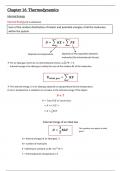
Internal Energy (of a substance)
Sum of the random distribution of kinetic and potential energies of all the molecules
within the system.
𝑼 = ∑ 𝑲𝑬 + ∑ 𝑷𝑬
Depends on temperature Depends on the separation between
molecules (the intermolecular forces)
For an ideal gas, there are no intermolecular forces, so ∑ 𝑃𝐸 = 0.
Internal energy of an ideal gas is solely the sum of the random KE of the molecules.
𝑼𝒊𝒅𝒆𝒂𝒍 𝒈𝒂𝒔 = ∑ 𝑲𝑬
The internal energy, U of an ideal gas depends on (proportional to) the temperature.
A rise in temperature is related to an increase in the internal energy of the object.
𝑼∝𝑻
𝑈 = 𝑇𝑜𝑡𝑎𝑙 𝐾𝐸 𝑜𝑓 𝑚𝑜𝑙𝑒𝑐𝑢𝑙𝑒𝑠
= 𝑁 ×< 𝐾𝐸 >
3
= 𝑁 × 2 𝑁𝑘𝑇
Internal Energy of an Ideal Gas
𝟑 This equation only applies to ideal
𝑼= 𝑵𝒌𝑻 gases*
𝟐
U = Internal energy (of an ideal gas) / J
N = number of molecules
K = Boltzmann constant (1.38 × 10⁻²³ JK-1)
T = Thermodynamic temperature / K
, Changing Internal Energy of a System
To increase internal energy, U (Or increasing the KE of particles, as 𝑈𝑖𝑑𝑒𝑎𝑙 𝑔𝑎𝑠 = ∑ 𝐾𝐸) :
1) Heating the gas (+q)
▪ Wall of container become hot.
▪ Molecules vibrate more vigorously.
▪ Molecules of the cool gas strike the wall and bounce off faster.
▪ They gained KE.
▪ Temperature increases.
2) Doing work on the gas (+W)
▪ Wall of container is pushed inwards.
▪ The molecules of the cool gas strike a moving wall and bounce off faster.
▪ They gained KE.
▪ Temperature increases.
To reduce internal energy, U:
1) The gas loses heat (-q)
2) The gas expands, the gas does work on the surroundings. (-W)
Work done on/by a gas at constant pressure
When gas is compressed, When gas expands,
work is done on the gas. work is done by the gas.
𝑊 = 𝐹 × ∆𝑥
= (𝑃𝐴) × ∆𝑥
= 𝑃(𝐴 × ∆𝑥)
Internal Energy
Internal Energy (of a substance)
Sum of the random distribution of kinetic and potential energies of all the molecules
within the system.
𝑼 = ∑ 𝑲𝑬 + ∑ 𝑷𝑬
Depends on temperature Depends on the separation between
molecules (the intermolecular forces)
For an ideal gas, there are no intermolecular forces, so ∑ 𝑃𝐸 = 0.
Internal energy of an ideal gas is solely the sum of the random KE of the molecules.
𝑼𝒊𝒅𝒆𝒂𝒍 𝒈𝒂𝒔 = ∑ 𝑲𝑬
The internal energy, U of an ideal gas depends on (proportional to) the temperature.
A rise in temperature is related to an increase in the internal energy of the object.
𝑼∝𝑻
𝑈 = 𝑇𝑜𝑡𝑎𝑙 𝐾𝐸 𝑜𝑓 𝑚𝑜𝑙𝑒𝑐𝑢𝑙𝑒𝑠
= 𝑁 ×< 𝐾𝐸 >
3
= 𝑁 × 2 𝑁𝑘𝑇
Internal Energy of an Ideal Gas
𝟑 This equation only applies to ideal
𝑼= 𝑵𝒌𝑻 gases*
𝟐
U = Internal energy (of an ideal gas) / J
N = number of molecules
K = Boltzmann constant (1.38 × 10⁻²³ JK-1)
T = Thermodynamic temperature / K
, Changing Internal Energy of a System
To increase internal energy, U (Or increasing the KE of particles, as 𝑈𝑖𝑑𝑒𝑎𝑙 𝑔𝑎𝑠 = ∑ 𝐾𝐸) :
1) Heating the gas (+q)
▪ Wall of container become hot.
▪ Molecules vibrate more vigorously.
▪ Molecules of the cool gas strike the wall and bounce off faster.
▪ They gained KE.
▪ Temperature increases.
2) Doing work on the gas (+W)
▪ Wall of container is pushed inwards.
▪ The molecules of the cool gas strike a moving wall and bounce off faster.
▪ They gained KE.
▪ Temperature increases.
To reduce internal energy, U:
1) The gas loses heat (-q)
2) The gas expands, the gas does work on the surroundings. (-W)
Work done on/by a gas at constant pressure
When gas is compressed, When gas expands,
work is done on the gas. work is done by the gas.
𝑊 = 𝐹 × ∆𝑥
= (𝑃𝐴) × ∆𝑥
= 𝑃(𝐴 × ∆𝑥)